Hurricane Hugo Anniversary Ramblings

Today, 21 September 2024, happens to be the autumnal equinox, and here on Folly Beach, the Edge of America, the weather is perfect, not a cloud overhead, the temperature Edenic, downright Elysian — no flies at Chico Feo, no mosquito swatting needed on my walk home from the bar. 

However, today also happens to be the 35th anniversary of Hurricane Hugo. As you can see above, Hugo was, “a mighty, mighty storm.”[1] Ask any Lowcountry resident who opted not to evacuate, and you’re likely to hear tales ranging from extreme discomfiture to abject terror.

Our family – Judy Birdsong, sons Harrison (5) and Ned (3), springer spaniels Jack and Sally, and I-and-I lived on the Isle of Palms, a barrier island that lay in the crosshairs of a cone of inevitability – in other words, Charleston was going to get clobbered by a monster category 4 cyclone.

On Wednesday evening before Thursday’s late night landfall, before we drove to my parents’ house in Summerville to drop off the dogs and spend the night before fleeing further inland to Columbia, I drove downtown to Charleston to hear Allan Gurganus read from his just published novel The Oldest Living Confederate Widow Tells All. I bought a copy, had Allan inscribe it, then drove back home and nailed plywood over sliding glass doors.

As it turned out, the novel, which deals with Reconstruction, offered a parallel to what we were about to endure. My father-in-law Ralph Birdsong compared the post-Hugo Isle of Palms and Sullivans Island to the bombed out towns of Europe he witnessed in World War II. 

Sullivan’s Island 22 September 1989

Reconstruction indeed.

We left Summerville first thing Thursday morning and arrived at my friend’s Jake’s house around noon where we watched the storm swirl closer and closer to the coast on a television screen. That evening, we had dinner at a restaurant in Five Points. We had been lately listening to Lyle Lovett’s most recently released album, which featured a song called “Here I Am.” 

Here’s are the lyrics from the last verse, which is spoken rather than sung:

Look, I understand too

little too late.

I realize there are things

you say and do

you can never take back.

But what would you be if

you didn’t really try?

You have to try.

So after a lot of thought

I’s like to reconsider.

Please if it’s not too late,

Make it a cheeseburger.

When it was time to order our meal, I asked three-year-old Ned what he would like to eat, and he said in a tiny little Lyle Lovett voice, “Please make it a cheeseburger.”

That almost made the entire ordeal worth it.

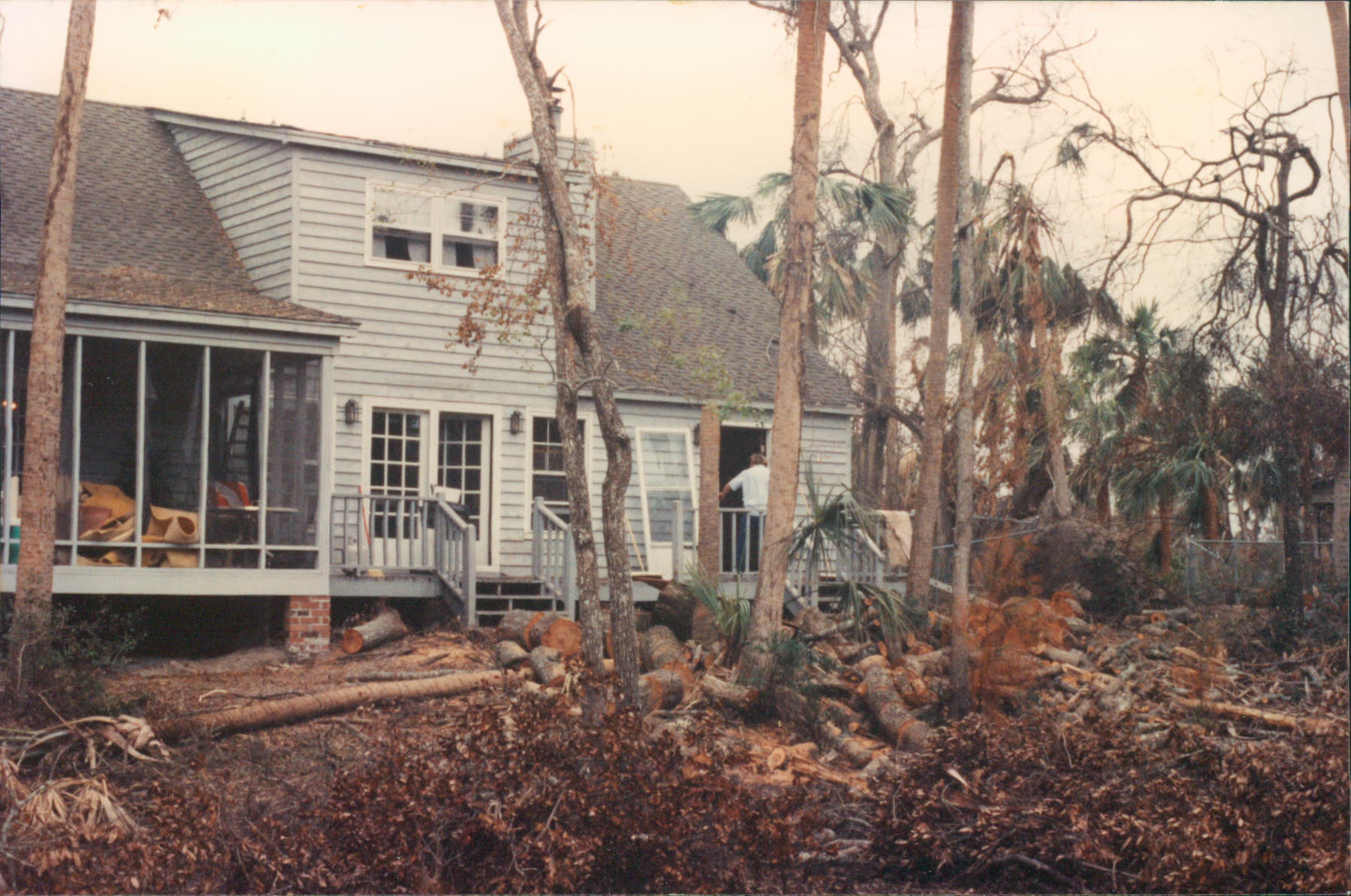
Almost, but nor entirely. Because the only bridge to the islands was destroyed, we became homeless for 17 long days, moving from family to family, devoured by anxiety. However, once we finally made it to the island via a ferry and walked from the marina to our home, he were delighted to see it standing in one piece. The ground floor had received about two inches of water, a tree had smashed through a back door into our bedroom, the floors were warped, so we had tons of work to perform, but we could sleep upstairs.

Sullivan’s Island Bridge (photo credit Judy Birdsong)

Ever it be so pounded, there’s no place like home. 

[1] I copped that quote from the Black spiritual about the Galveston hurricane of 1900.

Every Bod Gone Cruzy

Every Bod Gone Cruzy[1]

Well, not everybody’s gone cruzy. I’m as sane as David Attenborough, Walter Cronkite, Ward Cleaver, as sane as Thich Naht Hahn — or at least I’d like to think so. Certainly, I’m saner than the Lt. Governor of North Carolina, Mark Robinson, who has dubbed himself a “Black Nazi” on a transporn[2] site where he confessed nostalgia for the institution of slavery and expressed the desire to purchase a couple of human beings himself.

Here’s a photo of him mugging with the 45th president of the United States. Obviously, he and Idi Amin share a common ancestor.

BTW, here’s the greatest sentence in the history of American literature that features “Idi Amin.”

“I was in the water for six hours. Shivering, praying, scared, full of adrenaline. I kept making deals with the Fates, with God, Neptune, whoever, thinking I’d trade places with anybody anywhere – lepers, untouchables, political prisoners, Idi Amin’s wives – anything, so long as I’d be alive.”

                                                                        T. Coraghessan Boyle, Budding Prospects

Idi Amin

Also, I’d like to think I’m saner than Robert Fitzgerald Kennedy, Jr. For example, if I were ever unfortunate enough to run across a washed up dead whale, I’d like to think I wouldn’t saw its head off and take the head home with me. 

How did these [alliterative participle deleted] fools attain such high status you might wonder.

Well, Kennedy is a Kennedy after all. He was born into perhaps the most famous American family this side of Maybelle Carter’s clan. But Robinson? How did he rise from an abusive childhood bouncing back and forth from foster homes to his mama?  Here’s how. By giving a pro-gun speech at a Greensboro City Council meeting that went viral on Facebook. 

Robinson’s entry into politics reminds me of Lester Maddox’s who gained fame by chasing potential Black customers out of his restaurant with ax handles, became a sort of redneck folk hero, and was chosen as governor by the state legislature because of election confusion caused by a write-in candidate.

Lester and Mark strange bedfellows indeed.

And now both Georgia and North Carolina are swing states.

It’ll be interesting to see in forty something days, how many US citizens will vote for a candidate promising detention camps, mass deportations, tariffs, a candidate who portrays The US as a hellscape despite inflation under 3%, all three stock indices at record levels, and crime significantly decreasing.[3]

Maybe, a majority of voters in swing states won’t have gone cruzy. Maybe Georgians and North Carolinians will dump Trump. 

I wouldn’t bet on it, though.


[1] The title is a direct quote from a paragraph I received when I was teaching Developmental English at Trident Technical College circa 1980. Here’s another direct quote from the same paragraph. “Vivid sex on my mind every day.”  

[2] Can’t believe stodgy ol’ Microsoft Word doesn’t have “transporn” in their spelling dictionary. Tsk, tsk. 

[3] In 2020, the United States experienced one of its most dangerous years in decades.

The number of murders across the country surged by nearly 30% between 2019 and 2020, according to FBI statistics. The overall violent crime rate, which includes murder, assault, robbery and rape, inched up around 5% in the same period.

But in 2023, crime in America looked very different.

“At some point in 2022 — at the end of 2022 or through 2023 — there was just a tipping point where violence started to fall and it just continued to fall,” said Jeff Asher, a crime analyst and co-founder of AH Datalytics.

In cities big and small, from both coasts, violence has dropped.

Observations from the Other Other Wes Moore on the Trump Harris Debate

Observations from the Other Other Wes Moore on the Trump Harris Debate[1]

Back in the hypersensitive days of yore, Gary Hart’s extra marital shenanigans or Howard Dean’s oddly too exuberant “woo-hoo” could suddenly disqualify candidates from seeking their party’s presidential nomination. 

To coin a phrase, “Them days is over.” Nowadays, paying hush money to porn stars and being convicted on thirty-four felony counts are no longer disqualifying. 

Also, nowadays, online misinformation is taken as the gospel truth by simpleminded people. 

For example, here are two direct quotes from Donald Trump from Tuesday’s debate, which, in a sane society, would in and of themselves end his campaign for the presidency..

Quote number one: “Now she wants to do transgender operations on illegal aliens that are in prison.” 

This statement is so off-the-charts-creepy-Thanksgiving-dinner-bachelor-great-uncle-ish, that I can’t summon the energy to cough up from my dyspeptic spleen an HL Menckenesque screed of mockery because Trump’s claim is so batshit crazy that anything I’d come up with wouldn’t do justice to its absurdity.[2]

So here’s another quote: “They’re eating the dogs. They’re eating the cats. They’re eating the pets of the people that live there.” [i.e., Springfield, Ohio]

They, being Haitians, i.e., goggle-eyed zombies that at night wander from homestead to homestead abducting unfenced pets to feed on their brains.

An aside: Do white people hate people of color so much they don’t mind that this idiot is in charge of the nuclear codes?  

When the debate started, I disapproved of Kamala’s first answer, an evasion of the question, a rehearsed opening salvo, a laundry list of proposals, and I thought Trump looked calm and uncharacteristically presidential at first. I was worried for a minute or two.

However, in no time. he was careening into nonsense while she was getting her groove, smiling incredulously in high-snark amusement while Trump bragged about how much Hungarian strongman Vicktor Orbán admired him. 

His performance throughout the debate was the opposite of grace under pressure. 

In other words, it was ugly – like his rallies, like his hair, like his suits, like his ties. 


[1]For the record, I’m not the Governor of Maryland.

[2] I’d love some grammar maven to diagram that sentence.

Lines Stolen on a Gloomy Sabbath after Being Led Astray

Lines Stolen on a Gloomy Sabbath after Being Led Astray

Do you know the New York Times game Connections?  

If not, in the game, you’re presented each morning with a square consisting of sixteen boxes, four up and four down. The object is to discover an affinity of four of the words/terms that appear in the boxes, in other words., to find a common thread. Essentially, if you correctly identify three groups, you win because the final four you didn’t choose, will form the last group. 

Here’s today’s puzzle:

Frost                Beach              Pump               Pope

Race                Bishop             Pet Shop          Pound

Hardy              Beat                 Prior                 Bake

Throb              Bad                  Preheat             Pastor

The first category that came to my mind was poets’ surnames.

(Robert) Frost

(Alexander) Pope

(Elizabeth) Bishop

(Ezra) Pound

(Thomas) Hardy

This seemed unfair because there are five obvious choices, but not to worry, poets weren’t a category, and I almost botched my 48-day streak, missing my first three guesses but somehow managed to get the blue category (the second to the hardest), then the green (the second easiest), and finally, the yellow, the easiest, third, which left the purples, the hardest, now a gimme.

So I decided in protest to construct a poem by lifting lines from the poets that appeared in the puzzle.  Here it is:

Lines Stolen on a Gloomy Sabbath

Back out of all this now too much for us,

Down their carved names the rain drop ploughs.

One tear, like the bee’s sting, slips.

The paired butterflies are already yellow with August

And sport and flutter in the fields of air.

Sources:

Robert Frost, “Directive”

Thomas Hardy, “During Wind and Rain”

Elizabeth Bishop, “The Man Moth”

Ezra Pound, “The River Merchant’s Wife: A Letter”

Alexander Pope, “The Rape of the Lock, Canto 1”

So thank you, whoever, constructs Connections, for leading me astray.

A Post Labor Day Meditation

A Post Labor Day Meditation

I said, ‘It’s certain there is no fine thing   

Since Adam’s fall but needs much labouring.

WB Yeats, “Adam’s Curse”

It’s the Tuesday after Labor Day, and, as if on cue, the weather has turned a tad cooler.  The trees outside my second story office are swaying, nodding, trembling in a brisk breeze. In the back yard, morning glory vines have carpeted the Asiatic jasmine with purple flowers while the untended Elaeagnus is broadening its realm and sprouting ugly baldish shoots skyward. 

So this morning, armed with swing blade and hedge clippers, I braved the mosquitos to do a bit of long overdo maintenance, which oddly enough brought to mind Milton’s Paradise Lost where Eve and Adam are tasked by their Creator to tend to the garden’s growth. They must “lop” or “prune” or “bind,” but nevertheless “wanton growth derides” and the garden “tends to wilde” (sic). So, channeling her inner Adam Smith, Eve suggests she and Adam divide their labor, which leaves her isolated and vulnerable to the blandishments of Satan’s forked tongue and phallic charms:

            [The Serpent] Address’d his way, not with indented wave,
            Prone on the ground, as since, but on his reare,
            Circular base of rising foulds, that tour’d
            Fould above fould a surging Maze, his Head
            Crested aloft and Carbuncle his Eyes; 

            With burnisht Neck of verdant Gold, erect[1]
            Amidst his circling Spires . . . 

This seduction, of course, leads to the fall of humankind, so farewell, delightful gardening, hail back-breaking farm labor.

Thus, Adam’s curse is twofold: death and labor.

Yet, I think that without meaningful labor we humans tend to wither, and how horrible a terrestrial eternal life would be! Just ask Petronius’s Sibyl: 

I saw with my own eyes the Sibyl at Cumae hanging in a cage, and when the boys said to her: “Sibyl, what do you want?” she answered: “I want to die.”[2]            

                                                                                                Petronius, The Satyricon

Or the old man in Chaucer’s “The Pardoner’s Tale”:

            Thus I walk, like a restless wretch,

            And on the ground, which is my mother’s gate,

            I knock with my staff, both early and late,

            And say, “Dear mother, let me in!”

                                                            Chaucer, “The Pardoner’s Tale”

So, we should be thankful for Original Sin. Otherwise, we’d be stuck in a never-ending cycle of gardening, which would delight some of my friends, but is not to my taste.

I’ll give Wallace Stevens the last word:

            Is there no change of death in paradise?

            Does ripe fruit never fall? Or do the boughs

            Hang always heavy in that perfect sky,

            Unchanging, yet so like our perishing earth,

            With rivers like our own that seek for seas

            They never find, the same receding shores

            That never touch with inarticulate pang?

            Why set the pear upon those river-banks

            Or spice the shores with odors of the plum?

            Alas, that they should wear our colors there,

            The silken weavings of our afternoons,

            And pick the strings of our insipid lutes!

            Death is the mother of beauty, mystical,

            Within whose burning bosom we devise

            Our earthly mothers waiting, sleeplessly.

                                                                        Wallace Stevens, “Sunday Morning”


[1] Emphasis mine. But while I’m at it here below, shouldn’t some vice crusader alert Moms for Liberty that this filth is hiding in virtually every high school library in America! 

[2] “The Sibyl of Cumae was a prophetess in service to Apollo and a great beauty. Apollo wished to take her as his lover and offered her anything she desired. She asked to live for as many years as there were grains in a handful of dust. Apollo granted her wish, but still she refused to become his lover. In time, the sibyl came to regret her boon as she grew old but did not die. She lived for hundreds of years, each year becoming smaller and frailer, Apollo having given her long life but not eternal youth. When Trimalchio speaks of her in the Satyricon, she is little more than a tourist attraction, tiny, ancient, confined, and longing to die.”  from a hyperlink in windingway.org’s hypertext version of TS Eliot’s “The Waste Land”

Back Then, Right Now

Back Then, Right Now

When you face the preacher, there’s only one thing to say:
Just skeep-beep de bop-bop beep bop bo-dope skeetle-at-de-op-day!

                                                                           Cab Calloway

Back Then 

In the1950s version 

            of yesteryear

                                    beatniks all hepped up 

                                                                        on goofballs 

            snapped their fingers  

                                                in the wee hours 

                                                                                    while 

                                                                                    Cub

                                                                                    Scout

                                                                                    den

                                                                                    mothers

                                                                                    slept.

Secondhand smoke thick as pre-EPA Pittsburg smog.

Dizzy, Bird, Trane, 

            blowing their horns,

                                                Roy, Max, Billie Higgins beating their drums.

But then what? 

                                    The next day, 

                                                                        the unforgiving light,

                                                                                                            and then another day . . . 

Right Now

In the 2020s 

not much linguistic abracadabra, 

but on the other hand, 

I can hook up with Lester Young and Lady Day

on YouTube 

                        and snap my fingers 

                                                            all hepped up on 

my very own 

            garden variety 

                                    brain chemicals in a

             smoke 

                        free

             space.

                        It ain’t all bad – not yet.

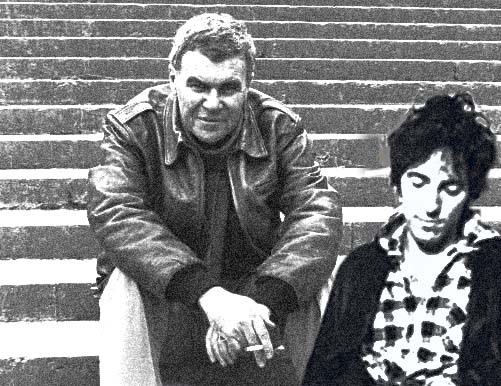
Raymond Carver + Bruce Springsteen = “Down Bound Train”

In the early ’80s, after my late wife Judy Birdsong landed a full-time position at Trident Technical College teaching psychology, I quit my po-dunk so-called assistant managerial position at Safeco[1] and decided to try my hand at writing short fiction full time. I had been selected to participate in a SC Arts Commission workshop headed by Blanch McCrary Boyd. Other writers in the workshop included Josephine Humphreys, Lee Robinson, Billy Baldwin, Harlan Greene, Steve Hoffius, Greg Williams, and Starkey Flythe, Jr., among others.

Through Starkey’s suggestion, Greg Williams and I attended the Sandhills Writing Conference at Augusta College in Georgia, where Starkey lived.[2]  At the conference, I learned a lot from writers I’d never heard of before, but the most profound consequence of my attending was discovering Raymond Carver. Why I had not heard of Carver is puzzling; nevertheless, better late than never.

I found his short stories thrilling, well crafted in the Flannery O’Connor sense of every detail contributing to the stories’ central themes, for example, the long white beard of the blind man in “Cathedral” evoking associations with blind seer Tiresias as he guides the benighted first person narrator into the realm of light, the blind not leading the blind not into a ditch but into a state of enlightenment.

However, most of Carver’s stories are the opposite of uplifting, like “A Serious Talk,” the story of a post-divorce Boxing Day encounter in which an estranged husband attempts to make up with his wife after trying to burn her house down, or like “Popular Mechanics,” a story dramatizing a breakup that ends with the husband and wife engaging in a literal tug-of-war with their baby:

Let go of him, he said. 

“Don’t,” she said. “You’re hurting the baby,” she said.

“I’m not hurting the baby, he said

The kitchen window gave no light. In the near-dark he worked on her fisted fingers with one hand and with the other hand he gripped the screaming baby up under an arm near the shoulder. She felt her fingers being forced open. She felt the baby going from her.

“No!” she screamed just as her hands came loose.

He would have it, this baby. She grabbed for the baby’s other arm. She caught the baby around the wrist and leaned back. But he would not let go. He felt the baby slipping out of his hands and he pulled back very hard.

In this manner, the issue was decided.

* * *

Three years after Carver’s collection What We Talk About When We Talk About Love was published, Bruce Springsteen released his seventh album, Born In the USA.  Aside from the sonic pleasures of Springsteen’s rock-‘n’-roll, I have always admired his story-telling talents, how he creates working class characters who come alive for the listener. He, too, like Carver, provides details that vivify his narratives, and as with Carver’s, Springsteen’s characters often don’t find redemption.

Here are the lyrics of “Downbound Train,” the final song of Side 1.

I had a job, I had a girl
I had something going, mister, in this world
I got laid off down at the lumber yard
Our love went bad, times got hard.

Now I work down at the carwash
Where all it ever does is rain
Don’t you feel like you’re a rider
On a downbound train?

She just said, “Joe, I gotta go
We had it once, we ain’t got it anymore.”
She packed her bags, left me behind
She bought a ticket on the Central Line.

Nights as I sleep, I hear that whistle whining
I feel her kiss in the misty rain,
And I feel like I’m a rider
On a downbound train.

Last night, I heard your voice
You were cryin’, cryin’, you were so alone
You said your love had never died.
You were waiting for me at home.

Put on my jacket, I ran through the woods.
I ran ’til I thought my chest would explode.
There in the clearing, beyond the highway
In the moonlight, our wedding house shone.

I rushed through the yard, I burst through the front door.
My head pounding hard, up the stairs I climbed.
The room was dark, our bed was empty.
Then I heard that long whistle whine
And I dropped to my knees, hung my head and cried.

Now I swing a sledgehammer on a railroad gang
Knocking down them cross ties, working in the rain.
Now don’t it feel like you’re a rider
On a downbound train?

But here’s something else. When Springsteen performs these songs, he transforms into the characters he sings about. Like a method actor, he summons memories that blur the distinction between rock star and the wretches he sings about. He feels what they feel, and it shows.

For example, note during the dream sequence of the clip below, at 1:55, how he trembles when he sings, 

“Put on my jacket, I ran through the woods.
I ran ’til I thought my chest would explode.
There in the clearing, beyond the highway
In the moonlight, our wedding house shone.

I rushed through the yard, I burst through the front door.
My head pounding hard, up the stairs I climbed.
The room was dark, our bed was empty.
Then I heard that long whistle whine
And I dropped to my knees, hung my head and cried.”

I mean, I find this to be very moving. Like the blind man in “Cathedral,” Springsteen is creating empathy, creating someone besides myself I can feel sorry for.

Blessed be the artists who take us out of ourselves.


[1] Not the insurance company but a safety equipment distributor. 

[2] Coincidentally, Greg won in a tie the second place short fiction award.

Fellow Marxists, Fascists, and Communists, No Need to Break Out the Molotovs 

I have the slightest acquaintanceship with the novelist TC Boyle, whom I occasionally try to convince that his despair over what he sees as Trump’s inevitable election is unfounded, so I thought I’d summarize my arguments and share them with the public at large. 

So, ladies and gentlemen, bulldogs and babies, here’s why Trump’s going to lose the 2024 election.

Technical Reasons 

Donald Trump runs the Republican Party the way dictators run their fiefdoms, i.e., by purging professional bureaucrats and replacing them with family members, like daughter-in-law Laura, the head of the RNC, who would probably have trouble successfully running a laundromat, much less a complicated multi-state conglomeration.  This means that the party doesn’t have the organizational apparatus in place to competently run a campaign, to assemble a 50-state ground game, for example.

A case in point, the piss poor vetting of JD Vance. To win the election, Trump needs to increase his appeal among suburban women, and he’s not going to win them over by selecting a frothing at the mouth misogynist like the Senator from Ohio[1]. In 2020, on Eric Weinstein’s podcast Portal, Vance agreed with his host that “postmenopausal females” exist just to help take care of children. I’m certain some slick communistic Hollywood commercial maker is crafting an attack ad quoting Vance as I type this. Hey, JD, this is late empire America not Medieval Slovenia. 

With more states adding right-to-choose referenda – most recently Arizona and Missouri – more women will be inclined to vote. The women I hang with, postmenopausal and otherwise, don’t want some self-identified hillbilly or convicted rapist telling them what they can’t so with their bodies.

Perhaps the most salient technical reason that DJT is going to lose the election is that he seems incapable of attempting to broaden his coalition. All he does at these rallies is sling red meat to lost souls in attendance and promise massive tax cuts to CEOs who would rather increase their wealth than provide free school lunches to food-insecure children.

And by the way, as much as Donald would like the economy to crater before the election, with today’s strong retail sales report and a likely interest rate cut coming in September, that ain’t going to happen in the 90-odd days before the election. 

Fundamental Reasons

Donald Trump’s always suffered from Narcissistic Personality Disorder; however, now that pathology is compounded by his diminished mental acuity, the product of decrepit age, to use WB Yeats’ unlovely term. Some also suggest that Trump is addicted to Adderall, which they blame for his periodic sniffing. Anyway, he is, as he said the other day, who he is.

No way he’ll quit obsessing over crowd sizes or cease with the adolescent nicknames, and as the election intensifies, his infirmities will be increasingly obvious to those paying attention. 

Anyway, his song and dance is getting really stale, or as one wag put it on Twitter/X, Donald is in his fat Elvis stage. Diehard fans adore him, but who else enjoys being bombarded with a constant barrage of hyperbolic negativity – foreign hordes pouring into our cul-de-sacs, the future a Blade Runner hellscape if Kamala wins – a land in which saying Merry Christmas could land you in jail.

Only idiots believe shit like that.

Harris Walz

Trump could very well have defeated Biden, especially after the debate; however, now he’s running against a formidable ticket that exudes joy and points to a bright future where citizens collaborate to address problems, a ticket that doesn’t want to dismantle NATO, or coddle up to dictators.

Conclusion

So chins up, pinko-fascists, if we work hard to get out the vote and unloosen our purses and donate, we got this thing. I don’t foresee my deleting this post on November 7, the day Caroline and I are going to see fellow Trotskyite Sarah Silverman at the Charleston Music Hall.

So, chill thyselves.


[1] Note the authentic-sounding pundit-ese. – “the Senator from Ohio.” 

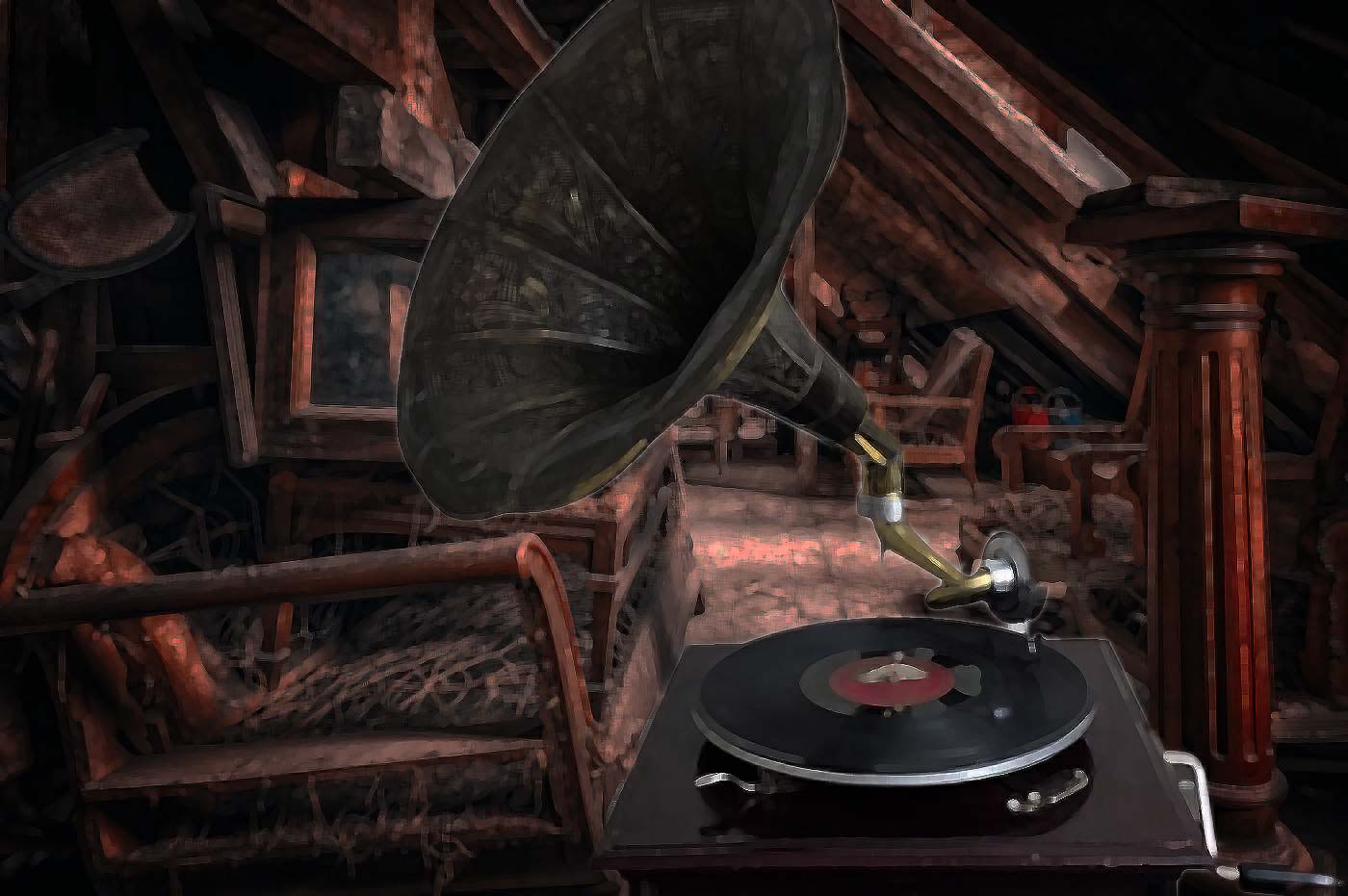
My Brain Is Like a Victorian Attic

My brain is like a Victorian attic – cluttered, too busy, 

            crisscrossed with cobwebs 

and full of musty old books with colorful illustraytions.

(sic)

            Let’s crank up the old Victrola.

            “I Dream of Jeanie with the Light Brown Hair”

            Floating like a vapor . . . 

Consciousness, 

burning,

burning like, like, a dying star,

blazing a circle seen

in this very room where 

I remember that other darkened room,

my grandmother, Saisy Blanton,

her hair unbunned, grey as slate, 

hanging past her waist,

 a big woman squatting 

over the bedpan like, like a human tent,

the metallic stream’s sizzle abating 

            tinkle, tinkle. Little

Boy Blue come . . .  Lasssssssss-seeeeeeee!

Words accumulating like marbles in a bowl.  

That tiny explosion when the TV’s clicked on.  

A horizonal line on a black screen.

Crackle, 

            then Rin Tin Tin running.  

The real dog Ace, a Doberman, outside 

            chained to a post.

            lying in the stripe of a shadow

            in the dirt under the eave 

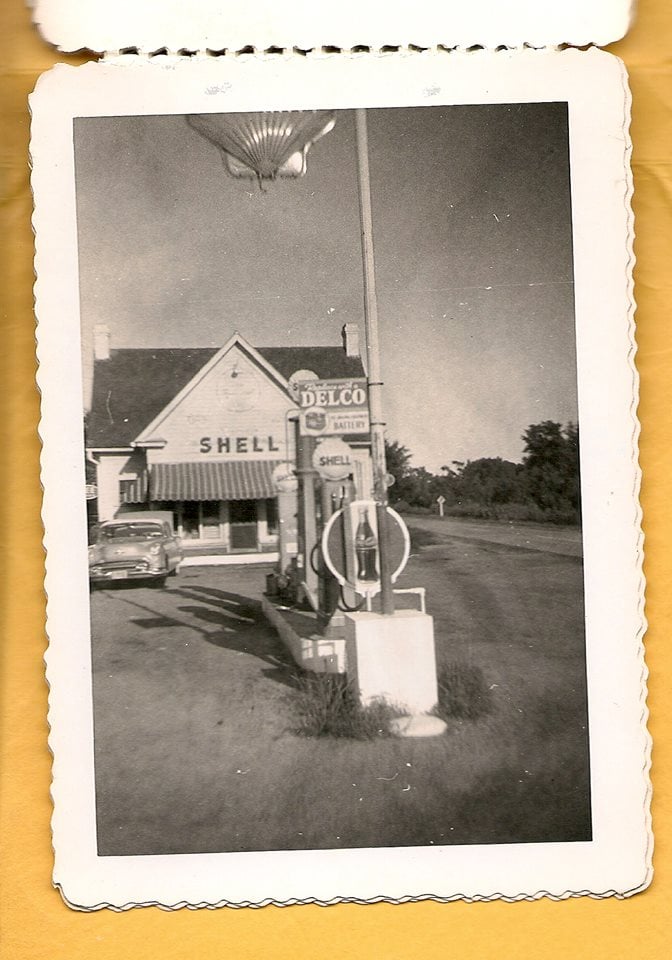
of the house that also serves as a service station.

The Self-Help Book I Wish Someone Would Write

Leah Palmer Preiss

The Self-Help Book I Wish Someone Would Write

Even though I’ve written parodies of self-help books, I don’t think I’ve ever read a real one all the way through.[1]  But, oh, lots of other people have. According to Worldmetrics.org, “the global self-help industry is estimated to be worth $11 billion,” and “58% of Americans have purchased a self-help product at least once.”

I guess one reason I’m not into self-help is that I’m in my seventies, retired, so not in the market to pick up “the 7 habits of highly effective people” nor do I have the energy to “accept nothing less than the life [I] deserve.”[2] Before retirement, revisiting the texts I was teaching left little time for recreational reading, so if I were going to slip a side book in between Crime and Punishment and The Sound and the Fury, it would be a contemporary novel like Cloud Atlas rather than the bogus-sounding The Influential Mind: What Our Brains Reveal About Our Power to Change Others. 

There is, however, a topic I wish some self-help sage would address, i.e., helping wretches like me come to terms with “the thousand shocks that flesh is heir to,” in other words, how to help us forget those PTSD-inducing experiences.

My late wife Judy Birdsong used to complain about what she called my “demons,” for example, my habit of awakening in the dead of night screaming after a nightmare conjuring that time at age seven when I accidently saw my demented wheelchair-bound great aunt naked. Or my self-defeating habit of reexperiencing in a never-ending loop Lonnie Smith’s getting deked in the ’91 World Series and not scoring what would have been the winning run. Imagine being at your in-laws at the Thanksgiving table holding hands while the patriarch is praying out loud, but rather than joining in the amens, you blurt out, “Dammit, Lonnie, why did you stop running?”

I wish some self-help sage would write How to Turn Your Demons into a Flea Circus. Ideally, this book would demonstrate to the – to use a quaint term – neurotic reader that she has blown negative life events way out of proportion, that she should shrink those bloodsucking vampires of her imagination into fleas, absurd itty bitty insects performing amusing little tricks in a miniature circus mock-up complete with tiny trapezes and tightropes. In essence, to find the humor in horror.

How to Turn Your Demons into a Flea Circus would teach us how not to take ourselves so seriously. Rather than being blown out of proportion, these negative life events would be weighed against what TS Eliot called “the immense panorama of futility and anarchy” i.e. the historical tapestry of famine, war, and genocide. 

Come to think of it, though it’s certainly not a quick fix, reading great literature is a way to tame those demons because it teaches, to quote Wesley Moore III, that “suffering doesn’t make you special; it makes you human.”[3]

I suspect that there’s not a quick fix. So, to quote the late, great Kurt Cobain, “never mind.”

I’ll leave you with this:


[1] Tolerating Upper Middle Class Northerners for Dummies, Crippnotes: Moore’s Treatise on Rearing Children in Late Empire America, and Mining Insomnia for Gold. 

[2] Come to think of it, given some of the stupid, hurtful things I’ve done, I’m thankful that I’m not living the life I deserve.

[3] from “The Art of Grieving.”