A Man Called Adam, a Mensch Called Satchmo

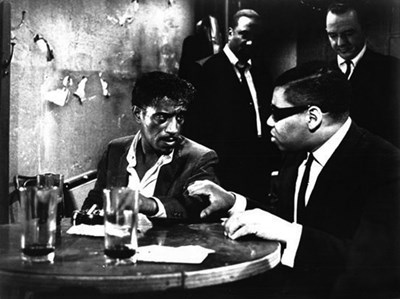
Last night on TCM, Caroline and I watched the 1966 film A Man Called Adam. In the introduction, host Eddie Muller mentioned that the film’s protagonist Adam Johnston, played by Sammy Davis, Jr., was based “very loosely” on Miles Davis. Muller didn’t mention that in 1966 Miles Davis was alive (if not well)[1] and had started a relationship with Cicely Tyson, who interestingly enough, plays Adam Johnson’s love interest.

The movie features Louis “Satchmo” Armstrong portraying a fictional character, Willie “Sweet Daddy” Ferguson. Ossie Davis, and Frank Sinatra, Jr. also co-star. In addition, Mel Tormé bops in for a number, which, for me, is the highlight of several superb musical performances, including one featuring Satchmo himself. Benny Carter composed songs for the movie and served as musical director and conductor.

Although some of the acting isn’t exactly topnotch (Frank Sinatra, Jr. was not nominated for an academy award), those above-mentioned performances, interesting racial dynamics, and its pivotal place in the timeline of civil right make the movie worth watching.  It’s a period of transition: some characters look ‘50s with their skinny black ties, others ‘70s with afros and pointy sideburns. For the most part, white and blacks dig each other, whether they be musicians or audience members in the jazz clubs.

Adam, like Miles himself, is a demon-haunted trumpeter. Years before, he drunkenly crashed his car, killing his wife and child. In addition, society’s underlying racial injustice stokes his anger.  He alchemizes this heartache and rage, blows them out of his horn in soaring, anguished, increasingly frenetic solos, syncopated banshee wails that can raise the hair on your arms (if you haven’t waxed them away).

Oh yes, he’s harassed by the police who want to see his arms, because, after all, being black is a sure sign of heroin addiction. Adam doesn’t take shit from anyone – though he does dump bulldozer loads on his agents, friends, and fellow musicians  –  and for a diminutive man gives the cops a fairly good fight.[2]

Ultimately, though, I don’t dig Adam. Genius, in my book, doesn’t excuse you from treating non-geniuses like lesser beings, doesn’t give you a license to shatter time-honored traditions of civilized decorum, not to mention nearly full whiskey bottles.

No, give me Louis Armstrong, who rose from poverty, did delinquent time at the Colored Waif’s Home in New Orleans, rose to prominence, became an international ambassador for jazz, but was no Uncle Tom. He called President Eisenhower “two-faced” and gutless” during Little Rock’s desegregation and cancelled a State Department tour to the Soviet Union. “The way they’re treating my people in the South, the government can go to hell,” he said as he pulled out of the show.

Anyway, if you’re into jazz or civil rights history, check it out. 


[1] In ’66 Miles spent three months in a hospital because of a liver infection. 

[2] Perhaps not coincidentally, Philip Marlowe, the protagonist of the noir 1953 novel I’m now reading, also gets worked over by the cops. Hmmmmm. 
Philip Marlowe Gives Donald Trump a Metaphysical Talking To

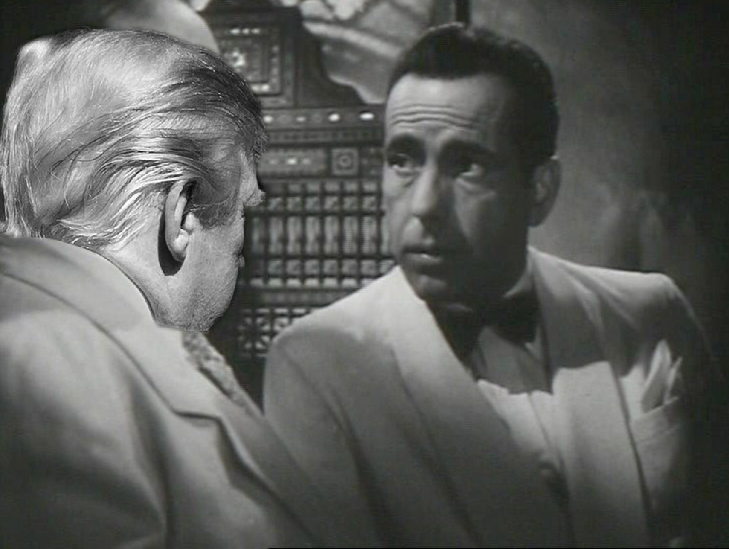
When I think of tough guys, I think of fictional private eyes, like Sam Spade and Philip Marlowe,[1] hard-drinking stoics whose view of the world is as unmisted as the Kalahari Desert. 

Donald Trump would like to think of himself as a tough guy, and he certainly talks the talk, blusters and threatens, but when it comes to walking the walk, for him it takes something more than a village – it takes a phalanx of police peppering unarmed protesters – including clergy – with rubber bullets and spraying them with some species of airborne irritant we dare not call tear gas. These citizens needed to be cleared away so the President and his coterie could swagger up in front of a church for a photo op. 

Here he is, holding a Bible upside down, Charles Bronson in a platinum wig playing Cotton Mather.

What may have prompted this “show of strength” is Trump’s ire over the news that he had been ushered into the White House’s underground bunker during protests the previous Friday.[2] The Twitter hashtags #BunkerBitch and #BunkerBoy started making the rounds as did the low-hanging analogies of Ava and Adolph’s last days in bombed out Berlin. 

Alas, it would seem, at least from the lamestream news sources I rely on, the PR stunt was an Ishtar grade failure, the brutalizing of the protesters prompting Generals Mattis and Mullen to speak out against the president, which provided cover for Republic Senator Lisa Murkowski to chime in with her own tsk-tsk. 

Oh, if there were only some good news, some ray of sunshine striking a shiny object to distract us from our dystopia! 

And then, like an answered prayer, the blessed news: Friday’s release of economic data indicating the unemployment rate had dropped to 13.3%, a “surprising turnaround” that “suggested the economy was stabilizing.”[3]  

To cash in, Trump summoned the media for what he called a news conference[4] and then doused that tiny spark of sunshine with this obscene and absurd observation:

“Hopefully, George is looking down right now and saying this is a great thing that’s happening for our country. This is a great day for him, it’s a great day for everybody. This is a great day for everybody. This is a great, great day in terms of equality.”

Oh, how would love to have Trump cornered in some black-and-white L.A. motel room alone with Philip Marlowe, that shamus extraordinaire, who hearing such self-serving bullshit would backhand him and snarl, “[When you are] dead, you [are] sleeping the big sleep, you [are] not bothered by things like that, oil and water [are] the same as wind and air to you. You just [sleep] the big sleep, not caring about the nastiness of how you died or where you fell.”

In other words, George Floyd has nothing on his mind, Michael Brown has nothing on his mind, Atatiana Jefferson as nothing on her mind. 

As Flannery O’Connor said, “You can’t be any poorer than dead.”

Perhaps Trump should take a page out of Joe Biden’s playbook and STFU, and perhaps Biden should return to that strategy. Biden’s estimation the other day that ten to fifteen percent of Americans are not “good people” adds up to a lot of votes, smacks of Hillary’s “deplorables” snark. 

We need to a stop to the carnage and rebuild our Smoldering City on the Hill before there’s nothing left to rebuild.


[1] Humphrey Bogart played both in film adaptations of Dashielle Hammett and Raymond Chandler novels.  

[2] Note, budding writers, my conscious employment of passive voice.

[3] Alas, this morning’s Washington Post reports there “had been a ‘major’ error indicating” that “the overall unemployment rate would have been about 3 percentage points higher than reported.”

[4] He took no questions from reporters.

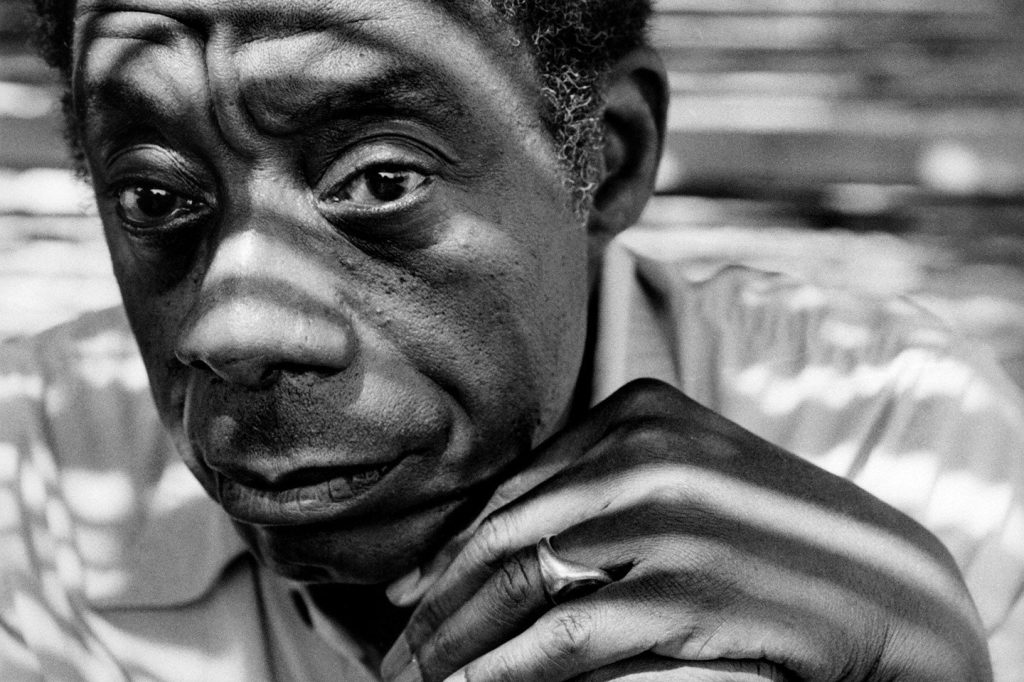
James Baldwin’s Take

A friend of mine, Tom Westerman, an incredibly dedicated, knowledgeable, and articulate history teacher posted these words on Facebook the day before yesterday, the morning after the riots in Minneapolis erupted: 

I have few words for this moment. I can only say I’m sorry, and that I want to console those who are hurting and to work harder with whatever tools I have to make change. 

This moment is 1918 + 1929 + 1968 all rolled into one. 

As James Baldwin said: “People who treat other people as less than human must not be surprised when the bread they have cast on the waters comes floating back to them, poisoned.

In my last two years of teaching high school, I taught an elective history course called “America in the 60s.”  Our history chair had approached me, an English teacher, and asked if I might be interested in teaching the semester course.  He thought that my having lived through all that trauma, having seen the unleashed dogs, Huey choppers, and assassinations on my family’s black-and-white television might compensate for my lack of formal training, so I thought, well, yes, something new, why not?

I needed, though, to educate myself in a hurry, so I spent the summer after the invitation in a sort of jazz riff crash course in civil rights, Viet Nam, the Great Society, feminism, op and pop art. When it came to music and the counterculture, I felt more confident, but, still, I had gaps to fill — the Grateful Dead’s role in Kesey’s Acid Tests, doo wop’s contributions to the Motown sound, the paucity of Billboard hits from the UK prior to the British invasion.

In preparation for civil rights, I reread James Baldwin’s 1962 New Yorker essay “A Letter from a Region of my Mind,” and in doing so, I came to realize that not all that much has changed, especially when it comes to white police officers and black citizens. As I’m writing this, cities are burning, and the President of the United is stoking the flames, echoing George Wallace’s threat, “when the looting starts, the shooting starts.”[1] It is somewhat disconcerting that the president, who had not heard of Frederick Douglas before his inauguration, is so handy with a George Wallace quote, disappointing that he’s not trying to bring us together, not suggesting we all calm down and take a deep breath.

Anyway, Baldwin begins his essay reminiscing about his youth in Harlem.  At the age of ten he was frisked by two cops who “amused themselves with [him] by frisking [him], making comic (and terrifying) speculations concerning [his] ancestry and probable sexual prowess, and, for good measure, leaving [him] flat on [his] back in one of Harlem’s empty lots.”  He goes on to say, “It was absolutely clear that the police would whip you and take you in as long as they could get away with it, and that everyone else—housewives, taxi-drivers, elevator boys, dishwashers, bartenders, lawyers, judges, doctors, and grocers—would never, by the operation of any generous human feeling, cease to use you as an outlet for his frustrations and hostilities.”

(I, myself, witnessed something like this in the poolhall I hung out at as a teenager. A cop, for fun, handcuffed one of the African American rack boys to one of the poles supporting the ceiling.)

Baldwin continues the essay, describing his coming of age, acquiring an education, and spending some time with Elijah Muhammad, the founder of the Nation of Islam, who had become impatient with peaceful protest. Baldwin refers to Malcolm X’s observation that “the cry of ‘violence’ was not raised, for example, when the Israelis fought to regain Israel, and, indeed, is raised only when black men indicate that they will fight for their rights.”  

After leaving a dinner hosted by Elijah, Baldwin realizes that “the American Negro can have no future anywhere, on any continent, as long as he is unwilling to accept his past. To accept one’s past—one’s history—is not the same thing as drowning in it; it is learning how to use it. An invented past can never be used; it cracks and crumbles under the pressures of life like clay in a season of drought. How can the American Negro’s past be used? The unprecedented price demanded—and at this embattled hour of the world’s history—is the transcendence of the realities of color, of nations, and of altars.”

The essay’s last paragraph:

When I was very young, and was dealing with my buddies in those wine- and urine-stained hallways, something in me wondered, What will happen to all that beauty? For black people, though I am aware that some of us, black and white, do not know it yet, are very beautiful. And when I sat at Elijah’s table and watched the baby, the women, and the men, and we talked about God’s—or Allah’s—vengeance, I wondered, when that vengeance was achieved, What will happen to all that beauty then? I could also see that the intransigence and ignorance of the white world might make that vengeance inevitable—a vengeance that does not really depend on, and cannot really be executed by, any person or organization, and that cannot be prevented by any police force or army: historical vengeance, a cosmic vengeance, based on the law that we recognize when we say, “Whatever goes up must come down.” And here we are, at the center of the arc, trapped in the gaudiest, most valuable, and most improbable water wheel the world has ever seen. Everything now, we must assume, is in our hands; we have no right to assume otherwise. If we—and now I mean the relatively conscious whites and the relatively conscious blacks, who must, like lovers, insist on, or create, the consciousness of the others—do not falter in our duty now, we may be able, handful that we are, to end the racial nightmare, and achieve our country, and change the history of the world. If we do not now dare everything, the fulfillment of that prophecy, re-created from the Bible in song by a slave, is upon us: God gave Noah the rainbow sign, No more water, the fire next time! 

It’s been fifty-eight years since the essay’s publication, we’ve had a bi-racial president, but, obviously, deep-seated animus still lingers in many a breast.

As a black man I follow on Twitter put it, “I just wish whites loved black people as much as they love black culture.”    

Amen.


[1] Wallace was quoting Miami Police Chief Walter Headley, who coined the unfortunate phrase.

A Confession

head illustration

Despite my lower-middle to middle-middle class background, despite my mediocre education, despite my all-too-average IQ, I have somehow become an elitist.

Yes, I confess that I’m one of those insufferable aesthetes who find Forrest Gump, Andrew Lloyd Webber, and Dave Matthews tedious, one of those arrogant, pretentious, overbearing know-it-alls who roil the stomach acid of the vulgarians at Fox News, one of those liberals Trumpsters want “to own.”  In fact, now that I’ve passed through the gateway of old age, suspending my disbelief has become a mission worthy of NASA.   I’m as disdainful of middle brow art and dogmatic ideology as today’s teenagers are of pre-digital special effects.

For example, even though I adore Ray Charles and admire Johnny Cash, I found both of their critically acclaimed biopics unbelievable, not because I doubted the veracity of the depicted events of their lives, but because everything seemed ersatz. I kept looking in vain for some scrap of atmospheric imperfection – a balled-up napkin on the counter, dead moths in a light fixture, a shitty haircut, anything that suggested that I wasn’t consuming a product manufactured in Hollywood.

Oh, to be able to enjoy a mainstream movie!  Oh, to be able to finish a John Clancy novel!   Oh to be Rupert Murdock!

The tragic truth is that once you become an elitist, it’s virtually impossible to go back.  After strolling around Dublin with Leopold Bloom and acquiring a sense of wonder at  Joyce’s magnificent mastery of language, seventy pages of ventriloquist dummy John Galt’s lip-synching of Ayn Rand’s theory of Objectivism ain’t gonna cut it.  After forty years of listening to Lester Young, you’re not going to find Yanni interesting.  Going back would be like trading in your Austin Healey for a Honda Accord.

Lester-Young-saxophone-631

Lester Young


Trump Cultists at Play During the Pandemic

IMG_3202

You would think an old fellow like me would have developed a sane hobby, something like numismatics or philately or heraldry, but no, ever since I was a wee lad, I’ve been keenly into cultural anthropology, consider myself an amateur Franz Boas, if you will.

This hobby has taken me into some fairly dicey places like Jamaican dance halls, USC football games, Louisiana juke joints, and any number of the folk festivals of Folly Beach, SC, the narrow barrier island I call home.

Obviously, given the current situation, I haven’t donned the ol’ pith helmet in a while, but yesterday I had a hankering for some Cuban beans and rice, so my assistant Caroline and I traveled to Chico Feo for some take out, being cautious to wear our protective gear.

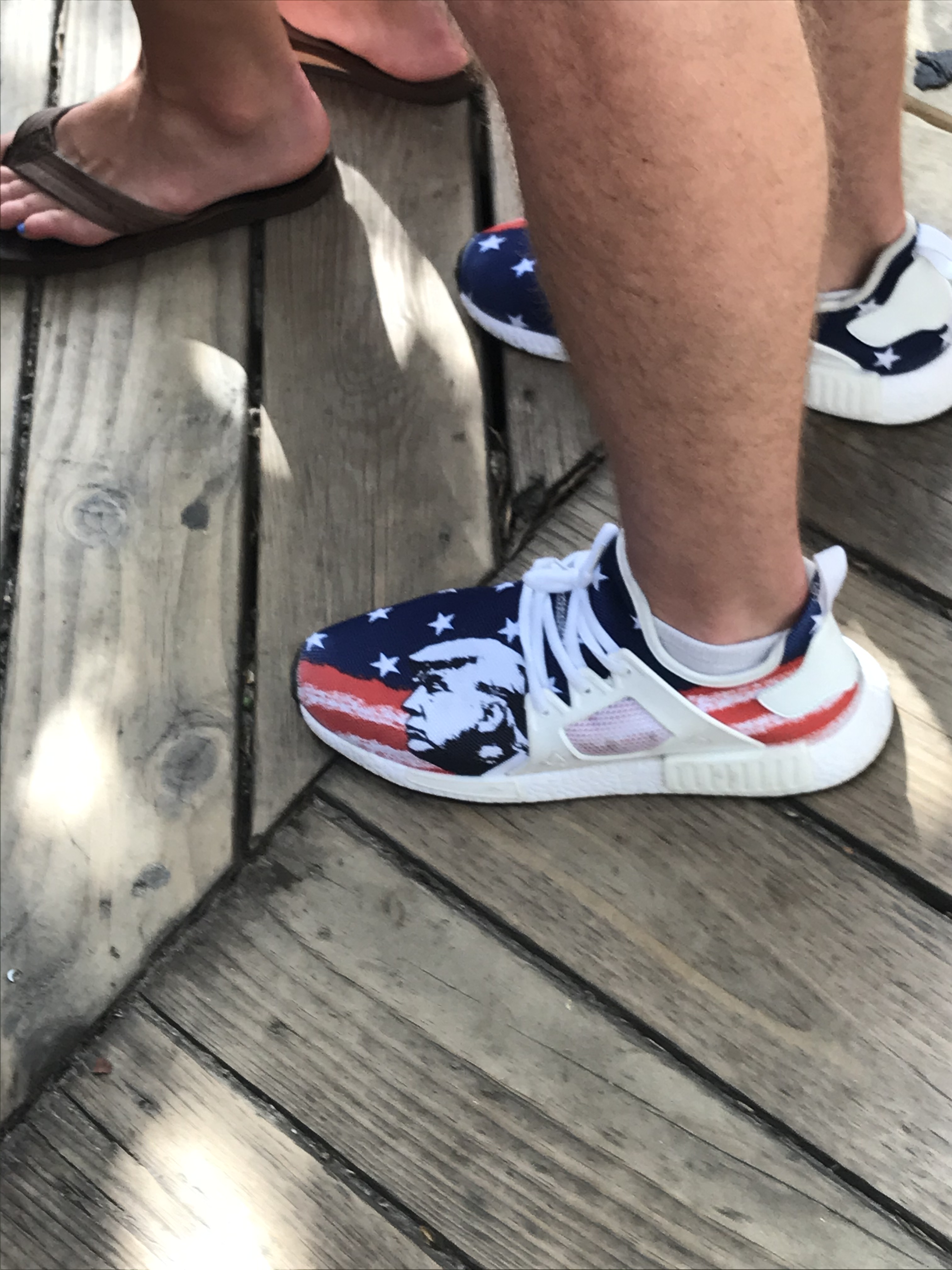
While we were there, a very strange thing occurred.  A group of Trump cultists clad in regalia honoring their orange icon descended upon the bar, ignoring social distancing, and it occurred to me that perhaps they are seeking a Jones Town and/or Heaven’s Gate-like tribute in honor of the master.

Anyway, here are a couple of photos.

I recently read on Twitter, that infallible source of information, President Trump suffers from arrested development, that he actually possesses the emotional behavioral quotient of a toddler. Of course, this can’t be true, but, damn, after reading the piece, every photo I run across of the president, he looks like a three-year-old.

trump toddler copy

Trump toddler

Just goes to show you how potent the power of suggestion can be.

Farewell, Porter-Gaud Class of 2020

DJI_0125-L

photo of Class of 2020’s Day of Caring lifted fro Porter-Gaud’s website

I’m distressed that Porter-Gaud’s sterling class of 2020 cannot celebrate publicly the important rite of high school graduation. Last night, they should have donned their flowered dresses and seersucker suits to celebrate baccalaureate at the Church of the Holy Communion on Ashley Avenue. Beforehand, I would have ducked into a nearby bar, Fuel, and consumed two IPAs, then jauntily rounded the corner on foot to greet the progression of faculty members and seniors waiting in front of the church. Everyone would be smiling, the parents proud, the siblings impatient, looking forward to it being over.

Once inside, I would gaze up at the Jesus-of-Color who looks over the congregation from the stained glass behind the altar, listen to the lovely choral music, watch the senior choir members leave the altar and disappear backstage[1] to shed their robes. Then they would reemerge and take their seats with the rest of the graduating class, a transition fraught with emotion. Finally, I would strain my ears to try to catch the homily but undoubtedly fail, my hearing having been destroyed by the Rolling Stones, Bruce Springsteen, and heredity. The final “amen” would be intoned, the seniors would march out nodding and smiling to the congregation as they headed for the freedom of the late afternoon sunlight, fading, the last few hours of their childhoods fading.

church

Church of the Holy Communion

I feel a special connection to this class. They were with me during my late wife’s illness and death. I especially remember teaching a short story to two sections of them as 9th graders on Skype from Houston where Judy was getting consultations, a melancholy prelude to the last weeks of their education.  I also taught three sections of them as sophomores the next year when Judy died.

Porter-Gaud undeservedly has the reputation with some in the community of being  a haven for “a bunch of spoiled rich kids,” but it’s a terrible misrepresentation. Just ask the leaders of Charleston’s charitable organizations. They’ll set you straight. When I returned to school the Wednesday after Judy’s death, all three of the whiteboards in my classroom had been covered with their hand-written condolences and sweetly drawn hearts and musical notes.

board

Love manifest.

What a remarkable group of young people, talented in so many different ways. I would love to hear the graduation speeches, discover who has won the academic awards, and watch each receive that hard-earned diploma, but, of course, it’s impossible. Pandemics are indifferent to sentimentality.

A few years ago, our Head of School asked me if I knew of a suitable poem that he might read at graduation, and I suggested this one:

To a Daughter Leaving Home

When I taught you

at eight to ride

a bicycle, loping along

beside you

as you wobbled away

on two round wheels,

my own mouth rounding

in surprise when you pulled

ahead down the curved

path of the park,

I kept waiting

for the thud

of your crash as I

sprinted to catch up,

while you grew

smaller, more breakable

with distance,

pumping, pumping

for your life, screaming

with laughter,

the hair flapping

behind you like a

handkerchief waving

goodbye.

—Linda Pastan


I know they’ll be fine. They’ll certainly get over this disappointment – even make wry jokes about it  – but I did want to honor them in some small way and to let them know that I wish I could say goodbye in person and that they will not be forgotten.


[1] Bad role model that I am, I’m too lazy to look up the correct ecclesiastical term. PS. Update, a friend of mine who is a priest has enlightened me: “In ecclesiastical terms, they left the sanctuary via the sacristy and chapel and re-entered the nave to be seated with their classmates. ” Hat tip to Brian McGreevy.

A Statistical Foray into the Funkification Ratios that Separate Folly Beach, SC from the Isle of Palms and Sullivans Island (Not to Mention Kiawah)

bill's art installation

photo by Caroline Tigner Moore

To say Folly Beach is peculiar is to say the sun is hot, night is dark, and that Marty Feldman never graced the cover of People magazine as the “Sexiest Man Alive.”  After all, Folly Beach is – in the now famous phrase coined by my friend and former boss Bill Perry – the Edge of America.[1]

marty

the late great Marty Feldman

I’ve always liked the sound of the word peculiar. According to my very own OED  (whose print Superman with telescopic vision would have difficulty decoding), peculiar comes to English from the Latin peculium, originally meaning “property in cattle.” That cow over there – let’s call her Elsa –  belongs to US Representative Devin Nunes. She’s peculiar to Representative Nunes in that she’s his alone. She’s peculiar to him.  But it’s also peculiar that Devin Nunes is suing the cow known as “Devin Nunes’ Cow.” I’m not making this up. [2]

Over time, as words are wont to do, the definition of “peculiar” branched out from the pasture of private ownership and took on the meaning of being different from others. Not surprisingly, being different acquired somewhat of a negative connotation, because to many, especially those intent on keeping up with the Joneses, being different (or unusual) is often not a good thing.

No PR person would ever come up with the phrase “Edge of America” to promote Kiawah Island. Kiawah doesn’t mind being different in an exclusive or unique way, but it certainly doesn’t want to come off as edgy, and it’s succeeded. Kiawah is about as edgy as Jack Nicklaus.

Not to be confused with Jack Nicholson.  I remember seeing an interview with Jack Nicholson not long after the actor Hugh Grant’s arrest for solicitation. The interviewer (maybe Barbra Walters) asked Jack why someone rich and good-looking and married to a beautiful woman (i.e., someone like Hugh Grant) would require the services of a prostitute.

“Peculiarities,” Jack said with his trademark leer, “peculiarities.”

So another denotation of peculiar  – actually the number one denotation – is “strange or odd,” like walking in “polka dots and checkered slacks,” to borrow a phrase from Elvis Costello (and to avoid examples of possible outré sexual inclinations that might have prompted Mr. Grant to seek peculiar connubial pleasures outside the bounds of his marriage).

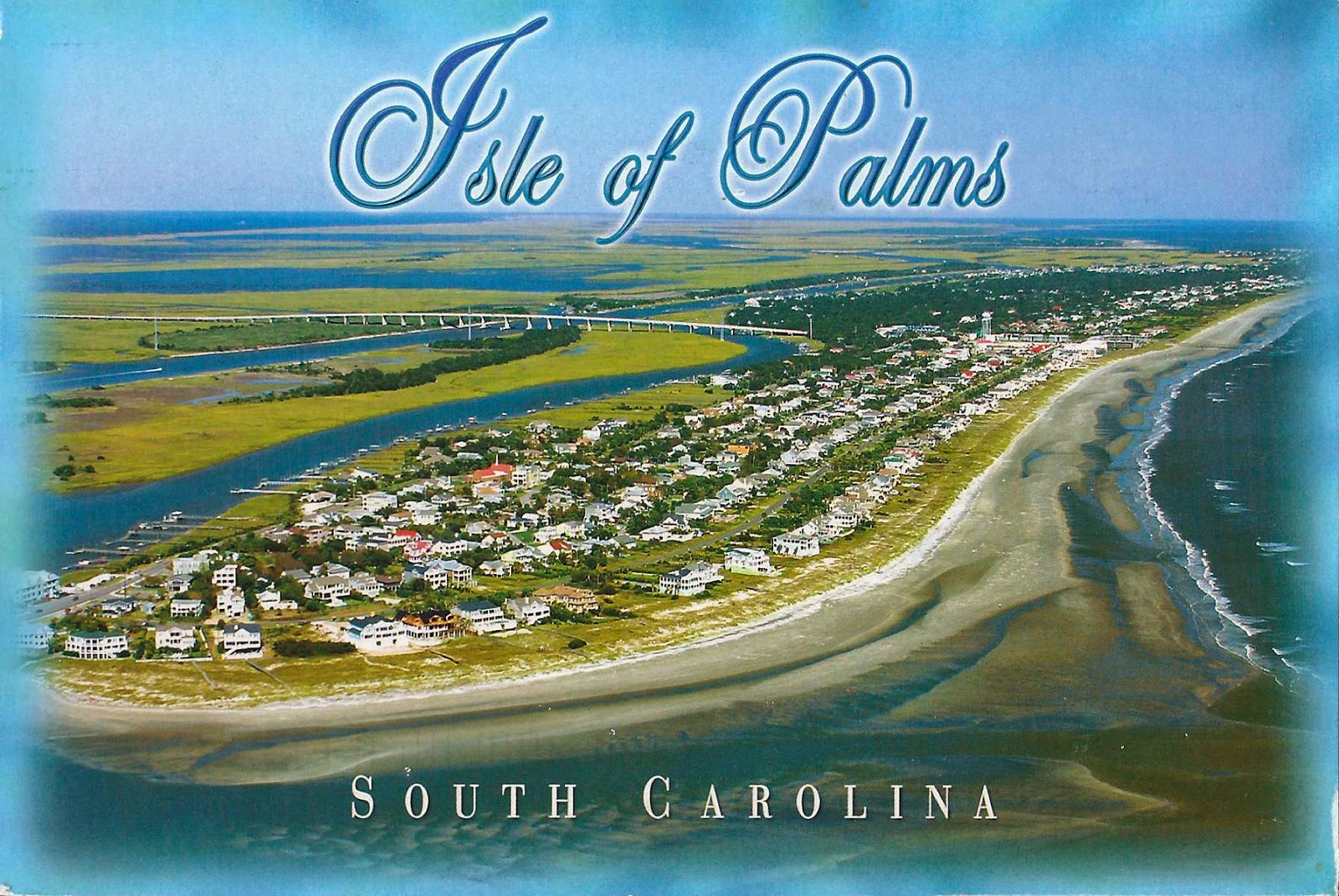
Good God, I’ve wandered far afield from paragraph one. Actually, what I want to know is what makes so Folly different from its barrier island neighbors, the Isle of Palms and Sullivans Island?  What is it about Folly that makes it so peculiar?

folly pc

IOP pc

usa-south-carolina-sullivans-island

To attempt to find the answer to this ultimately useless question, I did some googling on Yahoo (mixed metaphors is where it’s at) and compared the demographics of the three island communities.[3]

2021 Population:

Folly Beach  1,035 (61.15% 1-year decline!)

Isle of Palms 4,318 (1.21% 1-year decline)

Sullivan’s Island 2,220 (.09% 1-year increase)

2021 Median Ages

Folly Beach 62 (18.3% 1 year increase)

Isle of Palms 51.7 (3.54% 1-year decline)

Sullivans Island 51.7 (strange that Sullivan’s and IOP’s median age is exactly the same)

Once again, Folly is the median.

2021 Poverty Rate

Folly Beach 16.2% (61.3% 1-year increase)

Isle of Palms 2.51% (2.43% 1-year decrease)

Sullivan’s Island 10.1%

2021 Median Household Income

Folly Beach

$76,250 (14.3% 1-year decline)

Isle of Palms

$134,917 (4.97% 1-year growth)

Sullivan’s Island

$229,118

Median 2021 Property Value

Folly Beach $632,700 (1.36% 1-year growth)

Isle of Palms $883,200 (8.33% 1-year growth)

Sullivan’s Island $2,000,001

Ethnicity

Folly Beach 100% (non-Hispanic) white

Isle of Palms  96.2% (non-Hispanic) white, Asian (non-Hispanic) 1.97% Other (Hispanic 0.556%), and White (Hispanic) 0.44%

Sullivan’s Island 100% (non-Hispanic) white

Average commute time

Folly Beach  24.6 minutes

Isle of Palms 27.9 minutes 

Sullivan’s Island 16.7 minutes

Conclusion

So let’s face it. That was a waste of time. If you’re going to come up with an answer, demographics aren’t going to help. You need to go maybe to history or —

Wait, Caroline just popped into the drafty garret to ask what I was up to, so I told her I was trying to determine via demographics why Folly was more peculiar, funkier, than the IOP and Sullivans.

“More barstools per capita,” she immediately said.

Damn!  Being so much smarter, why in the hell do women make so much less than men?

Yes, Caroline: Planet Follywood, Sunset Cay, the Washout, Jack of Cups, Drop-In, Loggerheads, the Crab Shack, Taco Boy, Coconut Joe’s, Lowlife, The Bounty Bar, Rita’s, the Tides, Chico Feo.

I’m sure I’m leaving somebody out – and except for one, none of them smack of commerciality.


[1] Wisely, Bill copyrighted the phrase.

[2] https://www.latimes.com/opinion/story/2019-10-20/abcarian-sunday-column

[3] Data for Folly and IOP from Data USA, Sullivans Island from various sources.

In Living Memory

Patchwork_Face_1997_Oil_pastel_75_x_55_cm


In memory of Judy, on the anniversary of her death, a villanelle about Everyday Use and the grafting of new life, in which she has the last word ~  Caroline Tigner Moore


In Living Memory
a villanelle

There hangs a patchwork quilt above our bed
A stained and storied past in pastoral,
Skylit purple, indian summer red;

Clary, sea glass stitched with auburn thread.
Tuck to rimple, soft in autumn’s thrall,
A damocletian quilt above our heads.

Aboard the river bark where we were wed,
The innocents stood by in quiet pall
As each we swore to share our daily bread.

And like a bruise that first appears bright red
Then blue and green and ochre in its sprawl
We lay this patchwork quilt across our bed.

So stitch together prints of all our dead,
In orisons, from labyrinthine walls.
Her face was viridescent while she bled,

But now at peace… and lovely overhead,
A Pride of India[1] shades her, green and tall.
Here lies a patchwork quilt across our bed.
“What you see is what you get,” she said.

Caroline Tigner Moore


[1] “Pride of India” is an alternate name for a crepe myrtle.

Romanticizing Defeat

hopper

Edward Hopper

Any sports fan who grew up in the Sixties has seen the intro to ABC’s Wide World of Sports hundreds, maybe, over a thousand times:


Of course, here, “the agony of defeat” makes better theater than “the thrill of victory.” Watching fans hoisting a futbol hero on their triumphant shoulders or a grand prix racer popping a cork in the winner’s circle lacks the high drama of witnessing an Olympian pinwheeling off of a ski jump ramp or a motorcyclist skipping stone-like across a lake of asphalt.

Even as exhilarating as it is to see a big wave surfer survive a precipitous drop and then ascend the crashing slope of a breaking avalanche, I’m still not sure that it produces the vicarious adrenaline rush of one of those Wagnerian wipeouts that make you grit your teeth and shudder in wonder. [Warning, in addition to harrowing wipeouts, this compilation has a soundtrack that might make Sid Vicious cringe].


* * *

If you’re a Southerner born near Charleston, South Carolina, in the early Fifties, you grew up in the shadow of defeat. When I was a child, the “War” my granddaddies talked about wasn’t Korea, or WW2, or the Great War, or the Spanish American War. It was the War Between the States.[1]

Among the fanatical, that defeat was a miasma that hung in the air like an enervating narcotic.  My friend Don Doyle convincingly argues in New Men, New Cities, New South: Atlanta, Nashville, Charleston, Mobile, 1860-1910 that citizens from Charleston and Mobile were so traumatized after Appomattox that they couldn’t bring themselves to do business with Northerners,[2] perceiving it as treasonous – unlike folk from Atlanta and Nashville. While those two cities readjusted to postwar changes and modernized, Charleston and Mobile stubbornly wallowed in the romanticizing of the Lost Cause, rationalized that defeat was somehow noble­ –  tragedy, after all, being the highest of literary genres.

As late as 1988, VS Naipaul in the New Yorker wrote about his visit to Charleston when he interviewed a non-Reconstructed blue blood celibate who monklike had abandoned all worldly pleasures for a life devoted to lamenting the fall of the Confederacy.  I think I encountered this person in 1978 when my late wife Judy and I lived on Limehouse Street, a block from the Battery. You could see this fellow – or one like him – assume catatonic postures as he stared out towards Ft. Sumter, not moving a muscle for something like twenty minutes. He almost seemed like an apparition.

So, if you grew up in this culture, a culture that had fetishized defeat, and you were cursed with a Romantic bent of mind, you might come to see defeat as inevitable, or worse, as preferable – defeat being more Romantic.  Yeats masterfully expresses that sentiment in a gorgeous ottava rima stanza whose beauty deepens the tragedy because you realize that Yeats’ canon, too, will be disappear when the annals of civilization are wiped away.

He who can read the signs nor sink unmanned

Into the half-deceit of some intoxicant

From shallow wits; who knows no work can stand,

Whether health, wealth or peace of mind were spent

On master-work of intellect or hand,

No honour leave its mighty monument,

Has but one comfort left:  all triumph would

But break upon his ghostly solitude.

                        “Nineteen-Hundred and Nineteen”


Indeed, there might be some truth to idea that defeat builds character in the Dostoyevskian sense of suffering being good as a regimen for redemption, or even if, like me, you think eternal life seems as about as likely as Dan Brown’s receiving the Nobel Prize in literature, repetitious disappointment can, if you live long enough, inure you, to reverse Gerard Manley Hopkins – “More pangs will, schooled at forepangs, [less] wilder wring.”

IMG_8919

photograph by Caroline Tigner Moore

But let’s get real. Losing sucks, as does the pathology of obsessively dwelling on lost causes, whether they be wars, loved ones, or championships. Although the season of spring has been a time of loss for me in the past, I’m making the most of this spring’s beautiful weather, sitting each afternoon on the deck with my beloved wife Caroline talking about literature and art, checking out the play of light and shadow on the spartina, noting the mated robins who nest nearby as they dart back and forth, reveling in how much clearer the air seems, going through the photos Caroline has taken of Folly during the quarantine, discovering through them hidden gems never before noticed, treasuring the rich life afforded us on this funky, narrow strip of a barrier island we call home.

IMG_9185


[1] I never heard any of my people call it the War of Northern Aggression, and I always called it the Civil War myself without ever being reprimanded.

[2] cf. Southern governors refusing federal stimulus money.


If Richard Wilbur Were Alive and a Much Less Talented Poet, He Might Write Something Like This about This Latest Quarantine


Greenblatt-Shakespeare


If Richard Wilbur Were Alive and a Much Less Talented Poet, He Might Write Something Like This about This Latest Quarantine


Master Will didn’t waste his time,

When the authorities shut down the Globe.

Stuck at home, he wrote King Lear.

Deep into the dark he dove.


Sixty years later, when the plague returned,

Sir Isaac, too, avoided idleness.

Sitting beneath an apple tree,

He invented calculus.


No obsessive tweeting for those two,

No staring all day at computer screens.

They found much better things to do

Than reposting the latest kitty memes.


201712_Why-Poetry-Matters_Article