Okay, as I write this, President Trump languishes at Walter Reed Hospital battling a virus he claims was a “hoax” and would “magically disappear.” Four years ago, he mocked Hillary Clinton’s locomotion and coughing as she suffered from a short-lived bout of pneumonia.
Ironic? Karmic? Or both?
I like to think of karma and irony as a sort of comedy duo, a married couple, Karma, the female more powerful and profound, and Irony as male, wisecracking, cynical. They travel hand-in-hand around and around the crumbling empire of post-Modernism, she acting, he reacting, she detached, he involved. It’s a symbiotic relationship that can help educate us about the benefits and perils of good and bad behavior, so it’s helpful to be able to distinguish one from the other, to discern their similarities and differences.
Trump Mocking Hillary’s Pneumonia
Irony, of course, is often misunderstood, mistaken for coincidence, as it is throughout the Alanis Morrisette song “Ironic.”
[Irony’s] like rain on your wedding day It’s a free ride when you’ve already paid . . .
Of course, precipitation on your wedding day isn’t ironic, that is, unless it’s a destination wedding in the McMurdo Dry Valleys of Antarctica.[1] A free ride when you’ve already paid isn’t a free ride. The song “Ironic” isn’t ironic, which stupidly makes it sort of ironic.
Bone fide irony is all about incongruence, the discrepancy between expectation and reality.
I sometimes run across the phrase “irony is dead” when a commentator is highlighting some blatant act of ignored hypocrisy. However, the failure of people to perceive the incongruences that create irony doesn’t mean that irony is dead; it merely demonstrates that irony is dead to them.[2]
Yes, Trump’s calling a disease that smites him a hoax is somewhat ironic, only somewhat because you might not be surprised that a foolish man who flips off science ends up regretting it. However, it is ultimately ironic because, unlike rain on a wedding day, getting ill from a virus you claim is a hoax is incongruent.
What’s not ironic is that Trump’s flaunting of safety protocols, like not wearing masks and eschewing social distancing, has resulted in his infection. That’s karmic.
Karma, कर्म in Sanskrit, means action; karma’s all about cause and effect, as in the cliche “what goes around comes around.” Is mocking Hillary’s illness the reason Trump’s now fallen ill? Is it karmic? Only in the sense that it’s indicative of his modus operandi of defying human norms of decent behavior, of embracing a hubris that distorts his perceptions of reality, of cultivating a false sense of invulnerability. Actions such as these will eventually, as the vulgar say, “come and bite you in the ass.”
[2] I remember fondly Misahn Bootay’s response Donald Trump’s tweet proclaiming “The Democrat [health] plan would obliterate Obamacare” during the 2016 midterm elections:
“Not only is irony dead,” he tweeted, “but it’s grave has been dug up and it’s been dressed in gaudy finery and paraded through the streets like the decaying corpse of a medieval pope.”
I wondered the other day is there’s even such a thing as “conservative poets” anymore.[1]
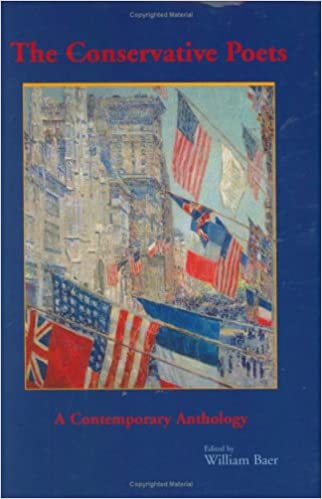
Well, it didn’t take me long to discover an anthology entitled The Conservative Poets: A Contemporary Anthology, edited by William Baer, who offers this estimation of the contemporary literary landscape:
Although it often seems that liberals and the radical Left have assumed complete hegemony over the arts, especially the literary arts, there exists a remnant of very talented American poets who create beautiful, serious, witty, moving, and diverse poetry from a conservative point of view. This unique anthology illustrates the wide range of these determined and sometimes defiant artists, who hope that their work will encourage more like-minded Americans to learn the poetic craft and pursue the literary endeavor.
By the way, Baer is a genuine scholar. Here’s his bio from Amazon:
WILLIAM BAER is the author of ten books, including ” ‘Borges’ and Other Sonnets”; “Fourteen on Form: Conversations with Poets”; “Luis de Camoes: Selected Sonnets”; and “Writing Metrical Poetry”. The Founding editor of “The Formalist: A Journal of Metrical Poetry” (1990-2004), he is currently the director of the Richard Wilbur Poetry Series, the poetry editor and film critic for “Crisis,” and a contributing editor to “Measure.”
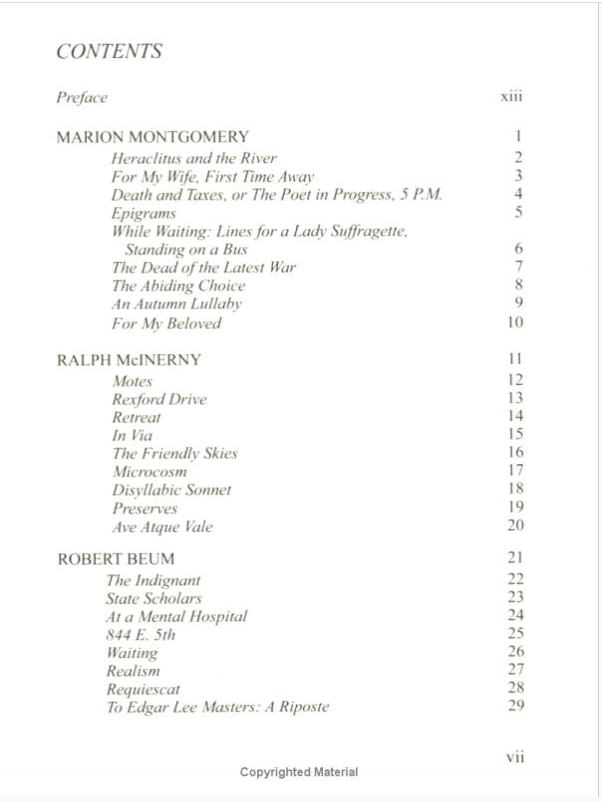
Here’s a screenshot of the table of contents.
I tried to track down some of these poets, only to discover most had, to quote Richard Wilbur himself, “gone from this rotten/Taxable world to a standard of higher living.” The late Marion Montgomery’s “While Waiting: Lines for a Lady Suffragette, Standing on a Bus” certainly seems to adhere in some ways to an antifeminist’s view of what Montgomery might call the “fair sex.”
Ah, Lady. Ah. It is a stirring sight.
Franchisement by the gods is now complete.
You now have won the inalienable right
Of standing on your own two feet.
Alas, Montgomery checked out of this Motel 6 of Sorrow in the penultimate year of W’s second term, so it would not be accurate to name him as a conservative poet writing today.
Editor Baer in his preface admits that most of the anthologized poems’ conservatism lies in their traditional forms rather than politics, but adds, “Some, myself included, would even tend to see meter as a poetic representation of the provident order of God’s universe.”[2]
So I continued my search and found a website from 2016 called Scholars & Writers for America. Beneath its banner this: “Given our choices in the presidential election, we believe that Donald J. Trump is the candidate most likely to restore the promise of America, and we urge you to support him as we do.”
Scrolling down my screen past names like Burton W Folsom, Jr., author of The Myth of the Robber Barons and Steve Mosher of the Population Research Institute looking for a poets or novelists, I discovered, to my delight, at the bottom of the screen, Thomas C McCollum, novelist.
Here’s the second paragraph of text from McCollum’s website, from an article by Louise Cook, the editor of Absolute Marbella Magazine:
If one were to view all aspects of Thomas McCollum’s professional and avocational life, one might be very tempted to call him a Renaissance man–albeit with a strong entrepreneurial bent. Wisely McCollum leaves all such pretentions to others, preferring the doing rather than the talking about.
What follows is a most-interesting-man-in-the-world litany: Can-Am racing, bull running in Pamplona [Spain she helpfully adds], man-eating crocodile hunting, a golf-addiction, insurance sales, original pen and ink drawings street-corner sales, med-school matriculation, med-school abandonment, medical laboratory founding, medical laboratory selling, retirement to Marbella, Spain, “to live out all the fantasies of his youth. He has camped, safaried, and traveled to every continent on earth.”[3]
McCollum has published four novels: Whipsocket, Tainted Blood, Palmer Lake, and Uncle Norm.
Here are the first and last sentences from Publisher Weekly’s review of Tainted Blood.
Readers willing to suspend disbelief beyond belief may find McCollum’s first novel an interesting medical thriller; others will be dismayed by characters manipulated by incredible plot contrivances.
McCollum makes the medical details microscopically authentic, but too many standard diatribes against government agencies, characters who speak polemic as often as they do dialogue and a conclusion that’s painfully anticlimactic render a hot topic tepid. (my italics)
Now compare that MSM review to this one for Uncle Norm from Christopher Feigum, Grammy Award winner and Metropolitan Opera Singer:
“Thomas McCollum has delivered a book of operatic proportions…a tale full of intrigue that tempts us to explore the what ifs of life and the possibility of encountering one profound love. Whether he is delighting pygmies with donuts or sharing his smuggled discoveries along the way, Uncle Norm is a warm, comical hero deeply connected to his fellow lost soul in the Congo, Ottobah Cuguano, and their shared faith in everlasting friendship. As they strive to break down racial barriers and transform the world, their adventures amaze the restless traveler in all of us. This timely piece is a declaration that we each have the choice to leave behind a better place than we found.”
Oh, yeah. There is also this snippet from of all places, Publisher’s Weekly describing Tainted Blood: “an interesting thriller…McCollum makes the adventure microscopically authentic.” Hmmm. “an interesting thriller . . . microscopically authentic.” Where have I seen that before?
So anyway, if you happen to be a Trump supporter who feels somewhat culturally isolated, there are indeed “conservative” literary artists out there working today, maybe not on the analogous level of Jon Voight and Bruce Willis, but they are out there.
[1] I don’t mean conservative in the old-fashioned sense of embracing traditional values and being skeptical of innovation, like Alexander Pope, but in its contemporary sense of someone rejects the Enlightenment and institutions of liberal democracy.
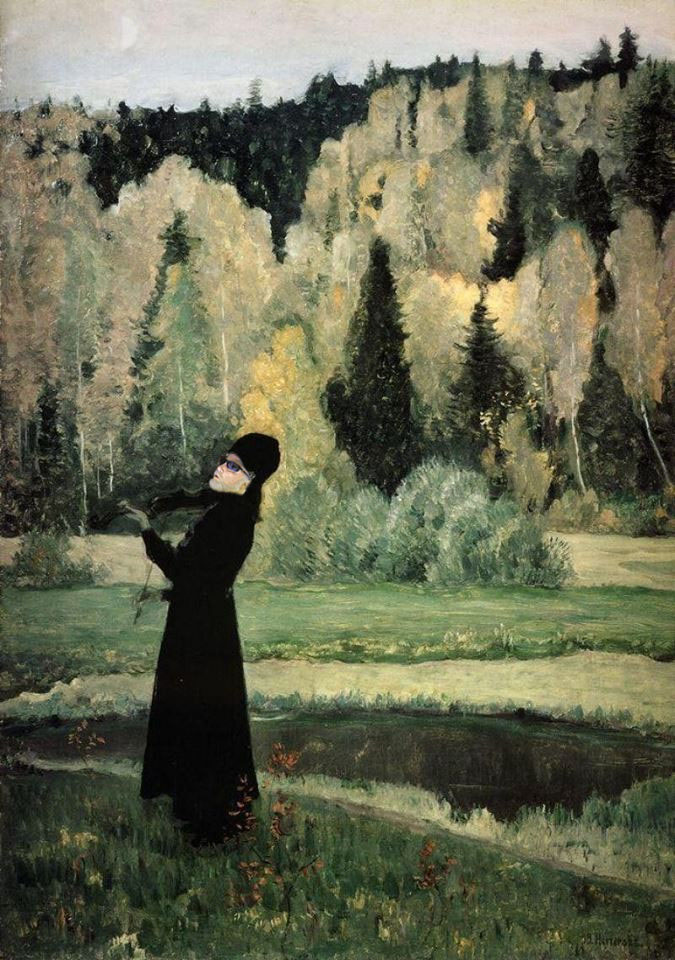
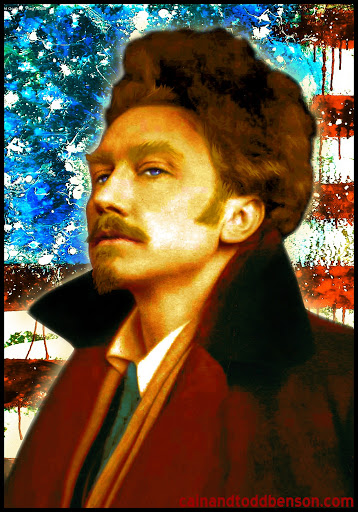
“Elegy: Blind Musician” by Mikhail Vasilevich (photoshopped by I-and-I)
. . . I need not rehearse The rosebuds-theme of centuries of verse.
Richard Wilbur, “A Late Aubade”
Although posthumous fame is essentially worthless to what Perry Mason and Hamilton Burger call the decedent,[1] humans tend to want to be remembered after their deaths, hence tombstones, epitaphs, and those memorial verses we find on obituary pages. As I have no doubt mentioned before, I actually enjoy reading the obituary page, even the obituaries of complete strangers. Perhaps it’s the poet in me who is interested in how the writer goes about compressing a life into the narrow confines of a column of newsprint.[2] Generally, however, I skip the memorial verses, which are generally godawful jingles heavy on end rhyme.
For example, below you’ll find a bit of elegiac verse I copped from a publication called National Post. On its website, I found a page devoted to “Memorial Verses” with this option:
Choose a verse from the appropriate category. Alternatively you may want to copy and paste the verse into the place a notice order form. When placing a notice, please identify the verse by its number to your Classified Telesales Representative. You may also change any of the verses or write your own.
Conveniently, the editors have classified verses by relationships: “Mother, Sister, or Daughter; Father, Brother, or Son; Wife or Husband; Children; Friend or Kin; Armed Forces; Prayer Corner.”
Here’s the first choice listed for a mother.
A wonderful mother, woman and aide, One who was better God never made; A wonderful worker, so loyal and true, One in a million, that mother was you. Just in your judgment, always right; Honest and liberal, ever upright; Loved by your friends and all whom you knew Our wonderful mother, that mother was you.
Of course, in my native state of South Carolina, not many would want to tar the woman who labored to bring them into the world with that vile word “liberal.” Last night during the debate between Nancy Mace and Joe Cunningham, the former used the word “democrat” and “liberal” as if they were synonymous with depravity.
Thank (in this case, given the diction of the verse) God that the purchaser has the option of changing the diction.
Just in your judgement, always right;
Honest and reactionary, ever upright.
Indeed the alliteration in “right” and “reactionary” and “upright” is an auditory improvement.
So it has occurred to me that in my retirement from teaching, I could make a few extra bucks composing memorial verses.
Let’s face it, almost anyone could do better than whoever wrote the above abomination. I mean, the syntax of “One who was better God never made” is so tortured it’s possibly in violation of the Geneva Convention.
Perhaps I could target sentimental agnostics and atheists who want their loved ones remembered, but less hyperbolically.
Our mother has succumbed to a terminal disease,
A mother who taught us manners, to say “please”
And “thank you” and “may” instead of “can,”
Who raised us without the help of a man,
Our deadbeat dad who skipped town one night,
Forever disappearing in dishonorable flight.
Yet, Mom endured life’s hardships with stoic good grace,
An exemplary example for the human race.
Loved by her friends, her children, and pets,
We appreciate that she tried her very best.
Good night, deceased mother, may you rest in peace
Safe in the cliché of death’s eternal sleep.
What do you think? Should I give it a try? Bill myself for the hours and then write it off my taxes? Anyway, if you’re in the market – fortune forbid – you know how to get in touch.
[1] This reminds me of a bit of dialogue from a WC Fields movie I ran across yesterday thanks to my pal Ballard Lesemann. A patron at a bar says to Fields, the bartender, “I understand you buried your wife a few years ago,” and Fields replies, “Yes, I had to. She was dead.”
[2] Unfortunately, I myself have become a somewhat prolific obituary writer, having composed posthumous bios for both my father and mother-in-law, my own parents, my maternal aunt and uncle, and for my beloved Judy Birdsong. The stylistic part is not easy. The memorialist needs to deftly insert introductory subordinate phrases and clauses to break the monotony of fact-filled declarative sentences.
angelheaded hipsters burning for the ancient heavenly connection to the starry dynamo in the machinery of night
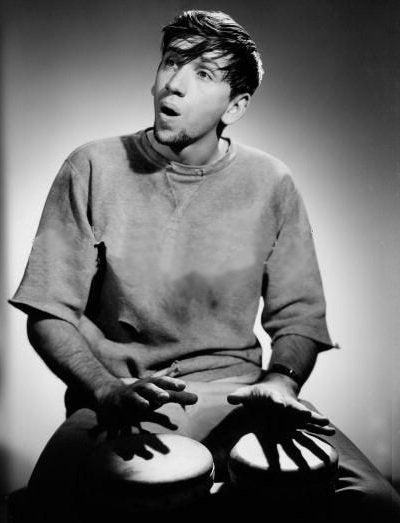
Born in December of 1952 in the small South Carolina town of Summerville, I missed out on the Beatniks, except, of course, for Maynard G Krebs, the goateed bongo-bopping pal of Dobie Gillis in the sitcom that ran from 1959-63.[1]
Bob Denver as Maynard G. Krebs
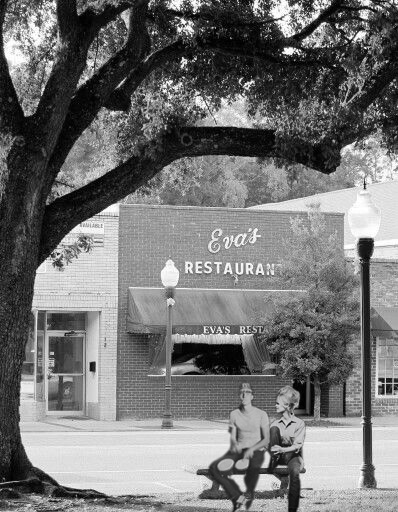
If Summerville had any beatniks, I never ran into them in my family excursions to the Cub Drive-In, Eva’s, or the Piggly Wiggly. I’m pretty sure we didn’t have a coffee shop in the sense of a bohemian hangout where beret-wearing malcontents high on MaryJane passed around copies of Alan Ginsberg’s Howl.
It’s too bad because I happen to think that bohemian cultures are healthy counterbalances to potentially stifling conformity. When I taught at Porter-Gaud, after the Magnet School of the Arts opened, we lost a slew of our countercultural students, i.e., nearly all of our liberals, and so without safety in numbers, fewer divergent thinkers were willing express unpopular opinions, which, of course, can led to smug complacency, especially in a community that lacks economic diversity. Plus, occasionally it’s fun to encounter a hep-cat daddy-o sporting a black turtleneck and straight-legged cigarette pants.[2]
So when did Summerville begin to develop a counterculture you may – but I doubt it – wonder? From my admittedly fogbound memory, I’m going to peg the year as 1965 and credit surfers as the first countercultural subgroup of Summerville.
Back in those days, at Spann Junior High, PE classes weren’t divided into grades, but 7th, 8th, and 9th graders met en masse during whatever period you happened to have PE. After playing football or basketball or softball, we were supposed to take showers, which could be a tad bit uncomfortable, depending upon whatever stage of hormonal transformation you happened to find yourself.[3] Anyway, one afternoon when we were showering after PE, someone shouted, “Are there any surfers in here?” One of my fellow 7th graders, I think it might have been Joe Dorn, answered enthusiastically, “I am” and was met with a basso chorus of “Surfers suck!”
This rather unsettling incident occurred right about the time a fellow named Greg Nutt arrived at Summerville High from California. Greg sported longish blonde hair, horizonal striped shirts, white jeans, and spoke in that somewhat whiny affected accent we associate with California. Greg claimed to have had some musical connection with the Beach Boys and played drums in a really good band called the Pendleton’s.[4] Greg was a charismatic cat, as we jazz enthusiasts like to say, and after the administration booked the band for a pep rally before a big game against archrival Berkeley, the animosity against surfing abated somewhat. The Pendleton’s performed killer covers of “Pipeline” and “Wipe Out,” and it would take one cold-blooded adolescent not to get off on that the drum solo from “Wipe Out.” In fact, Greg might have been the first non-football player who achieved some degree of celebrity at Summerville High.
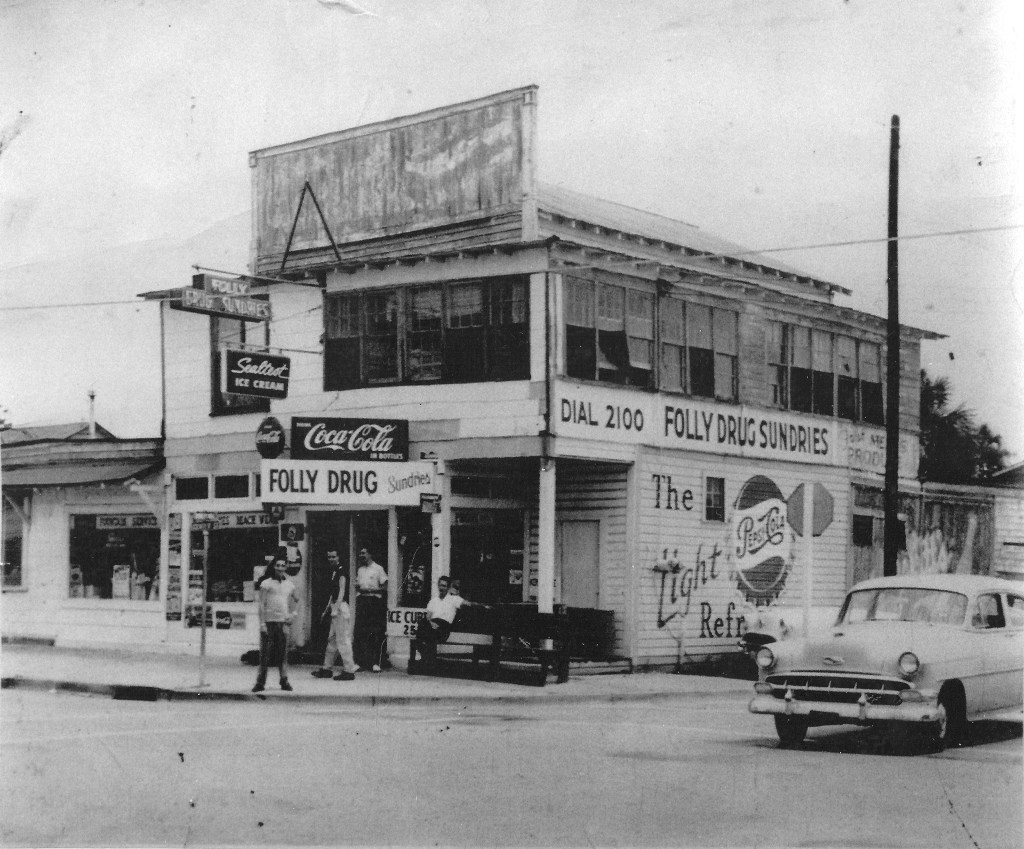
And so more and more of Summerville’s youth turned to surfing, despite the long trip to Folly Beach in those wireless days when you had to call long distance to McKevlin’s to get a not very up-to-date and perhaps enhanced surf report.
What one day would become Snapper Jack’s on Folly Beach
And to be a surfer, you wanted to look like a surfer, which meant long hair and flipflops as opposed to flattops and tasseled alligator loafers. Ven Diagrams of surfer and hippie costumes share a large swath of concentric shading, and on 15 October 1969, the day of the Moratorium to end the Viet Nam War, many of the Summerville High students who wore black armbands were surfers.
Thus, the counterculture had arrived for sure in Flowertown, which meant marijuana, LSD, and all that jazz heavy metal. Bye-Bye American pie; hello tie-dye.[5]
[1] Maynard was played by Bob Denver, who became much more famous as asexual Gilligan, the most famous castaway this side of Robinson Crusoe.
[2] On the other hand, too much of a good thing can be equally offputting; a completely countercultural community can be just as conformist in its own way as a country club. As much as I like Asheville, I sometimes wish I’d run across someone sporting a polo shirt and pair of khakis.
[3] Alas, puberty had yet to even knock on my door when I was a seventh grader, so showering among 9th graders who had failed a grade or so was, shall we say, unfun.
[4] Greg also played the sousaphone in the marching band where I encountered him in my short-lived gig of pantomiming playing the clarinet in that group.
[5] By the way, my friend Tim Miskell was the first to bring the art of tie-dying to Summerville. He had sneaked off to his old stomping ground of Croton-on-the-Hudson, which was, not surprisingly, much hipper than Summerville, and upon his return started tie-dying his friends’ t-shirts and bell bottoms for a nominal fee.
For me, one particularly melancholic aspect of the death of my elders is the loss of family lore, no more tales from my father, mother, grandparents, or great aunts. If I could recoup some of the precious time I squandered in my younger days – hours wasted bouncing tennis balls off the side of our house, watching Saturday cartoons, or later, sitting at bars solving crossword puzzles – I would reinvest some of that recaptured time asking follow-up questions to my kinfolk about some of the stories they used to tell.
Now, in my own old age, questions arise that I cannot answer. For example, it seems that no one in my family except my Uncle David had a church wedding. My maternal grandparents and my parents both eloped, Hazelwood Ursula Hunt running off with Kistler Jerome Blanton in the 1930s, my parents following suit a generation later. As Springsteen puts it in “The River,” “No wedding days smiles, no walk down the aisles, no flowers, no wedding dress.”
And I might add, no photographs.
According to my mother, her father Kistler had to quit school in the third grade because his pipe-smoking raw-boned Scots-Irish mother demanded that he not waste his time on abstractions like reading, writing, and arithmetic. After all, there was hard money to be made with child labor. Kiki, as we called him, was born in 1901, so his dropping out would have occurred in 1910 or 1911. But was my mother’s memory accurate? Could it have been the fifth or sixth grade? Weren’t there truant officers? Kiki seemed pretty damned literate for someone with a third-grade education, but then again, he never wrote me a letter or sent me a birthday card, so who’s to say?
That he was “dirt poor” is beyond a doubt, unlike his future bride Hazel who grew up on a prosperous farm in Branchville, South Carolina, her mother a Fairy (as in Shepard Fairy, a distant cousin). The Fairys arrived in the Palmetto State before the Revolution so I guess would qualify for the DAR.
Anyway, how did these two meet? They say Kiki sang in some kind of quartet that performed in various venues. Mama Blanton, as we called Hazelwood, played the piano. Did their music bring them together? Did they meet at a dance? A church? A party? How did they pull off their great escape? Who hitched them? Where did they stay? What was their parents’ reactions when they found out? I have no idea, only know that their marriage ended up being a separate bedroom arrangement, and I never once saw them embrace, much less kiss.
The Hunts were God-fearing Baptists, the Blanton’s not so much. Now that I think of it, the Hunts were atypical Southerners in that they didn’t really tell stories. I remember Mama B and her sisters Pearl and Ruby sitting in front of a television shelling beans and watching soap operas, but I don’t remember any tales of deering-do or tragedy or even gossip coming from anyone of them.[1]
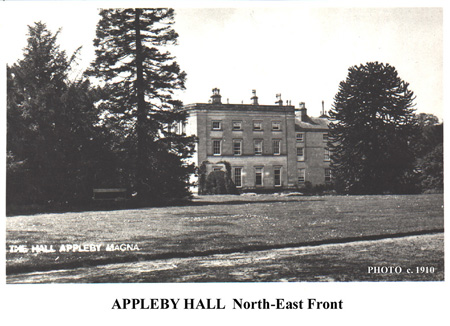
My father’s people, on the other hand, were full of themselves and also stories. The Moores considered themselves aristocrats, which I always found preposterous, until a distant cousin tracked me down and provided me with a family history. Someone named Richard Dunmore has written a history of Appleby Magna in rural Leicestershire and has devoted a chapter to the Moores, which begins, “The Moore family lived at Appleby Parva for about 320 years, first at the old manor house and later at Appleby Hall, built in the 18th century and enlarged in the 19th. Although Sir John Moore who built Appleby School is the most famous member of the family, there is much of interest to be found in the lives of the others.”
Sure enough, I’m descended from these once well-to-do Brits, as the family tree my cousin provided me attests, and it appears they lived the Downton Abbey lifestyle for a while:
The social status which the Moores enjoyed is illustrated by the 1841 census which shows the Hall occupied by George Moore and Isabel his (second) wife with their first child Clara aged 3 months. Fourteen servants were present at the Hall itself, 9 female and 5 male. There would be other employees living in cottages belonging to the estate. In particular the lodge or gate-house on New Road was staffed by a family with two children. (Dunmore)
However, just as we saw in Downton Abbey, the old families found it impossible to maintain these estates in modern times. Again, Dunmore:
Charles L G Moore inherited the Appleby estate on the death of his father in 1916. Despite their desperate financial situation, his parents had continued with their lavish lifestyle with numerous staff. In 1891 soon after the return from Norfolk, the Moores employed 3 male and 8 female staff in the house; and Aubrey Moore recalled even more employees just before the First World War. Although Mrs. Louisa Moore had her own ‘fortune’ which provided some income, the fact remains that the Moores were making ends meet by spending the capital arising from the sale of farms. In effect they were eating their seed-corn.
Cousins who decided not to cross the pond
Of course, by this time, their fourth or fifth cousins, my great aunts and my grandfather, were alive and kicking in the not so great State of South Carolina, not residing in oak-lined plantations in the Lowcountry but dwelling in backwater communities like Bishopville and Bennettsville. My great-great grandfather fought as a foot soldier for the Confederacy, and there is an apocryphal (I hope) story about his turning down a medal for carrying a wounded soldier off a field. Supposedly, his conscience wouldn’t allow him to accept the medal because his motive was not to save the wounded man’s life but to provide himself protection from incoming fire.
His son Luther produced a bevy of girls, my great aunts Polly, Mary, Tallulah, and Lila, and one son, Wesley E. Moore, Sr., my grandfather.[2]
Although I spent less time with these great aunts than I did with the mineral-named great aunts on my mother’s side, I can recall many more stories from Aunts Lila and Lou than I can from Ruby and Pearl.
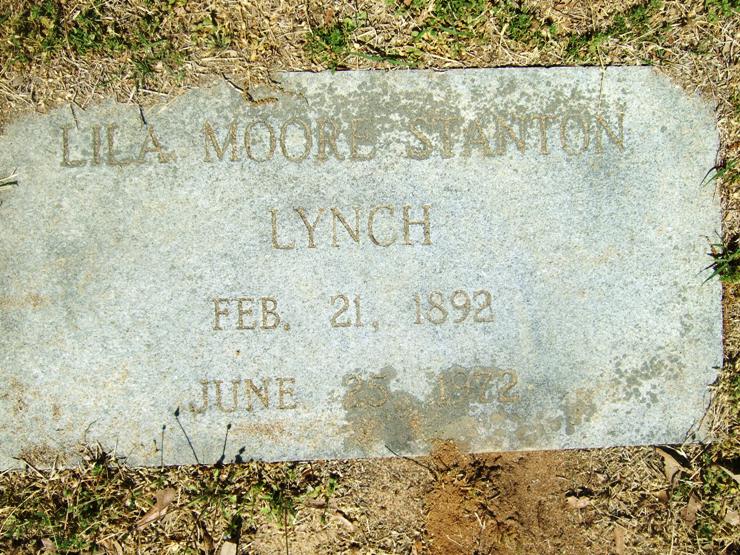
For example, whenever Aunt Lila dreamt of diamonds, someone close to her was doomed to die. She told me once – I couldn’t have been over ten – that she had begged her daughter, Lila Moore Stanton, not to go out with her roommate from Winthrop the night after Lila the Elder had dreamt of diamonds, but to no avail, and sure enough, both Lila Moore and her roommate were killed when a train smashed into their car a half mile away from the house. Aunt Lila related the story as matter-of-factly as if it had happened to someone else.
Also, after her first husband died, Aunt Lila remarried someone named Norman Lynch, who, according to what my parents told me, was lobotomized because he was an alcoholic. Can this possibly be true? Daddy told the story that someone once said to Lila, “You know, Uncle Norman would be better off dead,” and she replied, “But I sure as hell wouldn’t be.” It seems she was receiving some kind of monetary stipend as long as he was alive. Once again, this sounds suspect. What about social security?
Aunt Lila’s grave marker
There is one story I know is true that Aunt Lila’s sister Lou told me about the suicide of her nephew’s wife Sarah, who burned a hole in my blue sweater with a cigarette one Christmas Eve when I was seven or so.
Tipsy on sherry, Aunt Lou told this story more than once. Sarah had locked herself in a bedroom with a gun threatening to kill herself, then opened the door, put the gun to her temple, and fired.
“I don’t think she knew it was loaded,” Aunt Lou said with a twinkle in her eye. “I’ve never seen a person with a more surprised look on her face when the gun went off.”
So that’s what you get in “classless” America, the descendent of Sir John Moore marrying the daughter of a man with a third-grade education. In other words, what you get is a red state, an obsession with the past, and some pretty good stories to pass along.
[1] If an efficient God wanted to create a heaven and hell in one location, he could make a heaven by having Pearl, Ruby, and Hazel shelling those beans watching those soaps and a hell for my father by placing him in that same room with no cigarettes or whisky.
[2] In our family lore, Aunt Polly was infamous for her flatulence, which she could harness and employ at will to dissuade certain of her daughter’s suitors from continuing their flirtations. According to daddy, her trumpet-like blasts could rattle windows and smelled like a Stygian sewer. When launched at a dinner table, they could certainly give a young suitor second thoughts.
The Ballad of Old Buck Howland

For years and years he lived right here
in a tent on the edge of Folly.
He brewed his beer and wrote his poems
in the shade of a stunted loblolly.

He played at working construction,
could drive a nail I guess,
but what Buck was really good at
was downing his Inverness.

He’d have a drop in the morning,
he’d have a drop at noon,
he’d have a drop at midnight,
‘neath the light of a winter moon.

The cold on Folly ain’t that bad
(unless you stay in a tent),
but Buck would hum all through the night,
shivering but still content,

content because his poems would clack
from that old Underwood,
clack-clack-clacking, like a woodpecker,
on the edge of the stunted wood.

The VA doctors warned him
to change his lifestyle soon,
but Buck was a stubborn cuss.
He loved the light of the moon.

They found him dead inside a shed
on the side of Folly Road,
and in his hand he held a poem,
the last one he ever wrote:

            Drunk me some wine with Jesus [it read]
            At this here wedding in Galilee.
            He saved the bestest for second
            And provided it all for free.

            So I quit my job on the shrimp boat
            To follow Him eternally,
            No longer bound by them blue laws
            Enforced by the Pharisee.

            And we had us some real good times
            Till them Pharisees done Him in.
            Ain’t got no use for the religious right
            After I seen what they done to Him.

            Then when Saul Paul stole the show
            I sort of drifted away.
            Cause he never quite did understood
            What Jesus was trying to say.

            Paul was like a Pharisee,
            Cussing this, cussing that,
            Giving the wimmins a real hard time,
            Gay bashing and all like that.

            So I stay at home most nights now
            Trying to do some good,
            Offering beggars a little snort
            Whilst praying for a Robin Hood.

            Drunk me some wine with Jesus,
            It was the bestest day I ever seen.
            Drunk me some wine with Jesus,
            Partying with the Nazarene.

I can think of worse things
to have in your hand when dead
across the bridge on Folly Road
inside an old tool shed.
Alexander’s Dry Goods (photo courtesy of the Jewish Merchant Project)
Some Saturdays during my preadolescence, my friend Paul Smith and I would ride our bikes from our subdivision Twin Oaks to downtown Summerville and squander our allowances in the shops and drug stores along Main Street. In those days, a dollar and three cents went a rather long way. If you spent judiciously, you could draw out your expenditures for hours before exhausting your funds.
We’d ride up Lenwood Drive across the canal and the quiet two-lane road that is now Berlin Myers Parkway. From there we pedaled up Rose Hill where we would cut through the Sullivans’ yard and down a leaf-strewn path through woods that led to the black neighborhood on the outskirts of Summerville Elementary. Here in one of the unpainted houses lived my friend Gene Limehouse’s Dah,[1] an ancient cotton-haired woman who smoked a corncob pipe and wasn’t to be messed with. Also along this stretch lived a kid everyone called Squeaky, whom my brother Fleming hung with during the earliest days of his juvenile delinquency, a sort of latter-day Huck and Jim duo.[2]
We’d ride our bikes on the sidewalks in front of Summerville Elementary (i.e., across the street from Beasley’s), past what then was the High School, continuing along the white wooden private school Pinewood and down the big hill in Azalea Park where the sidewalk snaked between two oak trees. Paul and I would pedal as fast as we could down the hill and negotiate the oaks like slalom skiers, then stand up pumping until we hit the commercial district[3].
What used to be Pinewood School is now a seminary
Although our routine wasn’t the same every Saturday, chances are Paul and I would order a six-cent fountain cherry Coke at Guerin’s and sit at one of their wrought iron tables. We’d hit both Ben Franklin and Poppleton’s department stores, buying maybe caps to bang with a hammer, peashooters, or a thin-toothed contraption my mama called a “cootie comb.” We didn’t venture into Alexander’s or Barshay’s, not being in the market for shoes or looking to rent a tuxedo, but my parents certainly patronized those stores.
Down the lane from Kramer’s was Dr Melfi’s Pharmacy where you could cop a Superman comic for a twelve cents or a Mad Magazine for a quarter. Dr. Melfi displayed pharmaceutical instruments and powders, which gave the establishment an exotic, downright alchemical vibe. It smelled authentic, as if potions were being concocted.
Usually, we’d end our spree at a more prosaic drugstore, Kramer’s, where we’d slide into a booth and spend the rest of our change with a thirty-cent banana split or milk shake.
Being a red-blooded American, I lived from allowance to allowance, not possessing the self-discipline to save for a baseball glove or board game. Although the nation was in turmoil, we only heard about it distantly in newspapers or the nightly news, Cronkite or Huntley and Brinkley. I remember a “white’s only” sign over one of the lauderomats. Even doctors’ offices were segregated in those days.
Of course, the ride home wasn’t nearly as much fun. We’d pedal back on the other side of Main, struggle up the big hill we’d sped down a couple of hours earlier. Plus, we might be loaded down with merchandise. Still, it was a good feeling coasting up to your front door, especially if you’d bought something worthwhile to read, like a Mad Magazine or a fifty-nine-cent cardboard bound copy of The Swiss Family Robinson or Treasure Island.
I can still almost conjure the delightful smell of the crisp pages of those books.
[2] Of course, Fleming would later become well-known as a singer/songwriter and actor.
[3] One day when I was by myself, I encountered a woman in the park with her panties around her ankles peeing directly on the sidewalk. It was thrilling!








 You Do Hoodoo