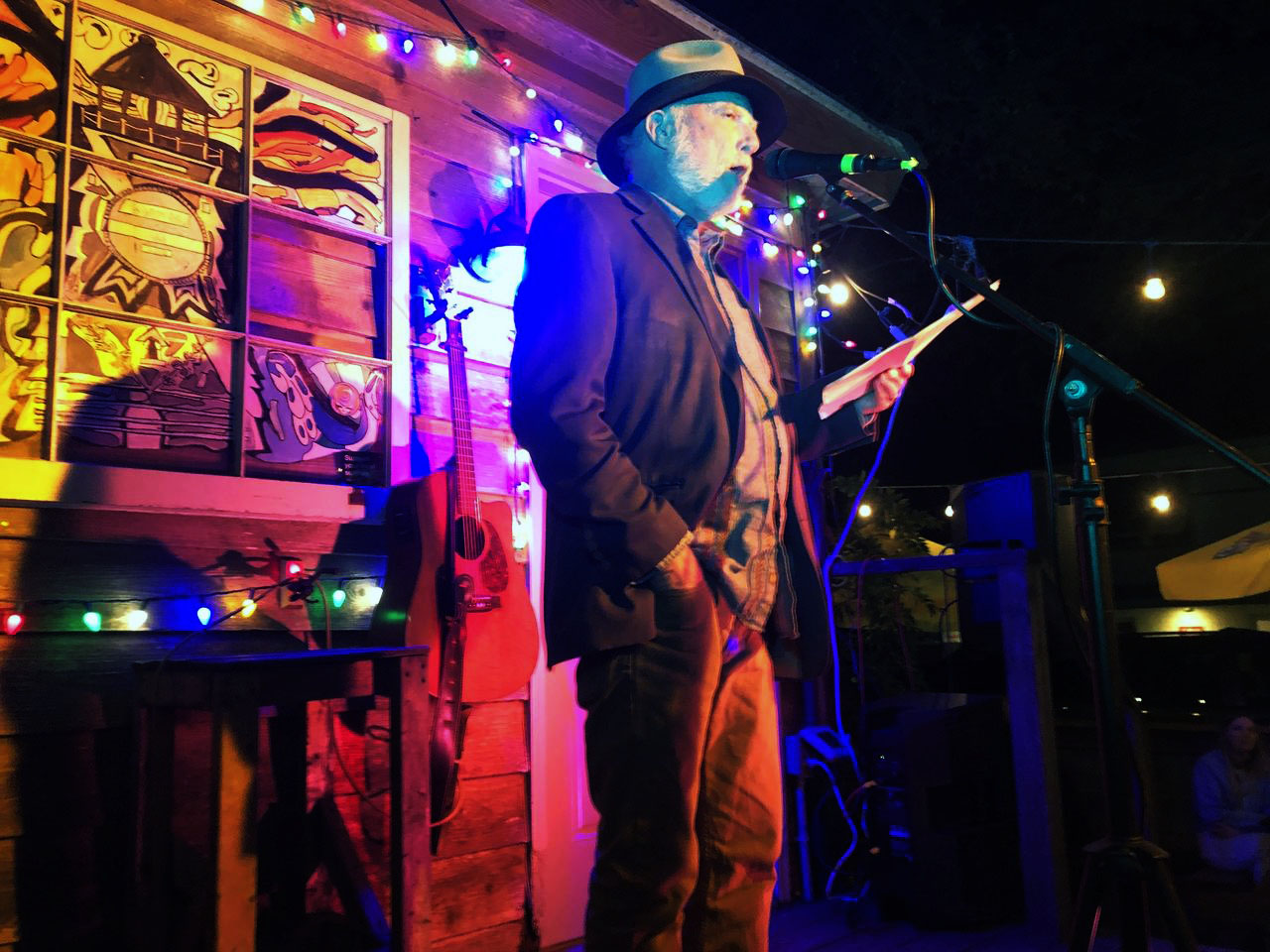
Here I am reading a poem written during the pandemic. Put on your dancing shoes.
Here I am reading a poem written during the pandemic. Put on your dancing shoes.
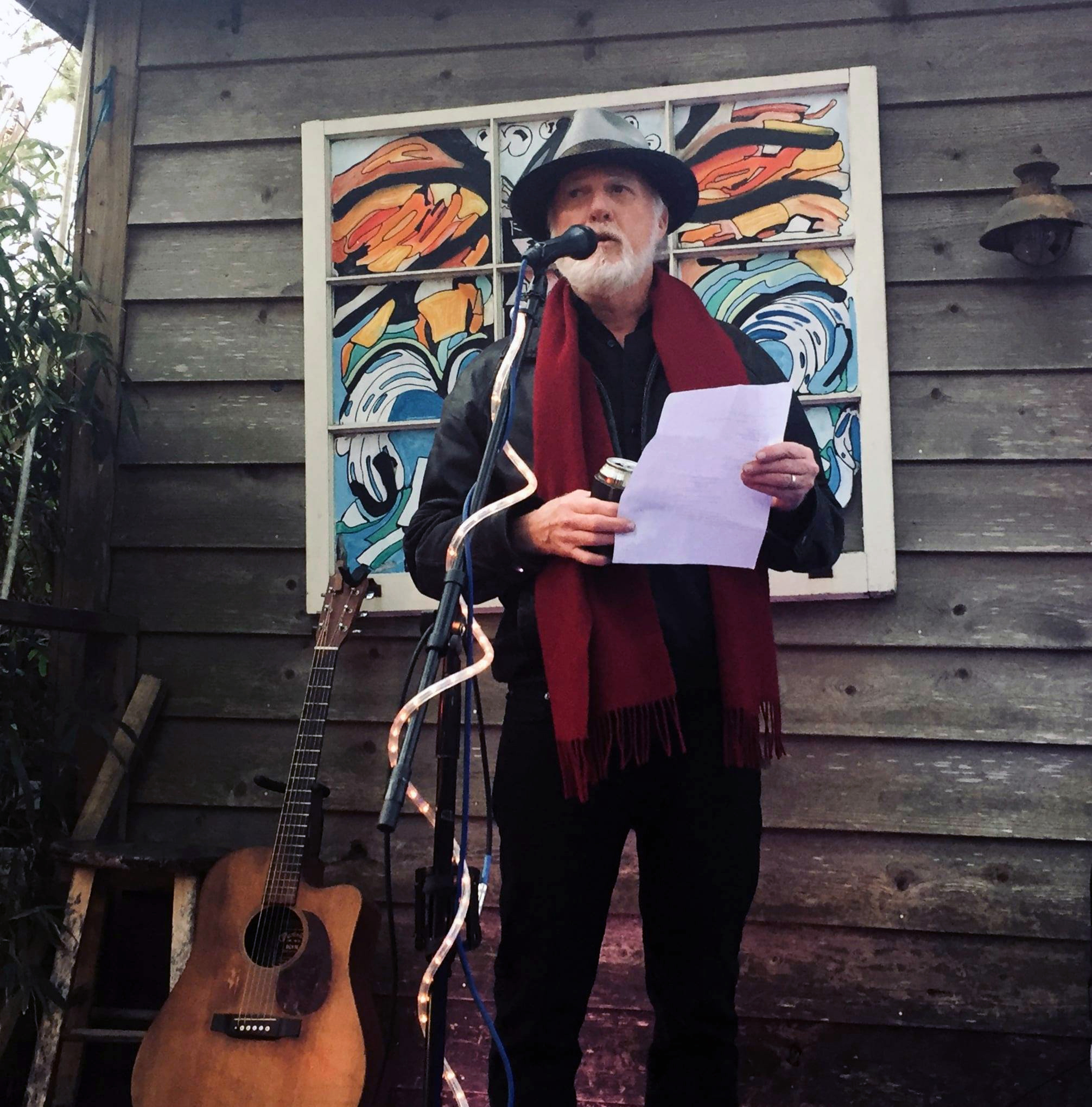
Here’s a video of my reading my original poem “St. James Infirmary iPhone Blues” on February 6 2023.
St James Infirmary iPhone Blues
Tapping a cane,
Mr. Andre Beaujolais,
with some hoodoo magic
in his front pants pocket
bopped down St. Charles
on his way to see
Miss Hattie Dupree,
the one-time lover
of McKinley Morganfield,
better known as Muddy Waters,
King of the Chicago Blues.
Those who got bad mojo
go see Miss Hattie Dupree
for the inside dope
in the hope of counteracting
shenanigans ¬– hexes,
curses, drywet nurses,
vexations, permutations,
marital relations.
genetic mutations,
Haitian sensations,
and genital truncations.
Mr. Andre Beaujolais
was on his way
to deliver a batch
of John the Conkeroo juice
to help some dude
whose private
conversations had
been swiped by
advertisers, enterprisers,
franchisers, monopolizers,
and merchandizers.
He’d been telling his gal
about Blind Willie McTell,
how the Dylan song
by the same name
was sung to the same tune
as St James Infirmary Blues.
Their moment of intimacy
the next day mysteriously
appeared in an ad
for a book being peddled
on the dude’s Facebook page.
“I Went Down to the
St, James Infirmary:
Investigations in the shadowy
world of early jazz-blues
in the company
of Blind Willie McTell, Louie Armstrong . . .
where did this dang song
come from anyway?
“That title don’t trip off the tongue,”
Mr. Beaujolais said when
he heard the dude explain.
“Hand me your phone,” Andre said,
then took off its cover,
whupped out the Conkeroo juice,
poured it all over the device,
mumbled some mumbo jumbo.
“Ta da! problem solved!”
“Wait a minute, “the dude complained.
My phone’s not working!”
“No shit,” Mr. Andre replied.
“That’ll be fifty dollars.
I’ll accept ten fives.”

Yesterday my cousin Pamela Moore Allen posted the above photo of my father (on the right) and his brother David fighting on a street in Charleston, South Carolina, during the Great Depression.
Here’s another photo standing outside their grandfather’s pharmacy where they worked as curb boys.
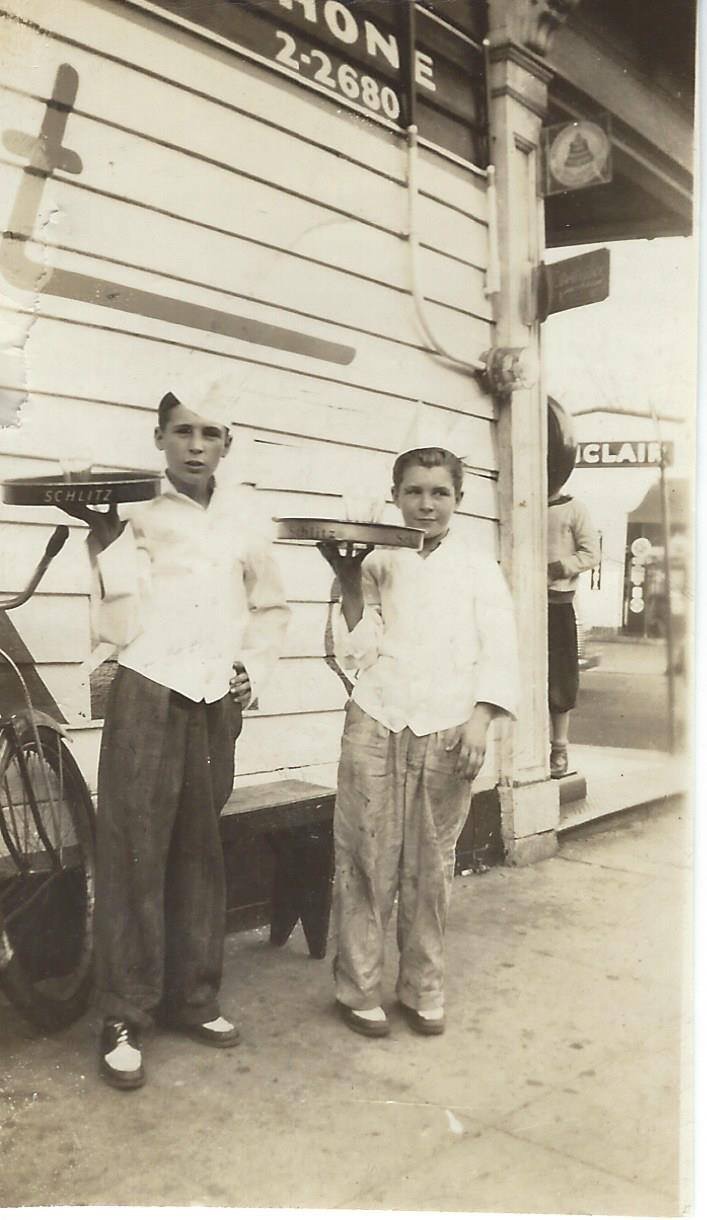
I posted the street-fight photo on the Facebook site “Charleston History Before 1945” and misidentified the location as Spring Street, where the pharmacy was located.[1]
A few sharp-eyed history buffs weren’t so sure about the location and began sleuthing.
Ray Benton, a Charleston lawyer, posted that in the early 60s he worked at a corner pharmacy that had an apartment upstairs. Lester Dempsey, another old-time Charlestonian, suggested the fight took place near Cannon Street and Rutledge.
Mary Thiedke Grady weighed in:
Look at the intersection of Spring and Rutledge looking west toward the bridge. The building currently occupied by Xiao Bao Biscuit was once upon a time a gas station and had a canopy. (The supports changed, but the canopy is still there.) Also look beyond to the other corner (northwest of Rutledge.) That building is tall enough, though the architecture isn’t quite the same. Given the proximity to the road, that first house could have been torn down and a second where the current house is located. (Ok, this part I think I’m fishing around with, and the argument doesn’t hold water.”)
Lester Dempsey provided an aerial view:
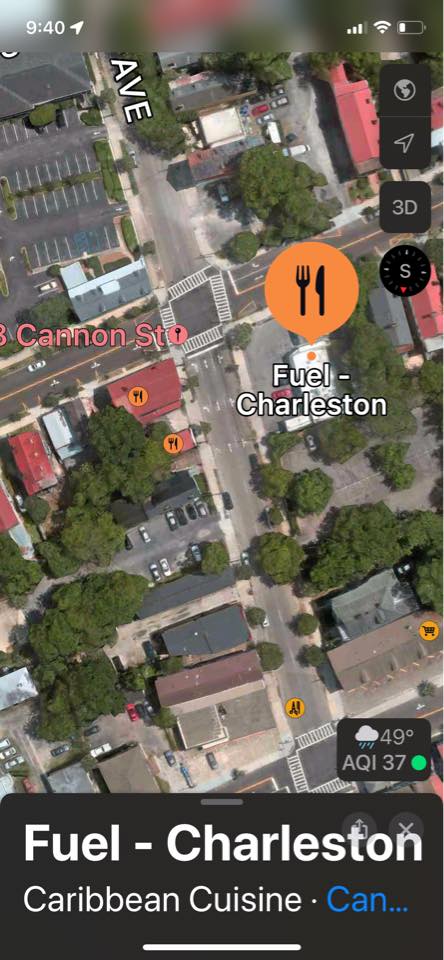
And dig this, Rutledge Rivers Webb, Jr. took two photos after dropping off his kids at school this morning. He took them on Rutledge near Spring looking towards Cannon. The Texaco service station on the right in the original photo is now the restaurant Fuel.


Mystery solved.
Thanks to all who weighed in.
[1] They lived above the pharmacy on the second floor.

Bo Diddley Revisited
I’ve been making good use of my time, watching YouTube videos of interviews with Eric Burdon, former front man for the Animals.[1] In the mid-Sixties, the Animals ranked as my favorite band because the timbre of Burdon’s singing voice sounded as if he could have been from my native ground, the Lowcountry of South Carolina (as opposed to Eric’s Newcastle-upon-Tyne). In fact, it was the Animals, and to lesser extent the Rolling Stones, who introduced me the blues, to Muddy Waters, Howlin Wolf, John Lee Hooker, and a host of others.
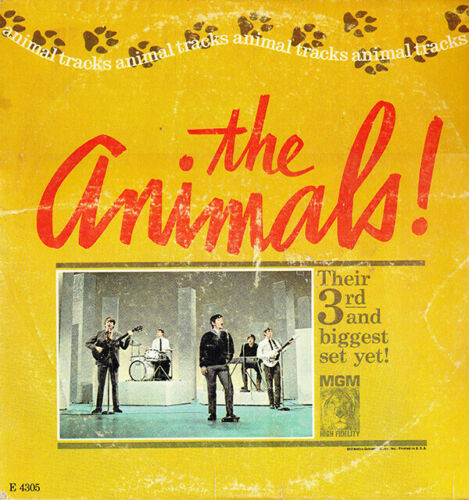
Decades ago, at his record store on Society Street (we’re talking Charleston, South Carolina), Gary Erwin, AKA Shrimp City Slim, told me that the Animals also had turned him onto R&B and the blues. He referenced their album Animal Tracks as his gateway into the land of shotgun shacks, cotton fields, black snakes, two-timing, big-legged women, and prison farms.
Here’s the tracklist for Animal Tracks.
| A1 | We Gotta Get Out Of This Place | 3:17 | |
| A2 | Take It Easy Baby | 2:51 | |
| A3 | Bring It On Home To Me | 2:40 | |
| A4 | The Story Of Bo Diddley | 5:42 | |
| B1 | Don’t Let Me Be Misunderstood | 2:26 | |
| B2 | I Can’t Believe It | 3:35 | |
| B3 | Club A-Go-Go | 2:19 | |
| B4 | Roberta | 2:04 | |
| B5 | Bury My Body | 2:52 | |
| B6 | For Miss Caulker | 3:55 |
Although “We Gotta Get Out of This Place” and “Don’t’ Let Me Be Misunderstood” are the big hits from the album, my two favorite tracks are the magnificent cover of Sam Cooke’s “Bring It on Home to Me” and “The Story of Bo Diddley,” a sort of pop song bio of one of the pioneers of rock-n-roll, which ends with a comic encounter when Bo, his sister the Duchess, and Jerome Greene meet the Animals at the Club A-Go-Go in Newcastle.
Listen and read along:
Now lets hear the story of Bo Diddley
And the Rock n Roll scene in generalBo Diddley was born Ellis McDaniels
In a place called McCoom, Missississipi about 1926
He moved to Chicago about 1938
Where his name was eventually changed to Bo Diddley.
He practiced the guitar everyday and sometimes into the night
Till his papa’s hair began to turn white
His Pa said “Son, listen hear, I know
You can stay but that guitar has just gotta go.”
So he pulled his hat down over his eyes
Headed out for them Western Skies
I think Bob Dylan said that, he hit New York City.
He began to play at the Apollo in Harlem,
Good scene there, everybody raving.
One day, one night, came a Cadillac with four head lights
Came a man with a big, long, fat, cigar said,
“C’mere son, I’m gonna make you a star”
Bo Diddley said, “Uh.whats in it for me?”
Man said, “Shut your mouth son,
Play the guitar and you just wait and see.”
Well, that boy made it, he made it real big
And so did the rest of the rock n roll scene along with him
And a white guy named Johnny Otis took Bo Diddleys rhythm
He changed it into hand-jive and it went like this
In a little old country town one day
A little old country band began to play
Add two guirtars and a beat up saxophone
When the drummer said, boy, those cats begin to roamOh baby oh we oh oh
Ooh la la that rock and roll
Ya hear me oh we oh oh
Ooh la la that rock and rollThen in the U.S. music scene there was big changes made.
Due to circumstances beyond our control such as payola,
The rock n roll scene died after two years of solid rock
And you got discs like, ah…
Take good care of my baby
Please don’t ever make her blue and so forth.
About, ah, one year later in a place called Liverpool in England
Four young guys with mop haircuts began to sing stuff like, ah…
It’s been a hard days night and I’ve been working like a dog and so on.In a place called Richmond in Surrey, whay down in the deep south
They got guys with long hair down their back singing
I wanna be your lover baby I wanna be your man yeah and all that jazz.
Now we’ve doing this number, Bo Diddley, for quite some time now
Bo Diddley visited this country last year
We were playing at the Club A Gogo in Newcastle, our home town.The doors opened one night and to our surprise
Walked in the man himself, Bo Diddley
Along with him was Jerome Green, his maraca man,
And the Duchess, his gorgeous sister.
And a we were doing this number
Along with them came the Rolling Stones, the Mersey Beats,
They’re all standing around diggin’ it
And I overheard Bo Diddley talkin’
He turned around to Jermone Green
And he said, “Hey, Jerome? What do you think these guys
Doin’ our.our material?”
Jerome said, “Uh, where’s the bar, man? Please show me to the bar…”
He turned around the Duchess
And he said, “Hey Duchess… what do you think of these young guys
Doin’ our material?”
She said, “I don’t know. I only came across here
To see the changin’ of the guards and all that jazz.”
Well, Bo Diddley looked up and said to me,
With half closed eyes and a smile,
He said “Man, ” took off his glasses,
He said, “Man, that sure is the biggest load of rubbish
I ever heard in my life…”
Hey Bo Diddley
Oh Bo Diddley
Yeah Bo Diddley
Oh Bo Diddley
Yeah Bo Diddley

By the way, this is my second homage to Bo. I also wrote about him in April of 2021 and my father-in-law’s Bo Diddley obsession. If so inclined, you can access that HERE, and it features videos of Bo performing on the Ed Sullivan Show and a snippet from the movie Fritz the Cat.
By the way, the white fellow in the collage up above is my father-in-law Lee Tigner in his younger days.
[bongo fade out]
[1] What prompted this foray into nostalgia was my recent poem, which you can access HERE, “The St James Infirmary iPhone Blues.”
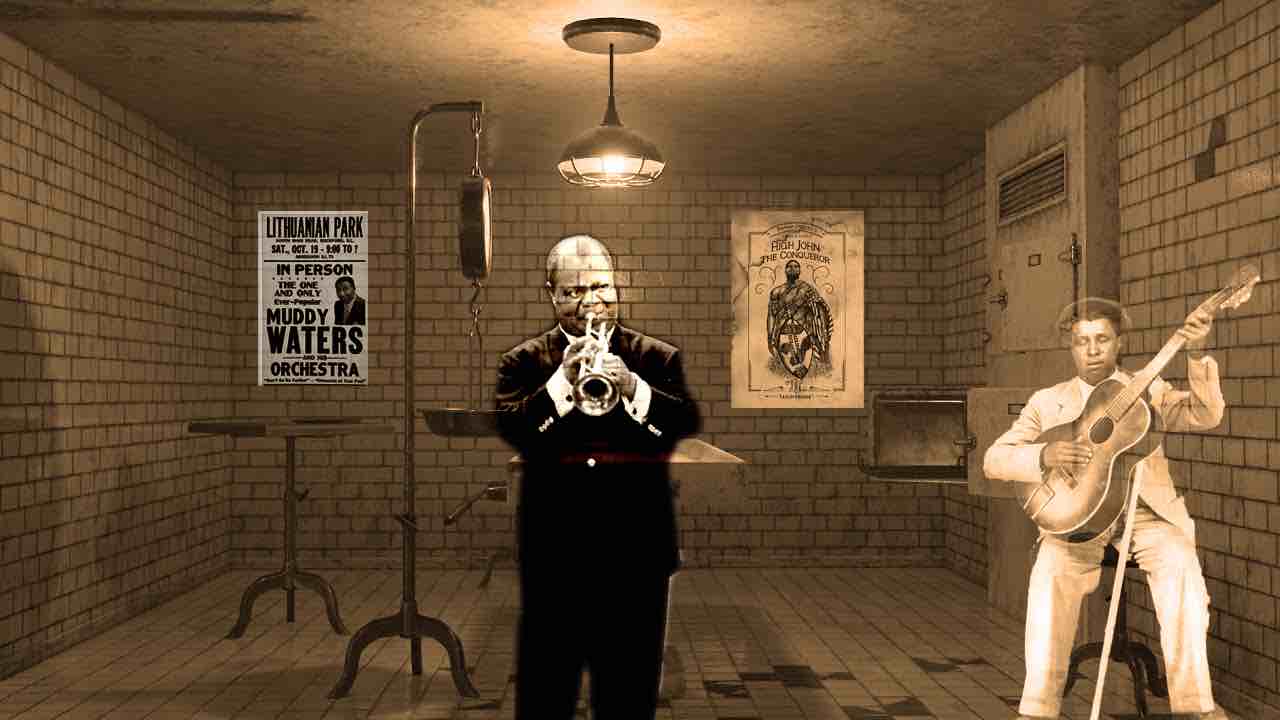
I first heard “St. James Infirmary Blues” covered by Eric Burdon and the Animals, and the song really moved me, the horror of it, having to encounter the corpse of your lover “stretched out on a long white table/ So cold, so stiff/ She was dead.” Throughout the years, the song really stuck with me.[1]

The other night, Caroline and I were at the Lowfife Bar on Folly, and somehow the topic of public domain tunes came up. I mentioned that Dylan had borrowed the melody of “St. James Infirmary Blues” for his masterpiece “Blind Willie McTell.” In fact, I sang two verses of the Burdon cover right there at the bar.
Well, the very next day, an ad showed up on my Facebook feed for this book, which I’m eager to read.

Anyway, we can probably chalk up the ad’s appearance to coincidence, but, man, could it be some bot was listening to us via our phone?
Then last night at the Soapbox open mic at Chico a banjo player covered the song. WTF?
So, this morning, during one of my undelightful stints of insomnia, I composed this piece of doggerel in my head, which I consider a more productive use of my time in the wee hours than contemplating politics, my health, the past, or the future.
(BTW, occasionally, a reader accuses me of cultural appropriation one of these paeans to Black culture, but my conscience is clear on that score.)
St James Infirmary iPhone Blues
Tapping a cane,
Mr. Andre Beaujolais,
with some hoodoo magic
in his front pants pocket
bopped down St. Charles
on his way to see
Miss Hattie Dupree,
the one-time lover
of McKinley Morganfield,
better known as Muddy Waters,
King of the Chicago Blues.
Those who got bad mojo
go see Miss Hattie Dupree
for the inside dope
in the hope of counteracting
shenanigans ¬– hexes,
curses, wet nurses,
vexations, permutations,
marital relations.
genetic mutations,
Haitian sensations,
and genital truncations.
Mr. Andre Beaujolais
was on his way
to deliver a batch
of John the Conkeroo juice
to help some dude
whose private
conversations had
been swiped by
advertisers, enterprisers,
franchisers, monopolizers,
and merchandizers.
He’d been telling his gal
about Blind Willie McTell,
how the Dylan song
by the same name
was sung to the same tune
as St James Infirmary Blues.
Their moment of intimacy
the next day mysteriously
appeared in an ad
for a book being peddled
on the dude’s Facebook page.
“I Went Down to the
St, James Infirmary:
Investigations in the shadowy
world of early jazz-blues
in the company
of Bling Willie McTell, Louis Armstrong . . .
where did this dang song
come from anyway?
“That title don’t trip off the tongue,”
Mr. Beaujolais said when
he heard the dude explain.
“Hand me your phone,” Andre say,
then took off its cover,
whupped out the Conkeroo juice,
poured it over the device,
mumbled some discrete mumbo jumbo.
“Ta da! problem solved!”
“Wait a minute, “the dude hollered.
My phone’s quit working!”
“No shit,” Mr. Andre replied.
“That’ll be fifty dollars.
I’ll accept ten fives.”
[1] In fact, I asked Gary Erwin to play it at Judy Birdsong’s memorial service, which he graciously did. BTW, Gary is an underappreciated Charleston treasure.
Death and Dominos
Be absolute for death; either death or life
Shall thereby be the sweeter.
Duke Vencentio, Measure for Measure, 3.1
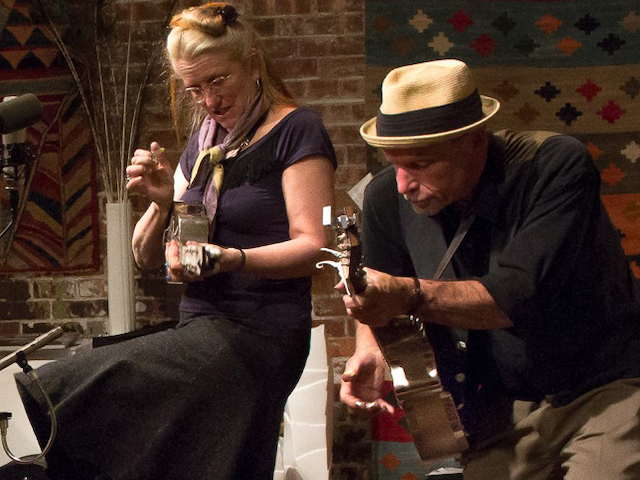
Yesterday, on what would have been Janis Joplin’s 80th birthday, I was shooting the breeze with bluesman Johnny Holliday at Chico Feo and asked him if he’d ever heard of Steve James, the superb blues guitarist who died earlier this month.

Johnny hadn’t, so I sang Steve’s praises, mentioning his partnership with Del Ray, a ukulele virtuoso. Johnny asked how old Steve was when he passed, and I replied 72.
“Well, that’s a good age to die,” the thirty-something said, and I agreed, but mentioned I’d just turned seventy.
A sheepish look, a nod of the head. “You don’t look seventy,” he graciously said, and I responded with a thank you, attributing my supposed well-preserved wreckage to clean living and the fedoras that hide my freckled bald scalp.
After I made my way home, climbed the stairs to my drafty garret, and logged on my computer, I learned that David Crosby had just bitten the dust at the beyond ripe old age of 81, he who had been addicted to cocaine and heroin but who nevertheless had managed to outlive the author of the best-selling book The Complete Guide to Running,Jim Fixx, who succumbed to a heart attack while jogging at the age of 52.
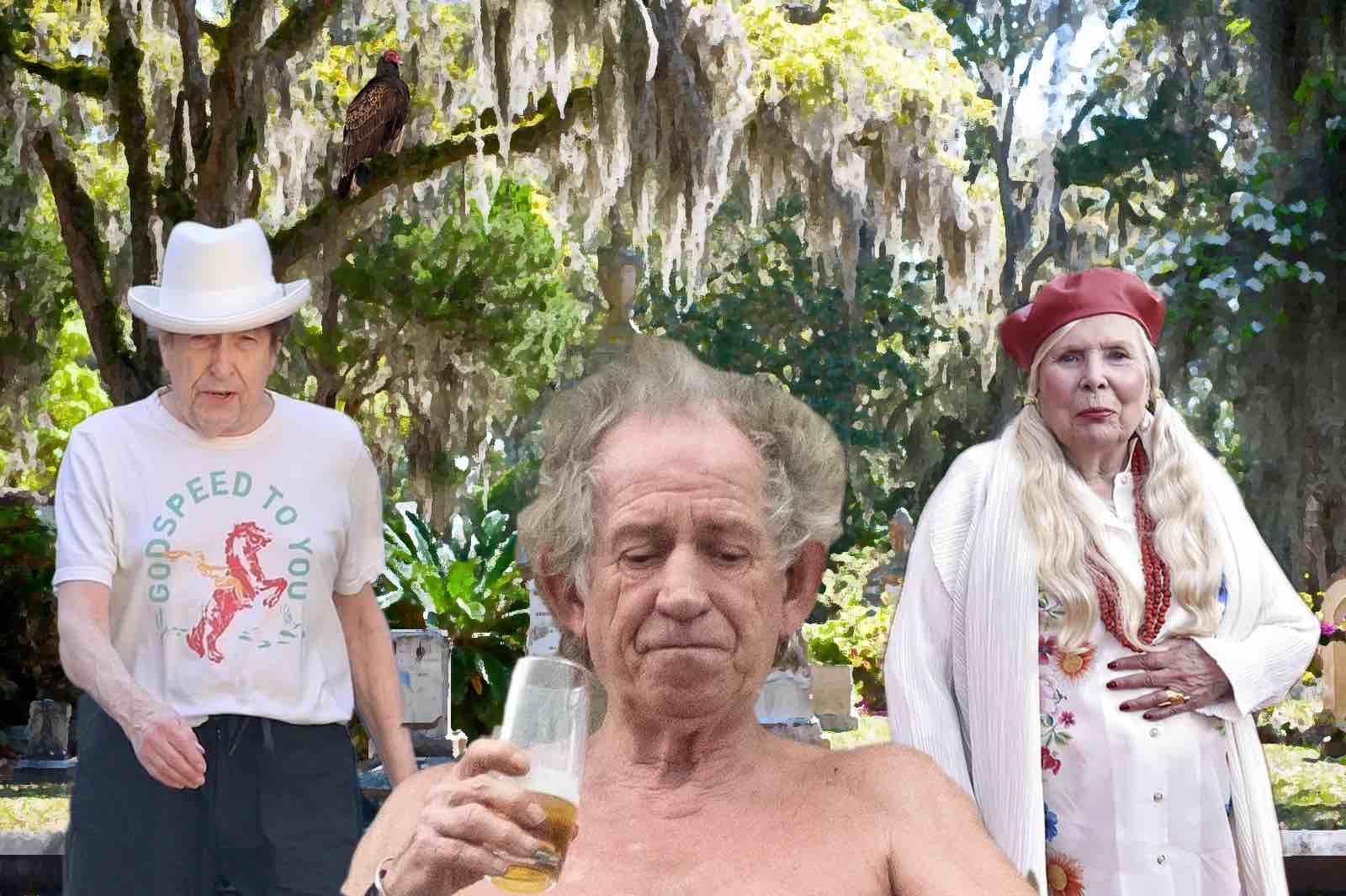
I will have to say that David Crosby looked worse for the wear, as does his one-time collaborator Joni Mitchell. Jeff Beck, on the other hand, who died suddenly five days ago, looked pretty damned good, though unlike David and Joni he dyed his hair.[1]

Anyway, these iconic rock stars of yore seem to be on a death roll, falling like dominos, painfully reminding the “me generation,” i.e., m-m–my generation, that all good, bad, and indifferent things must come to an end.
A host of others are waiting in the wings, Rod Stewart (78), Pete Townsend (78), Eric Clapton (75), Tina Turner (85), Paul McCartney (80), Ringo Starr (82), Keith Richards (79), Mick Jagger (79), Robert Plant (75), Willie Nelson (89), Joan Baez (82), and the man himself, Bob Dylan (81).
Bob’s demise will likely warrant a screaming above the fold front page headline in the New York Times and Washington Post.
By the way, I saw Dylan live last spring, and the show was terrific, the songs new, the interplay with bandmates a thing of beauty.
Anyway, back to the subject. This is counterintuitive, but it seems as if rock musicians, at least famous rock musicians, enjoy longevity, outpacing the general life expectancy of 71.6 – 73.2. Maybe the secret is avoiding those overdoses they’re prone to in their 20s and, of course, avoiding the helicopter and plane crashes that seem to take out so many.
And on that upbeat note, I’ll leave you to take my blood pressure and cholesterol meds.
Ciao.
[1] Maybe Mick Jagger should give up the ol’ hair dye. Once you hit the big 8-0, dark hair looks weird, sort of creepy, according to me, a fashion aficionado.

Folly Beach is in the throes of a political battle that wages real estate interests versus residents who would prefer Folly remain a community rather than become a resort destination.
Two competing collectives have formed, Saving Folly’s Future and the Folly United, which employs the shaka “hang loose” hand signal as its logo.[1]
I certainly understand real estate investors wanting to expand their net worth and protect their investments. However, I wish they’d make their case without resorting to misinformation.
My friend Chris Bizzell has taken the time to analyze some of the erroneous information from the flyer that Folly United recently distributed and from the Folly United web site.
First, Folly United argues that Folly Beach residences have grown 2% per year since 2015; however, even though the number of houses, i.e., residences have grown, the number of full-time residents has fallen, as shown in the chart below.

Chris provides the following analysis:
Based on the latest 2022 data from the US census, the current population of Folly Beach is 2,056.
What was the peak population of Folly Beach?
The peak population of Folly Beach was in 2010, when its population was 2,617.
Folly Beach’s population is currently 21.4% smaller than it was in 2010 and 6.0% smaller since the year 2000.
In fact, Folly Beach’s growth is below average. 63% of similarly sized cities are growing faster since 2000. If the STR market is not capped, we can easily expect Folly’s full-time population to decrease further.
The flyer also contends that fewer short-term rentals will lead to higher crime rates because the properties are left empty.
Again Chris:
While studies do show that empty properties can lead to higher crime rates, this has nothing to do with STR levels. In fact, a new study shows that a proliferation of Airbnbs, or similar short-term rentals, in a neighborhood contributes to higher rates of crime in the area.
The study compiled 911 data from 2011-2018 determined that higher STR properties in a community does in fact lead to higher crime rates. A major finding in the report was that certain violent crimes, including fights, robberies, and reports of someone wielding a knife, tended to increase in a neighborhood a year or more after the number of Airbnbs increased. “What seems to be the problem is that Airbnb is taking households off the social network of the neighborhood and eroding its natural capacity to manage crime,” says O’Brien, who also studies criminology and criminal justice at Northeastern.
“What we’re seeing is evidence of a slower process, one that becomes significant over the years,” Babak Heydari (associate professor at Northeastern and author of the study) says. “It’s another support that changing the social fabric of the neighborhood is what’s undergirding these results.”
Folly United’s web site has a page entitled “Did You Know,” that ends with incredible bit of so-called information:
The STR commission discovered that STR had NO impact on the number of Long term rentals and no impact on population growth. INCONVENIENT FACTS that have repeatedly ignored.
C’mon, commonsense tells us that this couldn’t be true. As off-island owners transform their properties from long term to short term rentals the renters who called Folly home are replaced by vacationers.
Chris Bizzell:
As more properties are converted to STR’s, the supply of available housing open for long-term renters and homeowners shrinks. With housing in short supply, everyone ends up competing for the same tiny pool of rental properties and rents increase.
Researchers at Carnegie Mellon University found that Airbnb “mildly cannibalizes” the long-term rental supply. And in the cities they studied where Airbnb was popular, residents faced a more severe reduction in housing stock.
Research at the University of Arizona and University of Denver found that Airbnb is indeed making the real estate market more expensive. By enriching its hosts while making housing less affordable for others, Airbnb and other home-sharing platforms may be compromising public affordability for private wealth, the research suggests. “It’s going to increase the gap between the rich and the poor,” Wei says. “It’s going to make inequality a little worse.”
The study concluded: “STR’s have become a major alternative for real estate investment and have had a significant impact on housing affordability.”
We can learn by looking at what has happened in other vacation destinations.
In Colorado ski towns, the demand for short term rentals and the increase in supply of STR’s are growing at such a rate that it is displacing local residents of the towns they are supposed to serve.
Margaret Bowes, Colorado Association of Ski Towns executive director, says that the perfect solution to the crisis is still not within reach. “The trajectory of the number of properties becoming (short-term rentals) is not sustainable,” according to Bowes. She adds that at the current rate, no one working in the said communities will be able to live in them.
Look, like I said earlier, I understand that property owners, especially those who don’t live on the island, want to increase their wealth, and certainly, if you live in your Folly residence nine months out if the year, you should be able to rent it short term and that goes for adjacent properties. However, we’re not talking about eliminating short term rentals but capping them, creating a happy symbiosis between full time residents and vacationers.
But, please, don’t resort to cherry picking data and resorting to misinformation to make arguments.
Aloha.
[1] Cue George Orwell: “Yes, war is peace!” If Folly were united, there would be no issue, and nothing screams “hang loose” and the aloha spirit like frenetically placing signs in the yards of short-term rentals that read “Don’t Cap Folly’s Future,” as if Folly is sentient being that would prefer to have its few remaining lots clear cut for the construction of McMansions than maintain a verdant residential vibe.
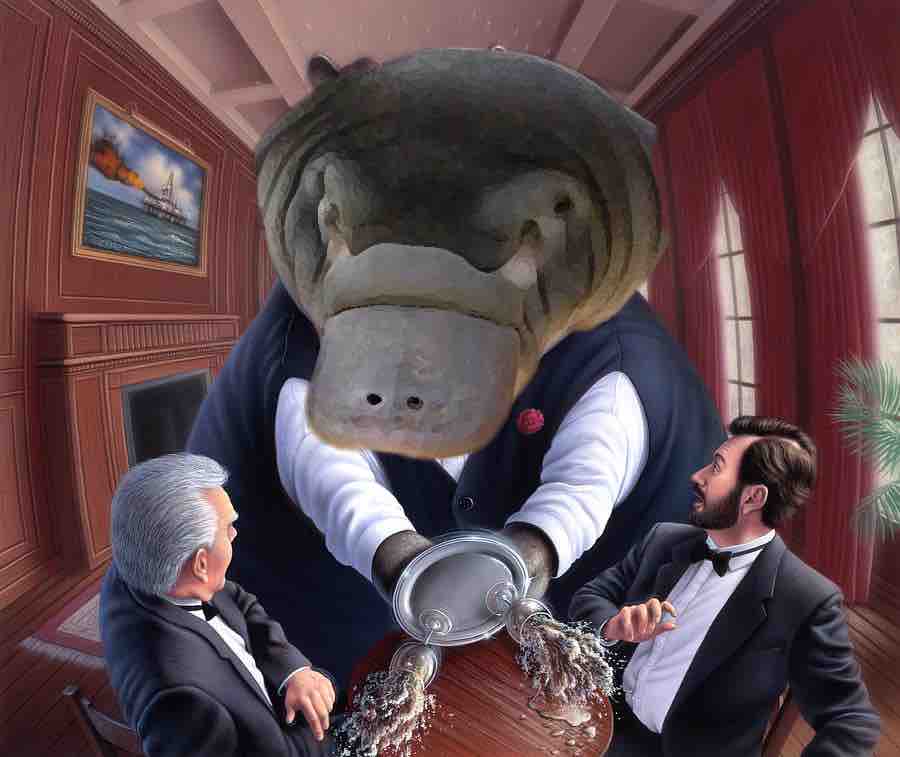
Photoshopped from Jerry LoFro’s Clumsy Painting
In pains me to admit I have the fine motor skills of a duck-billed platypus. I’d hate to add up the total time I’ve squandered in supermarkets struggling to open those plastic bags you unspool from rollers in the produce department. When shoppers stroll by, they probably attribute my fumbling ineptitude to senescence – or perhaps to a stroke I’ve not fully recovered from – but truth be told, this disability has plagued me from my earliest years.
The humiliation began in kindergarten when Miss Marion hauled out some shoes and attempted to teach the class how to tie them. As my playmates looped and threaded, the laces kept slipping from my tiny fingers. Miss Marion had to come over and help me, and when I had finally accomplished the feat, the bow I had managed was so loosely constructed, the whirr of an oscillating fan unraveled it.[1]
Then there were those horrid two weeks after third grade when Mama made me go to Vacation Bible School at Summerville Baptist Church, a church we didn’t attend regularly, so many of the kids were strangers to me, especially the older ones. We were required to thread a knitting needle, which took me so long I had missed steps two and three and suffered verbal abuse from a tall dark-haired older kid. Thank Allah this was not a Muslim religious school because if it had been, my ineptitude in later painting the clay likeness of our Lord might have been mistaken for desecration.
I could go on with further examples, like my attempting to carve a likeness of the Statue of Liberty from a bar of soap in Cub Scouts or much later struggles in freeing prophylactics from their tiny plastic pods; however, for me the most embarrassing incident concerning my total lack of fine motor coordination occurred when my older son Harrison and I teamed to construct a Pinewood Derby racer from a block of wood.
As a boy, I would turn over such a project to my father, who would fashion the car at his workplace. Once he got home, I fetched newspapers so he could paint it in the carport.
See, I helped!
So, when Harrison and I tackled the job, I followed my father’s lead, in a way. I carved a very un-aerodynamic semblance of a car, but, in a more honest rendition of my old man’s methodology, I had Harrison sand and paint it. After I had attached the wheels, I wrote “Free Tibet” on the side of the car with White Out.
I had the good sense not to photograph this monstrosity.
The great race took place at the gym of the Isle of Palms rec center. Harrison and I arrived early and got in line to have our car inspected, which essentially meant weighing it. The lady in charge was very complimentary to Harrison, and as she handed to car over to me, she leaned over and whispered in my ear, “It’s so nice for a change to see a dad who let his child do all the work all by himself.”
I smiled and said, “Thank you.”

[1] The year was 1957 before such establishments were equipped with air-conditioning. I remember being in the first grade sitting in my reading circle in early September eagerly awaiting the fan to turn its puny breeze my way.
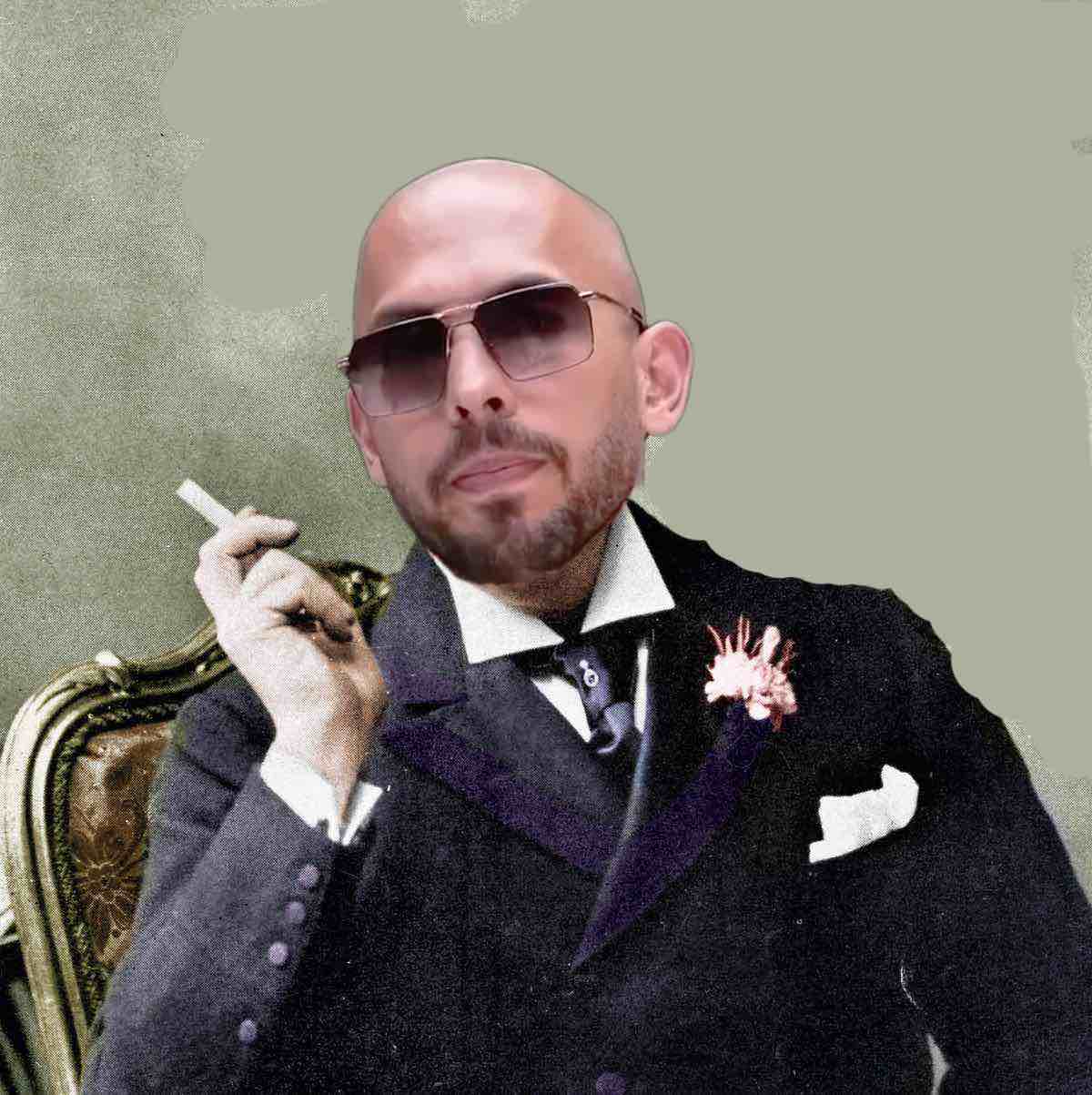
Example One: Andrew Tate
I had never heard of former professional kickboxer, world class misogynist, and current jailbird Andrew Tate until this week when he trolled Greta Thunberg on Twitter asking for her email address so he could “send [her] a complete list of [his] car collection and their respective enormous emissions.”
Her response, “yes, please do enlighten me. email me at smalldickenergy@getalife.com.”
With an atomic bomb boom, her tweet went nuclear, racking up 3.5 million likes and 650K shares as of yesterday.
Caught off guard, Tate tweeted back a surprisingly effete “How dare you?!” echoing Thunberg’s famous speech to the United Nations.
Stung, he attempted to salve his black-and-blue ego by posting a minute-long wit-bereft video featuring cartoonish cigar puffing and a red robe that Oscar Wilde might have found a bit much.[1] During the video, he calls for two boxes of pizzas and announces that he won’t recycle the boxes as he drones on about Greta, the matrix, etc.
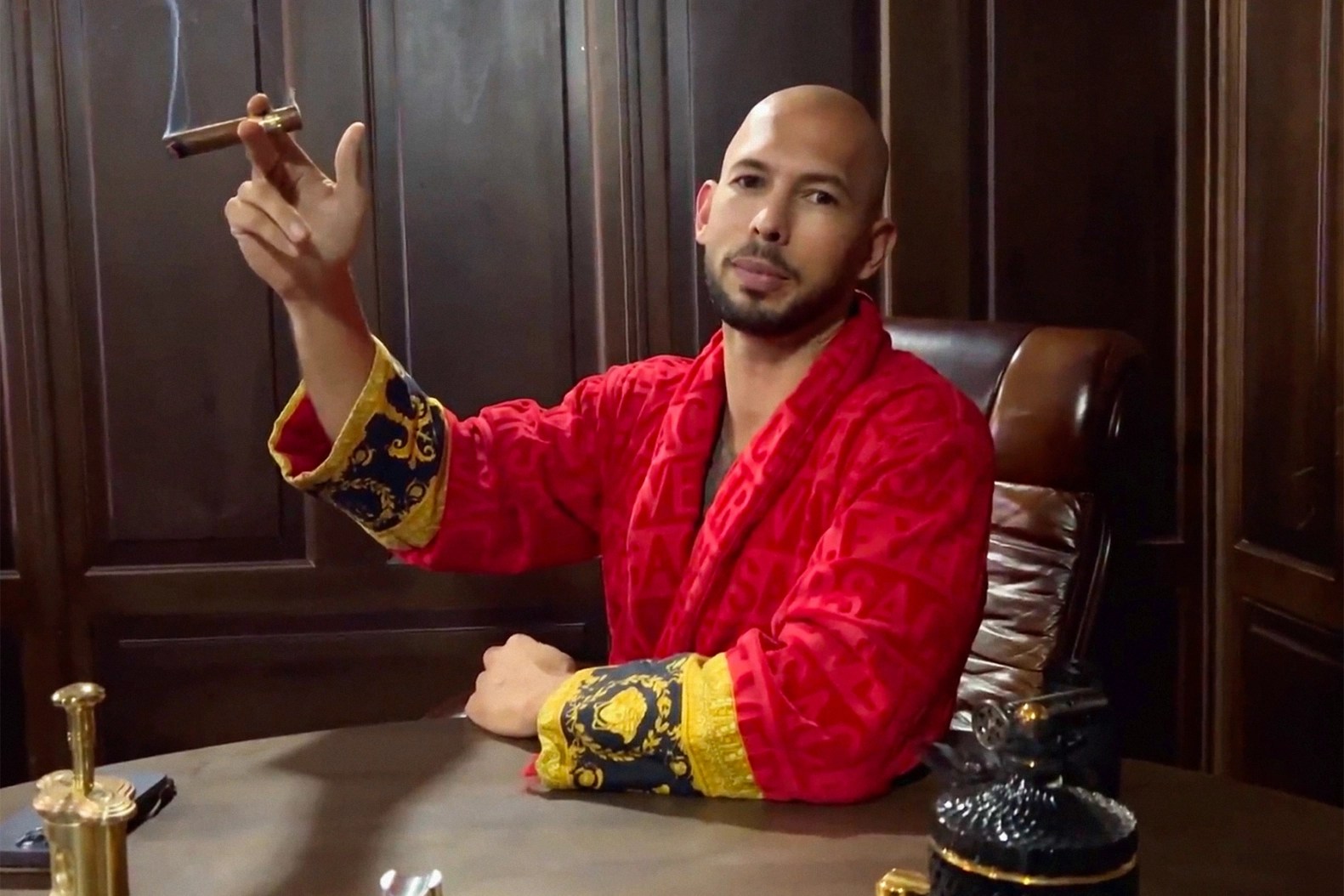
Well, fellow karma lovers, police were able to locate Tate and his brother Tristan from delivery records from the pizza provider. He and Tristan are now languishing in a Romanian prison on charges of human trafficking.[2]
And let’s not forget to congratulate capital crime fighter Elon Musk, who by reinstating Tate’s Twitter account, made his arrest possible.
Perhaps, irony isn’t quite dead yet.
Example Two: George Santos
I don’t have the energy to construct the epic catalog of lies Santos (if that’s actually his real name) spewed in his successful run for Congress in New York’s 3rd Congressional District.
Let this one suffice: After claiming to be descended from Holocaust survivors, after investigative scrutiny into his actual ancestry, Santos backtracked by saying he didn’t mean he was literally “Jewish” but nominally “Jew-ish.”

Um, George, no. If I were you, I’d don a disguise and slink off to some obscure Montana off-the-grid outpost.
O shame, where is thy blush?[3]
[1] Polonius is a fool, but he is right about this: “brevity is the soul of wit.”
[2] [cue Hamlet]: “For ’tis the sport to have the engineer/Hoist with his own petard.”
[3] That makes three Hamlet allusions in one post. Alas and alack!

But Jesus called them unto him, and said, Suffer little children to come unto me, and forbid them not: for of such is the kingdom of God. Verily I say unto you, Whosoever shall not receive the kingdom of God as a little child shall in no wise enter therein.” Matthew 19, 13-14.
Wendy Brown, the swashbuckling political theorist from UC Berkeley, has a hifaultin theory on how we as a culture have arrived at a point where Greg Abbott, the Governor of Texas, can dump immigrant children on the street in sub-freezing temperatures on Christmas Eve, the next day tweet Christmas blandishments, and suffer no pangs of conscience (and nary a word of censure from mainstream Republicans who claim to be followers of Jesus).
Brown’s theory is complicated, somewhat “over my head,” but worth thinking about, so I thought I’d take a stab at explaining a simplified version as I understand it.
She begins with Nietzsche’s contention that nihilism begins “with the rise of reason and science as challenges to God and other forms of authority, challenges that reveal all meaning to be constructed and all facts to be without inherent meaning.”[1]
In other words, God’s edicts were set in stone; the winds of time have effaced them. Science is not set in stone; it is self-correcting. For example, quarks have replaced electrons as the tiniest bits of matter. Relativity sets in and begets argumentum ad ignorantiam taunts that “you can’t prove it.” Anything that you believe, I can not believe better.
“Unmoored from their foundations,” in an arena of disenchantment and desacralization, “the Christian virtues along with democracy, equity, truth, reason and accountability […] become fungible, superficial and easily instrumentalized.”
Brown offers these examples:
“When a Martin Luther King Jr. speech about public service is used to advertise Dodge trucks during the Super Bowl, when Catholic clergy are revealed to have molested thousands of children while their superiors looked away, when ‘moral values’ politicians are exposed for consorting with prostitutes or making abortion payments for mistresses— these things bring not shock, but a knowing grimace, nihilism’s signature.”
In her view, unwittingly, neoliberalism has created a Frankenstein’s monster by monetizing every aspect of life in the West. “As we all become human capital,” she writes, “all the way down and all the way in, neoliberalism makes selling one’s soul quotidian, rather than scandalous. And it reduces the remains of virtue to branding, for capital large and small.”

Thus, the heavy repression of Christian values, especially the repression of sexuality, becomes, to use Herbert Marcuse’s term, “desublimated,” and capitalist culture subsumes pleasure.
Just do it, Nike says, as opposed to Yahweh’s thou shall not.
“Pleasure, instead of being an insurrectionary challenge to the drudgery and exploitation of labor, becomes capital’s tool and generates submission. Far from dangerous or oppositional, no longer sequestered in aesthetics or utopian fantasy, pleasure becomes part of the machinery.”
Brown further argues that “as late capitalist desublimation relaxes demands against the instincts, but does not free the subject for self-direction, demands for intellection are substantially relaxed. Free, stupid, manipulable, absorbed by if not addicted to trivial stimuli and gratifications, the subject of repressive desublimation in advanced capitalist society is not just libidinally unbound, released to enjoy more pleasure, but released from more general expectations of social conscience and social comprehension.”
Values, no longer byproducts of the Divine, have been devalued, which leads to the weakening of conscience, not only conscience concerning individual misdeeds but also conscience concerning the misdeeds of our tribe, especially when these misdeeds are waged against “Others” and “Outsiders.”
So rather than outrage from evangelicals over Abbott’s performative cruelty, we get chuckles.
I’ll give Brown the last word.
Bringing Marcuse’s version together with Nietzsche’s, the historically specific nihilistic depletion of conscience and desublimation of the will to power perhaps explains several things. To begin with, it may animate what is commonly called a resurgence of tribalism, but is better framed as a broken relation to the world demographically outside and temporally after one’s own. It may be the decoding key for Melania Trump’s infamous “I really don’t care, do u?” emblazoned Zara jacket worn on her visit to migrant children separated from their parents at the Texas border. It may explain the routinized mocking, on rightwing websites and in comments sections, of “libtard” concern with human suffering, injustice, or ecological devastation.
Happy New Year!
[1] All quotes are from Wendy Brown’s In the Ruins of Neoliberalism: The Rise of Antidemocratic Politics in the West.
 You Do Hoodoo