In the Year 2025

Each December, I assemble a month-by-month retrospective with links to what I consider that year’s greatest hits. Alas, in 2025, we have what my curmudgeonly grandfather Kiki would call “slim pickings.” Most years, I crank out 60 or so posts; however, this year I only produced 40 (and not a one in November). The good news is that the paucity of publishing is a by-product of greater productivity elsewhere. I’ve just finished Too Much Trouble, a sequel to Today, Oh Boy. The new book is essentially “a Southern Gothic romantic Comedy,” and who doesn’t love a “meet cute” during a serial killer’s murderous spree?

Now I’m attempting to land an agent so I can upgrade publishers, a tedious exercise in filling out forms on on-line platforms. Here’s a common request: In one sentence, pitch your novel.

“Oh, y’all, it’s so good, set in 1972, a page turner, literary, with characters you care about, a weird ass combination of pathos and fun, Harry Met Sally meets Night of the Hunter.

Already, even before official publication, David Boatwright is working on a screenplay, and his short film Summerville 1970, inspired by Today, Oh Boy, has recently won a handful of awards on the festival circuit.

So, anyway, grab a beverage, kick back, and gaze into the rearview mirror of 2025 as Jalopy USA races towards the edge of a cliff.

NOTE: WORDS IN BOLD ARE LINKS TO THE POSTS.

January

One of my favorite filmmakers David Lynch died in January, which prompted Caroline and me to take in several of his works, including Blue Velvet, Twin Peaks, and, of course, Eraserhead.

February
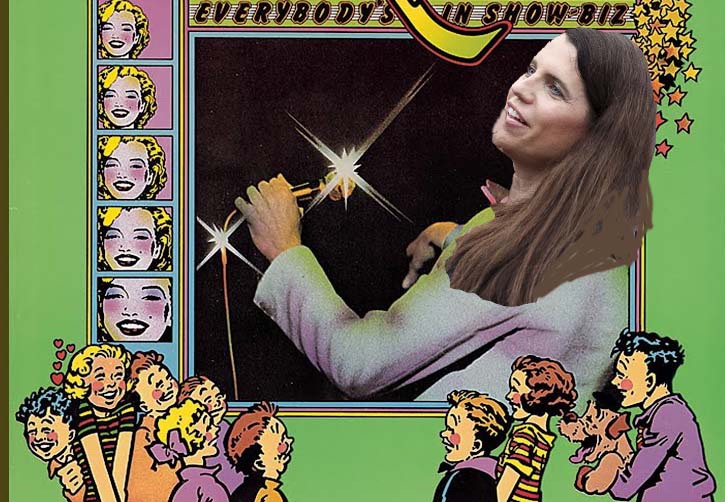
I’m what our narcoleptic president would consider “a lunatic leftwing communistic fascist low IQ individual,” so I revel in doing political hatchet Howitzer jobs on Donny; however, for the sake of my sanity, I’m only including two in this retrospective, and this one is more of a hit job on Nancy Mace than it is an excoriation of 45/7.

Take it away, Nancy!

Governing as a Performative Art.

March

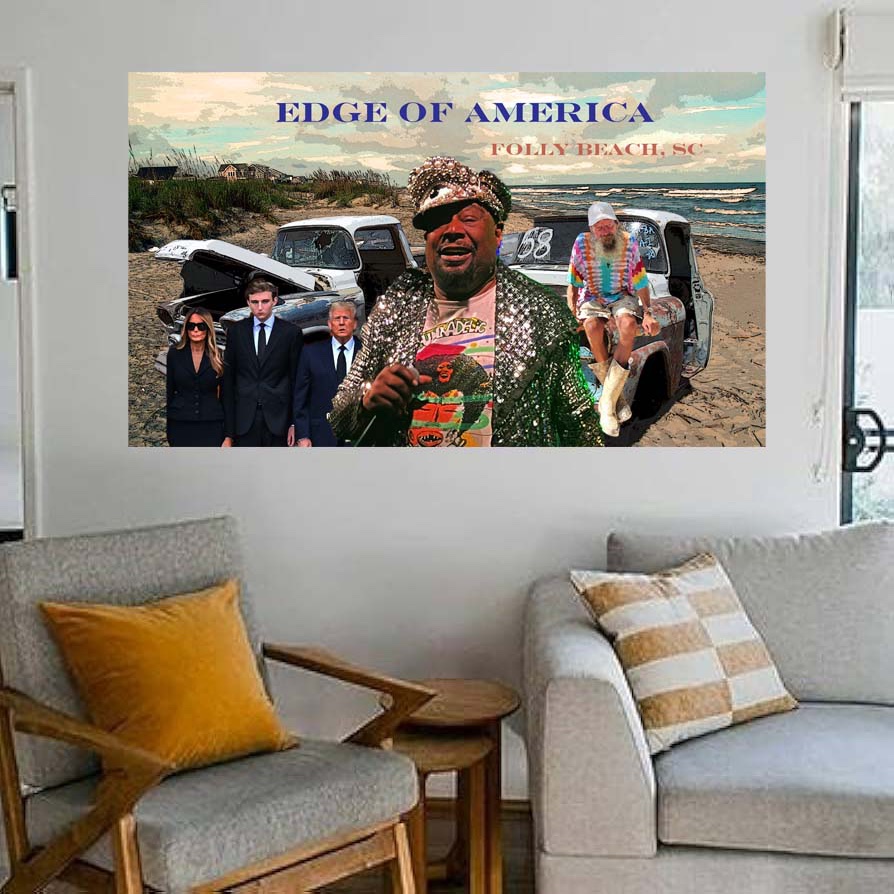
As an astute reader might infer from the above, I’m also not a fan of Lindsey Graham.

After reading the next one, entitled “Failed Poems, Fake Art, and Commerce,” you’ll definitely gonna wanna DM me so you can buy one of these fake paintings before they become unaffordable. By the way, Lowlife Bar now features the very first image in the post on the back of their hoodies. Lowlife’s located on the first block of East Hudson. Go grab you a hoodie before they sell out.
April
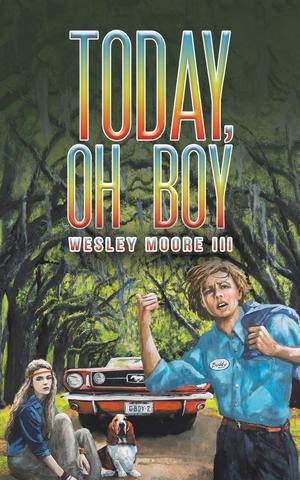
I attempted, unsuccessfully it would seem, to transform Today, Oh Boy into a screenplay, and this post explores the differences in the genres from a narrator/filmmaker’s perspective. Click: Novels Vis-a-Vis Screenplays.

May

Here’s what you get when you ask AI about Summerville 70.

“Summerville 70” refers to a recent 15-minute short film, an adaptation of a chapter from Summerville native Wesley Moore III’s novel Today, Oh Boy, depicting life and coming-of-age lessons in Summerville, SC, during the summer of 1970, directed by David Boatwright and produced by Paul Brown, which premiered in late 2025 and has been winning film festival awards.

(AI needs to work on its syntax. You could practically hang yourself with those dangling modifiers.

Anyway, I visited the set and gave Hitchcock a run for his money in fat boy cameo appearances.

June
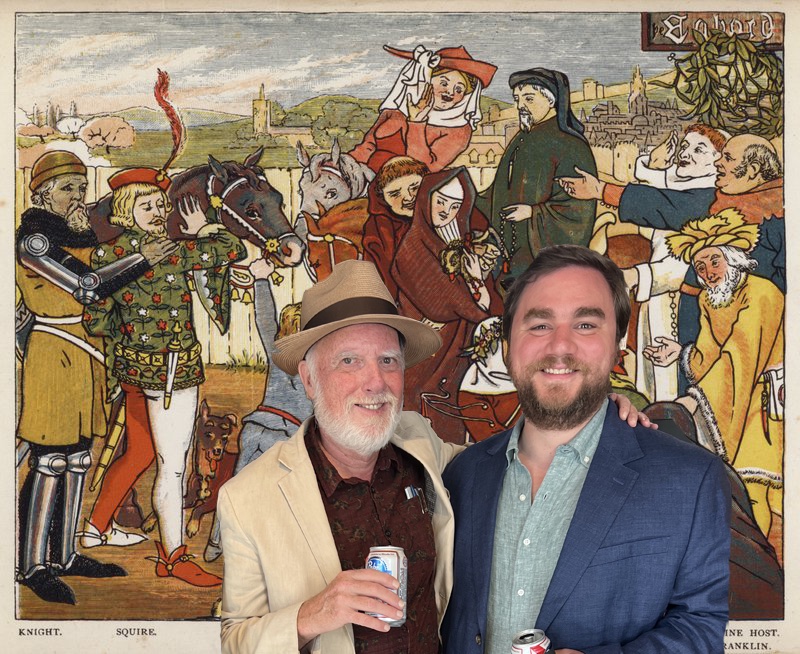
Oh, yeah, I had a book come out in June. Here’s eloquent Alex Werrell’s introduction of Long Ago Last Summer at its launch at Buxton’s Books, which was, to quote my friend Lee Robinson quoting Alan Shapiro, “the storm before the calm.”

July

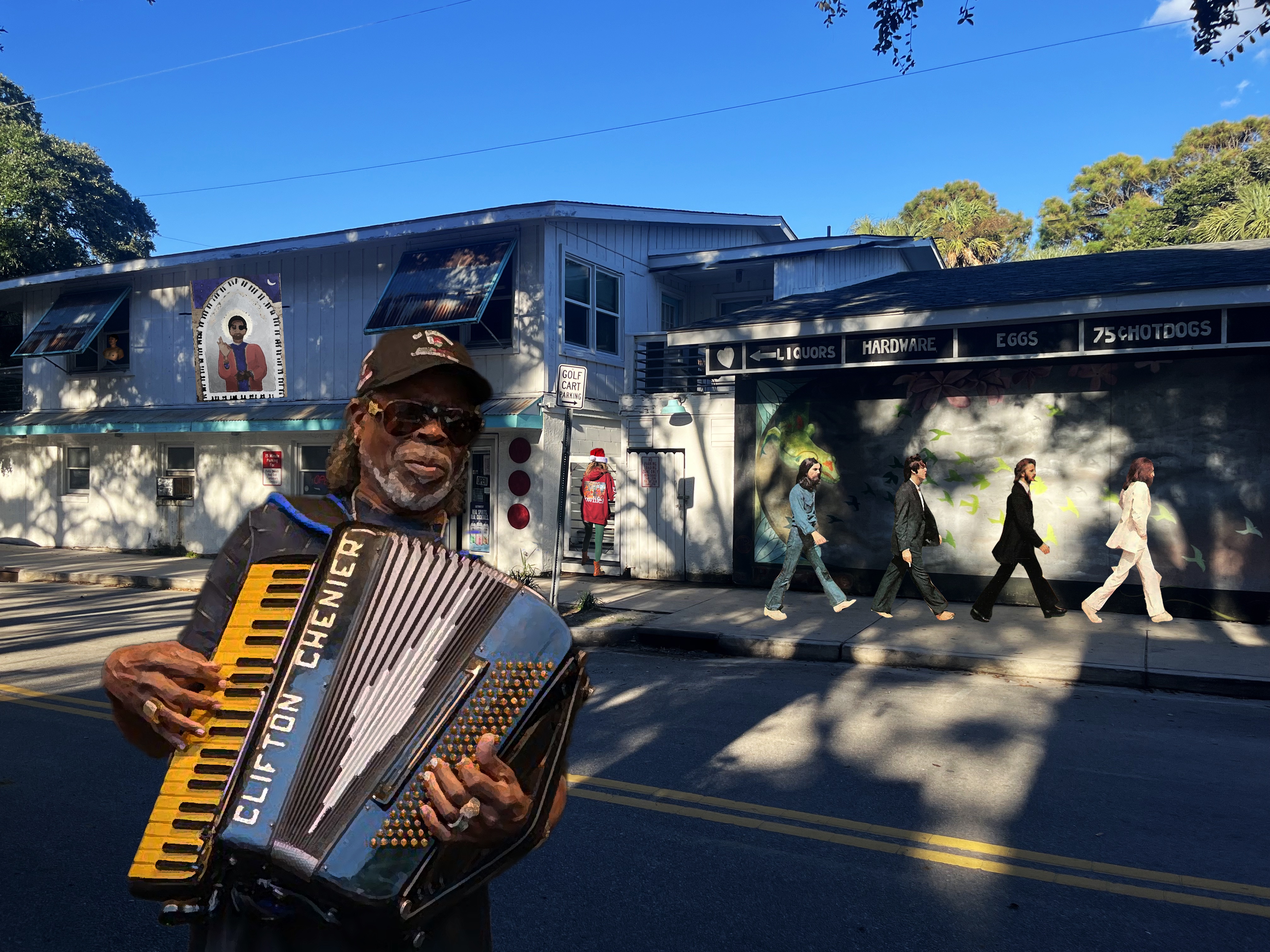
What’s real? What’s not? I can’t hardly tell (sic) cause Everything’s Ersatz.

August

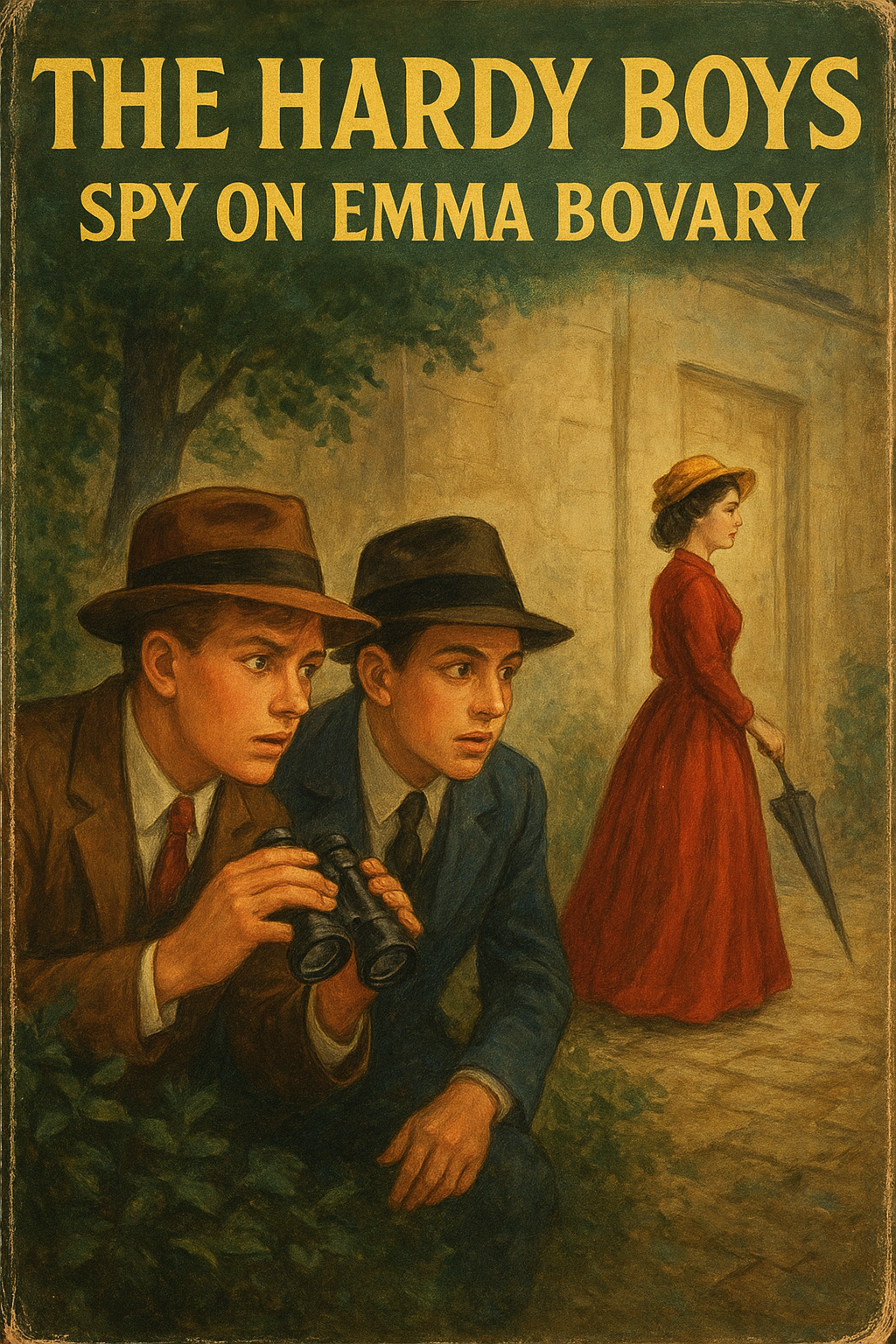
Imagine if Flaubert had written the Hardy Boys series.
September

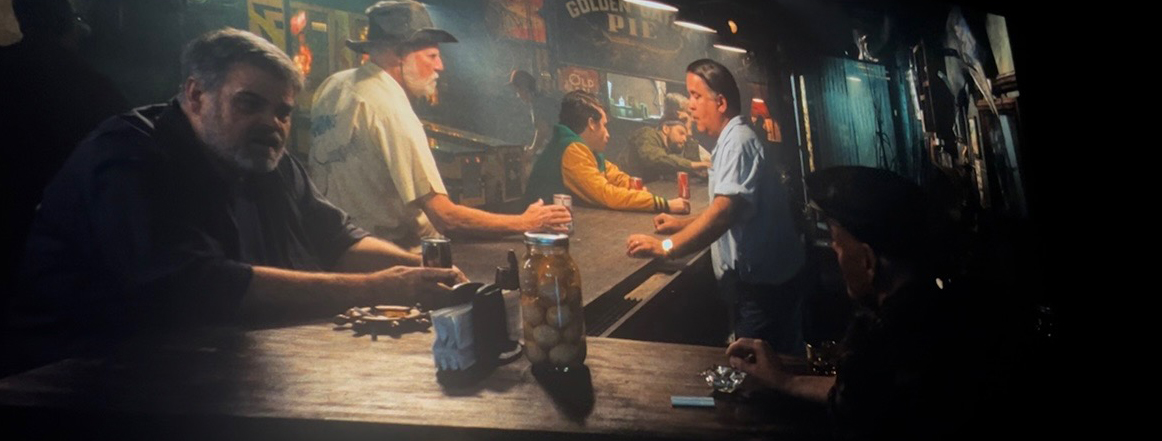
After the premiere of Summerville 70, I wrote this review in which I claim that David Boatwright, like David Lynch, creates “moving paintings.”
October

Caroline and I went to see Elvis Costello and Charlie Sexton.

November

the sound of one and clapping

December

Here’s the first chapter of Too Much Trouble, read in my gorgeous Lowcountry baritone.

Happy Holidays, Happy Solecist, Happy New Year and thanks for reading!
Too Much Trouble – Sneak Preview

Too Much Trouble

BOOK I

Chapter One: Goings and Comings

Thornwell Dormitory, the University of South Carolina, 22 December 1972 

Crisscrossing his dorm room, Rusty Boykin wads up clothes and shoves them into a sour-smelling duffel bag. He leans over and snatches his two-tone cowboy shirt from the floor, the one with fake pearl snaps, and shoves it in on top of two pairs of faded Levi’s. Turning around, he rifles through the built-in drawers in his closet and crams into the bag the four boxer shorts he owns. After yanking the drawstring tight, he slings the duffel over his shoulder hobo-style and steps out of the room into the suite he shares with three other students. Before leaving, he checks himself out in the mirror above the sink, admiring his Keith Richards–inspired shoulder-length shag that’s sure to give his ol’ man a hemorrhage-and-a-half.

Red on the head like a dick on a dog 

His suitemates, Jersey boys, have already departed for the frigid Northland. Despite going to the University of South Carolina, two-thirds of Rusty’s dormmates hail from the Northeast while the rest come from small in-state towns like Hampton, Seneca, and Sumter. Yesterday was the last day of exams, so most students have already cleared out for the holidays.

Rusty doesn’t own a car, so he’ll get back home the way he usually does—by hitchhiking. With luck, someone will take him straight to the Summerville exit so he won’t have to hitch on the interstate. It’s no fun shivering on the side of the highway, getting wind-whipped in December as 18-wheelers roar past on their way to some soulless Kmart loading dock. Not to mention that hitchhiking on the interstate is illegal.

I-95, Robeson County, North Carolina, 20 December 1972 

Rusty’s pal Alex Jensen, better known as “AJ,” has had a socially successful but academically disastrous first semester at Hampden-Sydney College—three Ds, an F, and a lone A in freshman English. “Frat life ain’t no good life, but it’s my life,” he sometimes jokes, echoing the Willie Nelson song. The good news—if you can call it that—is that AJ’s parents have become inured to being disappointed in their only offspring, a child conceived late in life when his mother Anne was 40 and her husband Thom was 52. So they won’t be shocked when they discover AJ’s abysmal grades and that he’s been lying, having assured them throughout the semester that classes were going great.

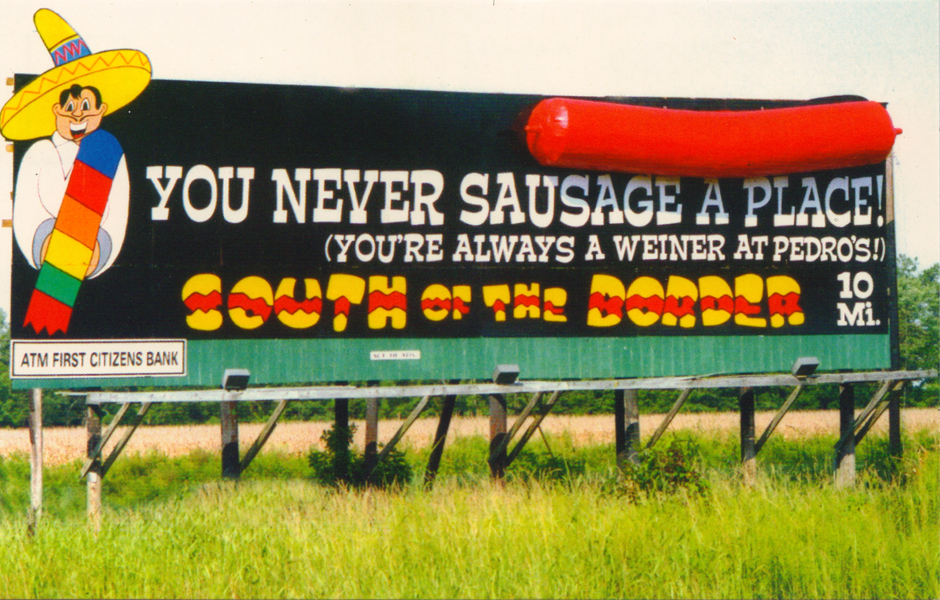
Four hours into his drive from Hampden-Sydney, AJ’s hangover has leveled off into a dull headache. He measures his progress to Summerville by the number of miles separating him from South of the Border, a Mexican-themed tourist attraction just below the state line. An absurd number of South of the Border billboards featuring their sombrero-sporting mascot Pedro appear with increasing frequency on the drive north or south on I-95 toward the North Carolina/South Carolina border. Up ahead, AJ spots yet another billboard, this one with a giant red hot dog standing upright above a sign that reads YOU NEVER SAUSAGE SUCH A PLACE!
(YOU’RE ALWAYS A WEINER AT PEDRO’S)
SOUTH OF THE BORDER 10 MI.

He thinks, Hell, why not? I’ll stop there, check it out, maybe get a bite to eat, and take a piss.

Fun ahoy!

506 Farrington Drive, Kings Grant subdivision, Summerville, South Carolina
21 December 1972 

Jill Birdsong, a tall, slender freshman at Davidson College, opens a Christmas card from her high-school boyfriend Ollie Wyborn. A fourth class cadet at the Air Force Academy, Ollie isn’t allowed to come home for Christmas. Jill hasn’t seen him since they broke up in June just before his departure for Colorado Springs. Although fond of Ollie—she admires his intelligence and integrity—Jill has never been “in love” with him, and their make-out sessions were relatively tame—especially for Summerville’s teenage culture, where, at least once every school year, some sophomore or junior or senior suddenly disappears “to stay with her aunt for a while.”

At Davidson, Jill has had a few dates, but nothing has clicked. Just recently, though, she has started drinking socially. In high school, Jill was religious—a member of the national Christian organization Young Life—and never indulged in alcohol; however, gradually, thanks largely to her biology courses, Jill has stopped believing in the Resurrection, a change of heart (and mind) she would never share with her parents, who are devout Episcopalians but not teetotalers.

Ollie, whose lack of playfulness had always been a bit of an impediment in their relationship, has never been a believer. In fact, in high school, when Rusty Boykin once asked Ollie if he believed in God, Ollie explained that the series of events Rusty had mistaken for divine intervention was merely coincidence. Although not friends, they had been thrown together the October of their junior year after some rednecks jumped Ollie outside the pool hall. Rusty and his would-be girlfriend Sandy Welch were slowing down, looking for a parking space when they saw Ollie karate-kick one of his three assailants.  They yelled for him to jump into Sandy’s Mustang to escape—only to have the rednecks tear after them in a high-speed chase through town. The rednecks’ pick-up ended up running off the road at Bacon’s Bridge and crashing into the Ashley River.

In Summerville, fistfights are common, especially among the undereducated white male population. Ollie, originally from Minnesota, was surprised at first by the belligerence and obsessions of small-town Summerville, especially people’s fixation on what they call “the War Between the States.” Ollie has contemplated the differences between the cultures of the Midwest and South with anthropological detachment. A talented academic with a scientific bent, he finds almost everything interesting.

Ollie cares deeply for Jill, but he’s a rationalist, not a romantic, so he understands it made sense for her to nix their high-school romance when college puts two time zones and military restrictions between a couple. Anyway, his boyhood dream of becoming an astronaut is paramount, so he intends to focus his attention on that goal. He could have asked for leave toward the end of the holidays but opted not to because he’s determined to demonstrate his devotion to his duties.

Jill slides the card from the envelope, glances at the glittering snow scene, then opens it and reads Ollie’s neat, efficient cursive:

Happy Holidays, Jill. As always, I wish you the best and hope that if our spring breaks coincide, we can perhaps go to a movie or have lunch and catch up. Your forever friend, Ollie.

Poor Ollie.