Of Palsied Eld

Once a month or so when I was a child, my mother would drive her mother, my younger brother, and me from Summerville to visit my great aunt Ruby, who lived on Warren Street in downtown Charleston. The two older women, the daughters of a prosperous Orangeburg County farmer, were Baptists and considered alcohol Satan’s saliva, the most detestable substance known to humankind.  On the other hand, they deemed the painkillers and mood enhancers prescribed by their physicians to be the Balm of Gilead and freely exchanged these brightly colored pills the way we did Halloween candy after trick-or-treating.[1] I also remember their complaining of their various ailments, an epic catalogue of aches and pains, a tedious topic of conversation for a ten-year-old to endure. I dreaded these visits that took me away from wooded yet-to-be-subdivided acres surrounding our neighborhood in Summerville where we built forts and played Davey Crockett.

On my father’s side, it was my great grandfather and grandmother whose visits I dreaded. My great grandfather, Fleming David Ackerman, had been a pharmacist who owned a drug store on the corner of Spring Street and Ashley Avenue in Charleston during the Depression. He was a hypochondriac extraordinaire who actually slept in a hospital bed. Mama’s daddy, Kiki, a spry bantam rooster of a man, used to say that Grandaddy Ackerman “enjoyed bad health,” which would elicit a smoker’s cackle from my mother, who somehow had managed to grow up open-minded, unlike Aunt Ruby’s daughter Zilla, whose embrace of puritanism would give Carrie Nation a run for her money.

Carrie Nation

Of course, ten-year-olds don’t fret about their own eventual senescence until that distant day in the unreckoned future when they too will stiffen, as TS Eliot put it, “in a rented house.”  Alas, for me, that day has arrived, sneaked up on me like ninja, one day my urine jetting in a beautiful arc into an empty Coke bottle, the next sprinkling weakly as if from a watering can.[2]  Rolling over several times a night in bed is necessitated by lower back issues, and to me even more vexing is the tinnitus I’ve recently developed, which in my case isn’t a ringing of the ears, but a frenetic clicking, as if mice are sending out desperate messages via telegraphs, a fitting soundtrack for the insomnia that visits me nightly.

So here I am, like Aunt Ruby and Grandmama Hazel and Grandaddy Ackerman, taking pleasure in complaining about ill health. 

Ah, but here’s an antidote:

Thou hast nor youth nor age,
But as it were an after-dinner’s sleep

Dreaming on both, for all thy blessèd youth
Becomes as agèd and doth beg the alms
Of palsied eld; and when thou art old and rich,
Thou hast neither heat, affection, limb, nor beauty

To make thy riches pleasant. What’s yet in this

That bears the name of life? Yet in this life
Lie hid more thousand deaths; yet death we fear,
That makes these odds all even.

Measure for Measure, 3.1 34-43


[1] I remember in grad school actually copping a tranquilizer from my grandmother to assuage my nervousness before delivering an oral report in one of my classes.

[2] OMG, TMI!

Eraserhead Revisited

From Painter to Filmmaker

The death of the brilliant film director David Lynch has spurred my wife Caroline and me to revisit his oeuvre.[1]

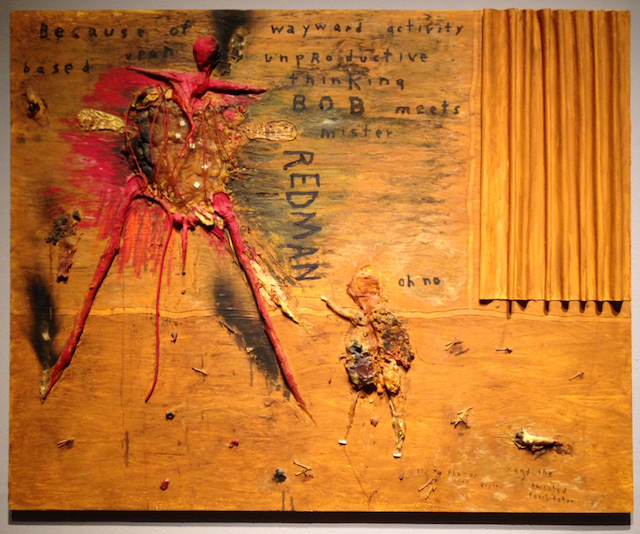
We started with the Jon Nguyen’s 2016 Lynch documentary The Art of Life, the culmination of four-year’s worth of conversations, twenty in all, recorded at Lynch’s home in LA. I had not been aware that Lynch was a painter, a highly skilled and prolific one at that. 

Throughout the documentary, we listen to Lynch narrate his life story while watching him in the act of creating paintings and sculptures. Interspersed are 8mm home movies of him and his family from the ’50s and ’60s. If you love Lynch, you’ll love this film, enjoy its leisurely pace and artful presentation.

What struck me most was Lynch’s revelation that “moving pictures” could be “moving paintings.”

So post epiphany off Lynch went to the American Film Institute where he resided in stables owned by the institute, and there he made his first feature film Eraserhead, transforming the narrow halls and small rooms of the stables into movie sets. 

By the way, I first saw Eraserhead in 1989 as a refugee from Hurricane Hugo, a dozen years after its original release, the again in the mid-’90s, and for the third time last night with Caroline.[2]

Dr. Caligari’s Great-Great Grandchild

In the fall of 1973 or 4, at the University of South Carolina, I had the great fortune to enroll in a multi-departmental course on German Expressionism, the prominent artistic movement of the Wiemer Republic. This class really broadened my intellectual horizons. We read Hesse, Kafka, and Bertolt Brecht; analyzed the paintings of Ernst Ludwig Kirchner, Karl Schmidt-Rottluff, and Emil Nolde; listened to the music of Schoenberg and Alban Berg; and watched each week in the student union’s theater an expressionistic Wiemer film. We began with the Cabinet of Dr. Caligari and ended with Fritz Lang’s Metropolis. Murnau’s original Nosferatu was also among the films we saw and analyzed. It was, by far, the most interesting and rewarding course I’ve ever taken. 

Obviously, Caligari heavily influenced Eraserhead in its set designs, dark themes, and murky black-and-white lighting. Also, Eraserhead is essentially a silent movie with only four minutes of dialogue in its 89-minute running time. The protagonist Henry, played by Jack Nance, waddles Chaplin-like throughout the film in what amounts to a Kafka nightmare. Though Eraserhead’s billed as a surrealistic horror movie, both Caroline and I found it to be hilariously funny. I can’t remember the last time I saw a film that produced so many out-loud laughs.

On the other hand, one significant way in which Eraserhead doesn’t resemble a silent movie is in its soundtrack. Unlike a silent movie whose soundtrack is more or less pasted on afterward, the soundtrack of Eraserhead consists of irritating sounds arising from the action, sounds like rain hissing, a radiator hissing, the mewling and crying of that abomination of a baby whose arrival marks the turning point of the plot. Caroline aptly described these background noises as “a plaid of sounds,” which provides a sort of underlying mechanical, menacing buzzing. 

Caroline also suggested that the central theme lay in Lynch’s hatred of fatherhood, though I saw it more as a strangely puritanical parable about the dangers of premarital sex. Ends up Caroline was correct. Lynch’s daughter Jennifer was born with severally clubbed feet and had to undergo several corrective surgeries as an infant, and she considers her birth defects as the major inspiration for the infant of the film.

At any rate, we had a fun night and look forward to checking out Lynch’s next film The Elephant Man, which, although more mainstream, shares with Eraserhead a very malformed human being at the center of the action.


[1] Why do I feel guilty using “oeuvre” when EB White would applaud its economical aptness? Perhaps because American anti-intellectualism lurks in the shadowy shotgun shack of my subconscious mocking me like the bully it is? 

[2] Caroline, who minored in art history and has a master’s in psychoanalytical criticism, is the perfect companion and provides a wealth of cogent observations that would have escaped me otherwise.

A Late Night Lament

A Late Night Lament

Drip drop, drip drop, drop, drop, drop.

TS Eliot. “The Waste Land”

Our planet suffers from too much sorrow/too many troubles–– fluorocarbons, cows, prequels, Subarus, homo sapiens, ads, tin pot dictators, lone gunmen, South African billionaires, etc., etc. etc. 

Earth Mama Gaia seems to be doing all she can to shake off these fleas of infestation. 

To wit, in the last four years, we’ve had a plague, Biblical-scale floods in Appalachia, and now these Southern California fires whose widespread devastation makes the great conflagrations of London 1666, Charleston 1861, and Chicago 1871 seem like pep rally bonfires in comparison, at least when it comes to total square miles of smoldering rubble and the billions of dollars of property loss. 

Alas, elitists like I-and-I can’t bother to

[…] bear witness

To what each morning brings again to light:

Gold crosses, cornices, astonishment

Of panes, the turbine-vent which natural law

Spins on the grill-end of the diner’s roof[1]

because we’re too distracted squinting at tiny screens informing us of the latest sorrows/horrors from practically every square inch of the Planet Earth. Hey, our synapses evolved back in those non-agrarian days of yore on savannas rich in birdsong but devoid of the blare of leaf blowers, so our brains are ill-equipped to deal with all this over-stimulation, the incessant din of our ailing empire–– honk, honk, bang, bang, ahooga, ahooga––  and the never ending volcanic avalanche of distressing news.

No wonder so many of us is gone cruzy and taken to self-medication. 

Envy the nuns and monks of cloisters and monasteries, Mother Teressa and Thich Nhat Hahn, but come to think of it, they’re dead, and to quote Mary Flannery O’Connor, “you can’t be any poorer than dead.”

Here’s another quote, this one from a poem by my wife Caroline Tigner Moore –– “The Earth will outlive this human plague.”So on that note, “Good night ladies, goodnight, sweet ladies, goodnight, 


[1] Richard Wilbur, “Lying”

Uthceare

Uthceare[1]
 
 
Please tell me this: is
a mourning dove’s mating call
actually a lament?
 
To me it sounds like 
a woebegone train whistling 
on its weary way
 
through highland thistle
on a sun-starved, loveless day
in late December.
  
[1] An Old English word that means to lie awake and worry before dawn.

My Backpack Full of Crack

My Backpack Full of Crack

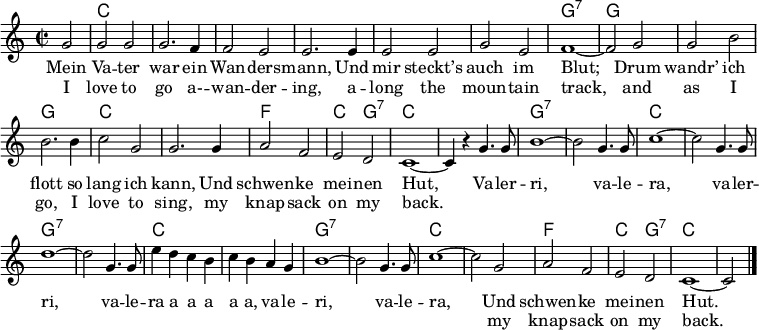
with apologies to Florenz Friedrich Sigismund

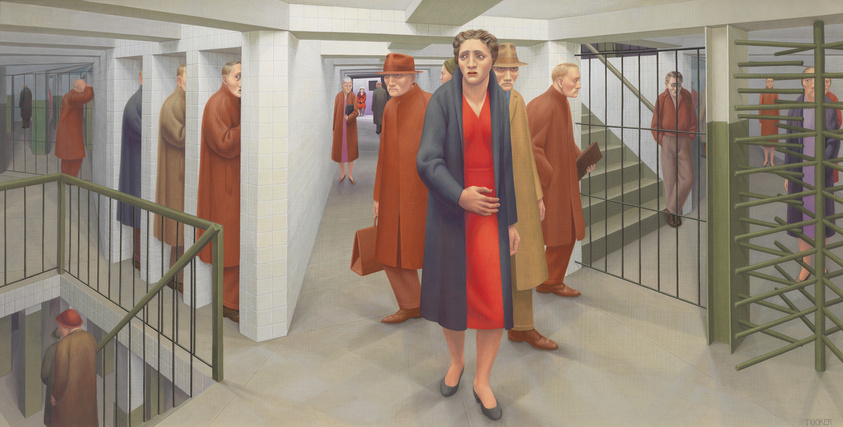
I am a miserable trafficker
along the subway track
and as I ride, I never nap
with a backpack full of crack.

Val-deri, val-der-wah
Wha wah wah wah wah
Val-deri, val-der-wah
My backpack full of crack.

I won’t get off at a station
where K-9s sniff around
So I close my eyes and keep my seat
until we’re Harlem bound.

Val-deri, val-der-wah
Wha wah wah wah wah
Val-deri, val-der-wah
My backpack full of crack.

I avoid eye contact with those I meet
when I get off the train
then jostle my way through the crowd
humming “All my Love’s in Vain.”

Val-deri, val-der-wah
Wha wah wah wah wah
Val-deri, val-der-wah
My backpack full of crack.

All this dope trafficking
will soon be the death of me
but until that day I’ll ride this train,
embracing my infamy.

Val-deri, val-der-wah
Wha wah wah wah wah
Val-deri, val-der-wah
My backpack full of crack.