AI Has Its Place But It Ain’t Above My Mantle

The other day on Facebook, every septuagenarian’s favorite social media platform, I posted this confession:

“I’ve just come to the terrible realization that I’m a professional dilettante!”

I meant the quip, of course, to be humorous given the oxymoronic pairing of professional, denoting lucrative compensation for someone who can claim to be an expert, and dilettante, which describes a poser, an amateur who dabbles in the arts.[1]

A few kind responders begged to differ, claiming that I was the real deal, which I appreciate, but don’t buy, especially when it comes to what I have come to call my “fake paintings,” which are essentially photocollages filtered to look like paintings and printed on canvases. Not that they’re not eye-catching in a good way. My friend the painter and filmmaker David Boatwright ­ — the antithesis of a dilletante — finds them amusing.[2] So even though I call them “fake,” I do think they qualify as “art,” but it’s amateur art. When in a groove, I can crank one out in a couple of hours.[3] David, on the other hand, toils over his canvases and murals for months, not ceasing until every last miniscule detail is right.

Which brings me to the central subject of these ramblings — AI generated illustrations. 

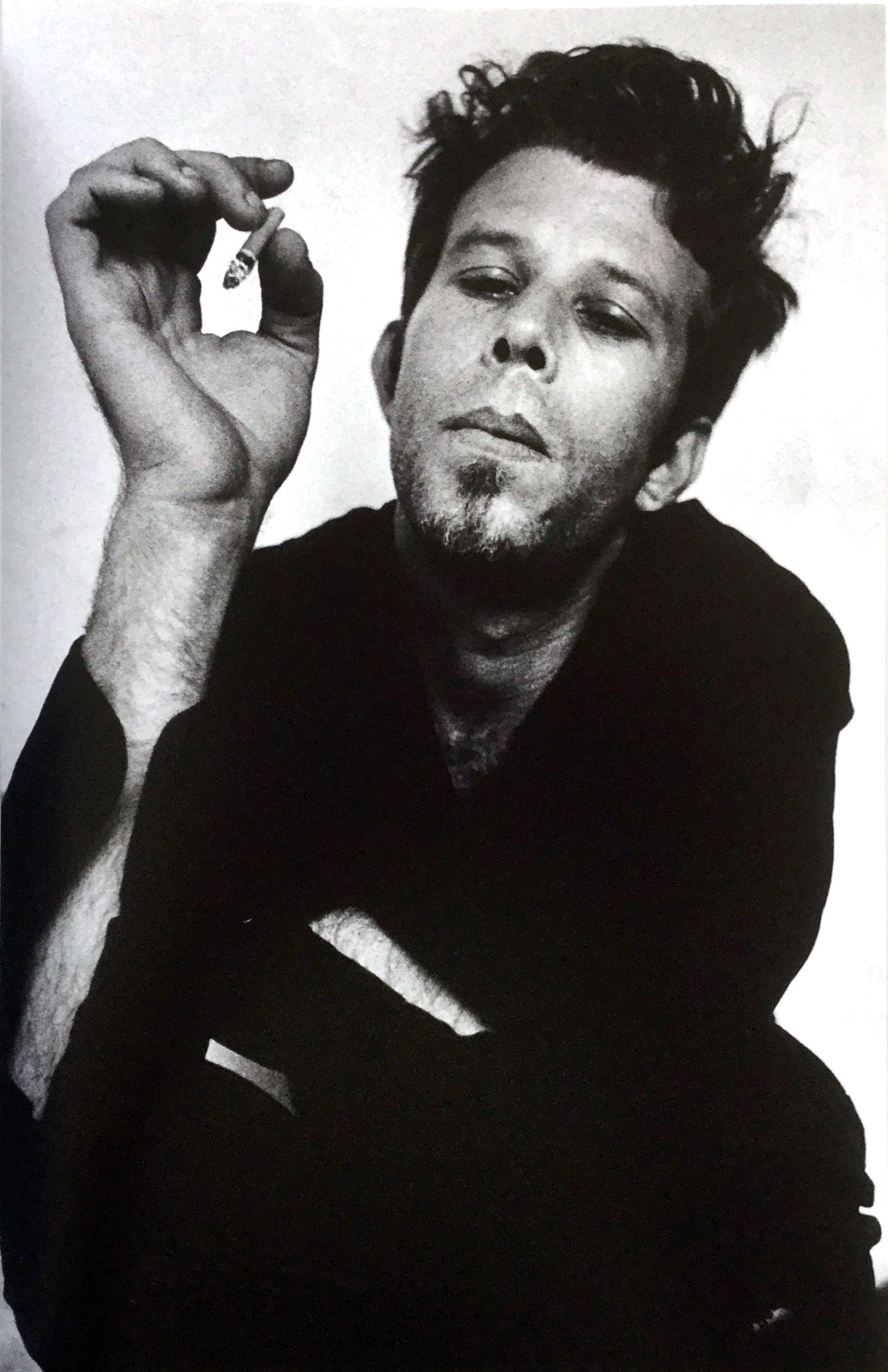
A while back a Facebook friend lamented that AI-generated “art” was going to put people like me out of business, but I begged to differ. “AI hasn’t listened to Tom Waits while smoking Thai sticks,” I responded. It can’t, by its very essence, be original. It ain’t got soul. 
Last night my wife Caroline and I were looking at my two latest canvases, and I said, “There’s no way AI could come up with either one of these.”

“Let’s do a little experiment and see what AI comes up with,” she said. 

So we did, prompting the software to create something similar. 

Before we begin the comparison, I’ll explain briefly how I go about making a fake painting. 

I start with a high resolution photograph. In my latest (see below) TGIF Chico Feo, I took a photo of the bar area when I was the only customer in the establishment. 

I upload the photograph to Photoshop and add an artistic filter, in this case, the “Dry Brush” filter.

Almost always, I have no preconceived notions about what I’m looking to create. In this case, I googled “pulp cover paperbacks bar scenes” and scored the couple kissing from a novel entitled Divorce. Of course, the man wasn’t leaning over a bar to kiss his lover, but I determined I might be able to cut the couple out and paste them into the photo, and, damn, it worked. Next, I found the woman sitting to the couple’s left and did likewise, and once again, I was successful.

I thought it might be amusing to have an organ grinder in the foreground, but I couldn’t find any illustrations that suited; however, I did find the begging monkey with the cup and tried him in various locations until I hit upon placing him on the bar, interrupting the passionate kiss. 

I decided to place a large figure in the foreground and went Screaming-Jay-Hawkins hunting. I experimented with various Hawkins iterations, but the vibe wasn’t right, and then the proverbial cartoon light bulb went off above my fedora. Louis Armstrong, Satchmo!

And boom![4]

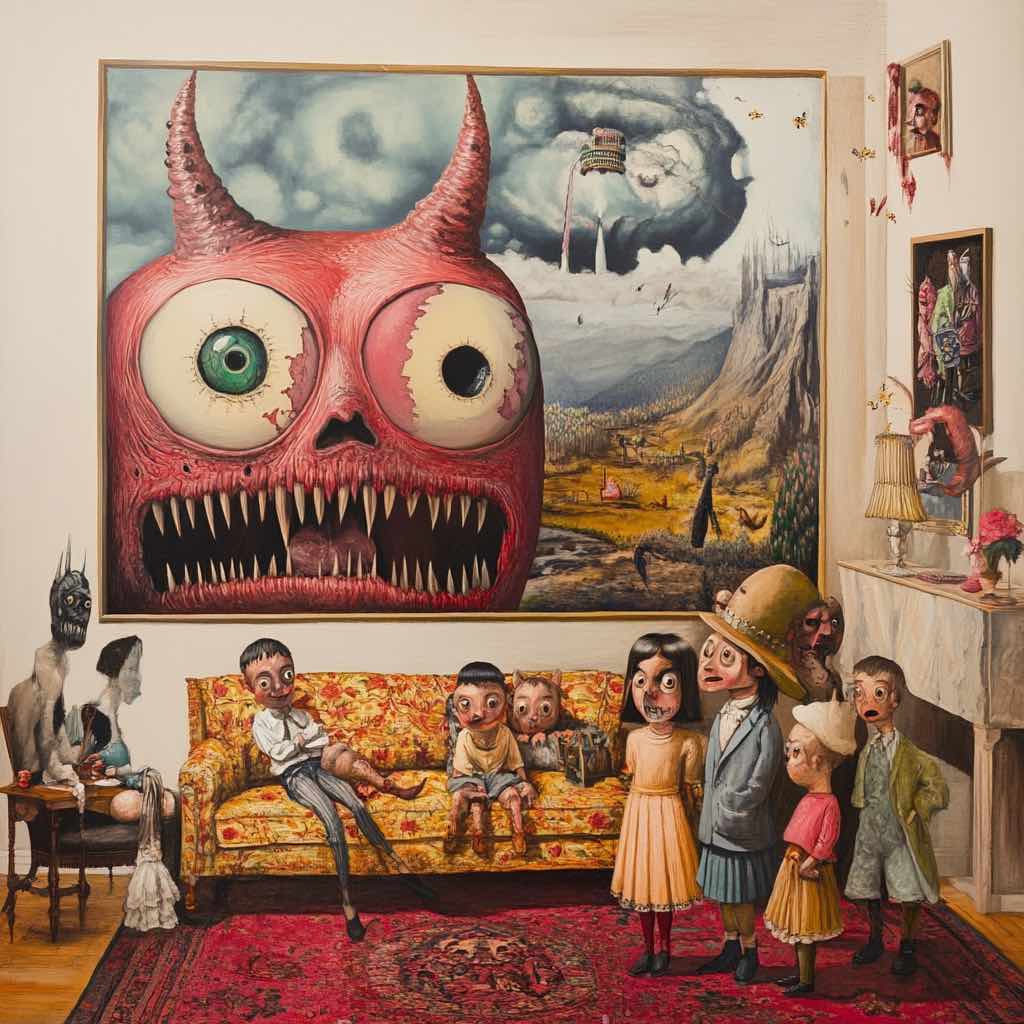
So here are my TGIF Chico Feo and AI’s response to the prompt “create a picture of Louis Armstrong playing at a beach bar.”

See what I mean.

One more example. 

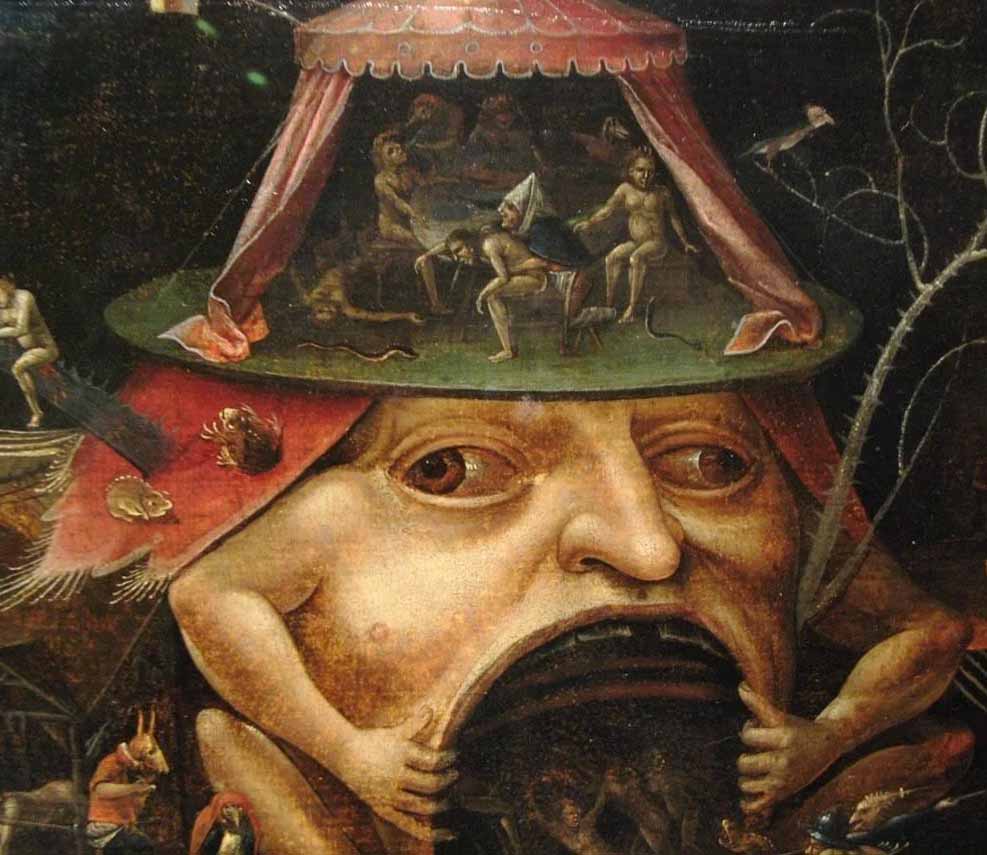
Two of my favorite artists are Bruegel the Elder and Hironimus Bosch. 

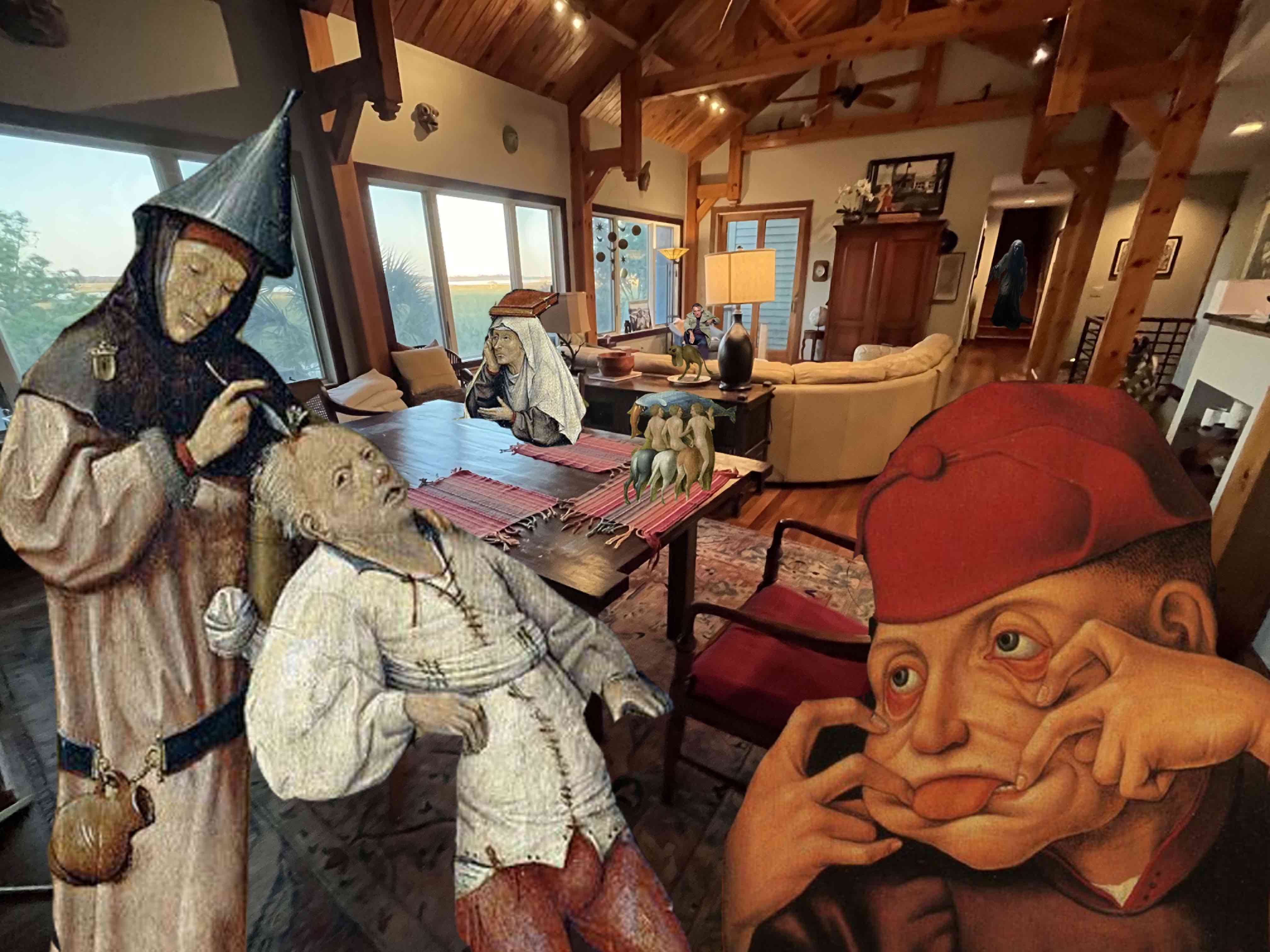
I took a photo of our living room, which struck me as sort of Flemish-looking so I peopled it with Bosch figures, being in a mocking post-election funk. 

Here’s the final product.
And here’s what AI came up with when prompted “Boschian style weird people and one Boschian monster in a regular modern beach house living room.”

Of course, AI is likely to put some illustrators out of business. In fact, because Caroline subscribes to AI software, I might ask her to provide me images to illustrate some of my blog posts. However, for book covers, I always prefer scruffy over slick. 

Which cover would you guess Caroline and I chose?


[1] The awkwardly phrased sentence this footnote references is proof in and of itself of my dilettantism. A professional, a true wordsmith, would devote time to express these ideas in a more cogent fashion, spending perhaps an hour or so insuring that every word was in its proper place and that the clauses melded in pleasant fluidity. but [cue Bob Dylan]. “[That] ain’t me, babe. 

[2] BTW, David has written a screenplay for a 15-minute film based on the poolroom chapter of my novel Today, Oh Boy and is just 50K short of having the funds to start production, so if you happen to be wealthy and want to be an art patron and contribute to making a really cool indie film, contact me, and I’ll forward your info to David. 

[3] I have had a one-man show at Studio Open and have sold a couple of dozen, two of which went for $500, so there’s that.

[4] I also Hitchcock like, try to make a cameo appearance in the “paintings.” In this case, it’s the cover photo of my next book Long Ago Last Summer. Can you find it?

Him Plenty Dead, Kemosabe

Him Plenty Dead, Kemosabe[1]

Curmudgeon iconoclast that I am, I’ve decided to ask my loved ones that my memorial service be dubbed “an acknowledgement of death” as opposed to “a celebration of life.”[2]

Look, I get the sentiment, know Ecclesiastes/ Byrds song — a time to be born, a time to die and all that jazz. Focus on life, not death. Dear departed Uncle so-and-so did some good things, navigated life okay, so let’s reminisce, let’s celebrate the years at the Navy Yard but not mention the racist jokes. 

But here’s what I really bugs me: the phrase “Celebration of Life” is clunky, wordy, awkward.

            “Hey. Josh, let’s go surfing.”

            “Can’t, dude. Gotta go my Uncle Tims’s celebration of life ceremony.”

            “Bummer, dude.” 

What’s wrong with calling the postmortem get together a “memorial service?”

BTW, I hate fucking euphemisms, especially fucking Chamber of Commerce euphemisms. 

So there!

Emily Dickinson, First Year Medical Student

their Nightingales and psalms

Far removed from vanity
The old man lies exposed,
His organs sporting flags
Like holes of a golf course.

Nose and Ears are hairy;
He used to be a Man
Who ate beets – burped – blinked in the Sun –
It used to be Man.

Now disarticulated,
The antithesis of sentimentality,
Resting in pieces
Like left over turkey.

Yes, I have become accustomed
To hanging out with the Dead,
Assuming a cool, ironic air,
Pulling intestines like thread,

But when I die, I want my Lodging
As plush as plush can be,
For I have learned this lesson
In Gross Anatomy:

In spite of all
The noble palaver,
It’s impossible to respect
A desiccated cadaver.

[1] a line from Tonto from an episode of the Lone Ranger circa 1958-ish

[2] I wish I could demand it, but I realize that corpses are in a weak position as far as negotiations go.  

A Spotty Religious Education

My mother’s people were Baptists, serious Baptists, no drinking, no playing cards on the Sabbath, no dancing, though where would they have danced in rural Orangeburg County if given the chance? Juke joints were devil dens. Maybe there were barn dances, but I doubt it.

On the other hand, my daddy’s people were indifferent Methodists. In the 19th Century, they must have been devout because my great-great grandfather Wesley, a Confederate foot soldier and later prisoner of war, named his son Luther, and I’m one of four descendants named Wesley in honor of the founder of the Methodist Church.

However, by my grandfather’s generation, none of the Moores I know of attended church. We did pray, mumbled the same rote grace every meal, but otherwise, the only time God’s name was uttered in our house, it was taken in vain by my father in anger.

Other families I occasionally ate with might ad-lib their blessings, mentioning current events, family members, and on one occasion, me, which made me feel somewhat uneasy for whatever reason. Obviously, praying was meaningful to them, an attempt at communication with the Lord rather than the empty abracadabra lip service we recited at our dinner table.

For a year or two, when I was eight nine, my mother, my brothers, and I sporadically showed up at Summerville Baptist Church where my grandmother Hazel worshipped. Pathologically shy, I despised going because I felt out-of-place, like an intruder; plus the place smelled strange, chemically odd, like they overdid the disinfectant. I’d much rather been at home smelling stale cigarette smoke dreading Monday reading the funny papers.

My mother wasn’t enamored with Summerville Baptist, yet sought a spiritual haven, so she joined St. Paul’s Episcopal Church, willing to be tarred with the accusation of being a social climber. So here I was again intruding in a strange place of worship, this one with ritualistic recitations, head-bowing, and kneeling that were alien to me. But Mama was serious this go around. She signed me up for confirmation classes. 

I hated being two years older than the other confirmation students, yet once I started attending, I did learn the basics of Judeo-Christianity, that the Old Testament was a covenant between God and Moses, and the New Testament a covenant between God and us mediated by his only begotten son. We had to memorize the names of the books of the Torah and the names of the first six books of the New Testament. I scored a 100 on the exit exam, was confirmed, and became a member of St. Paul’s. 

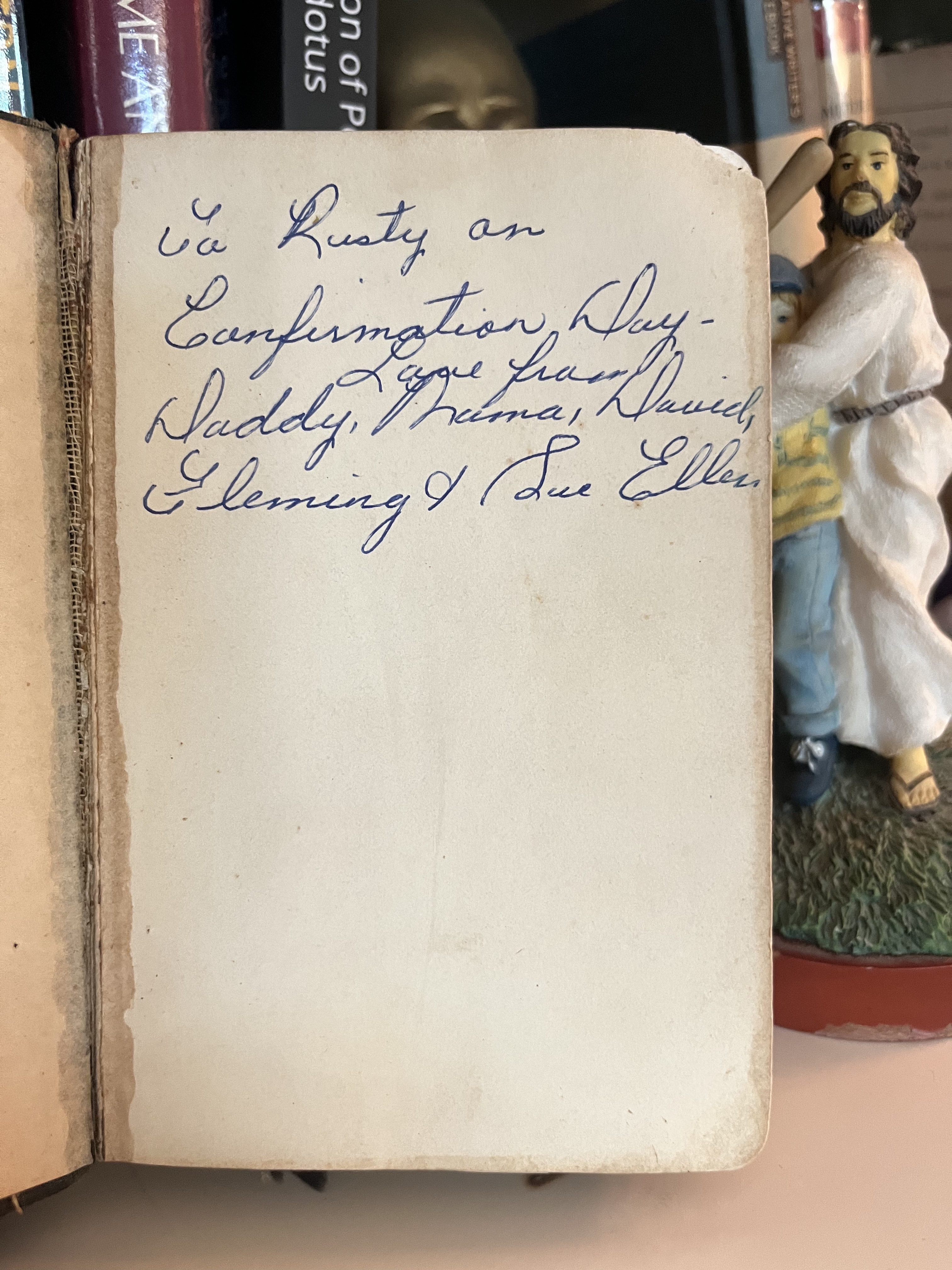
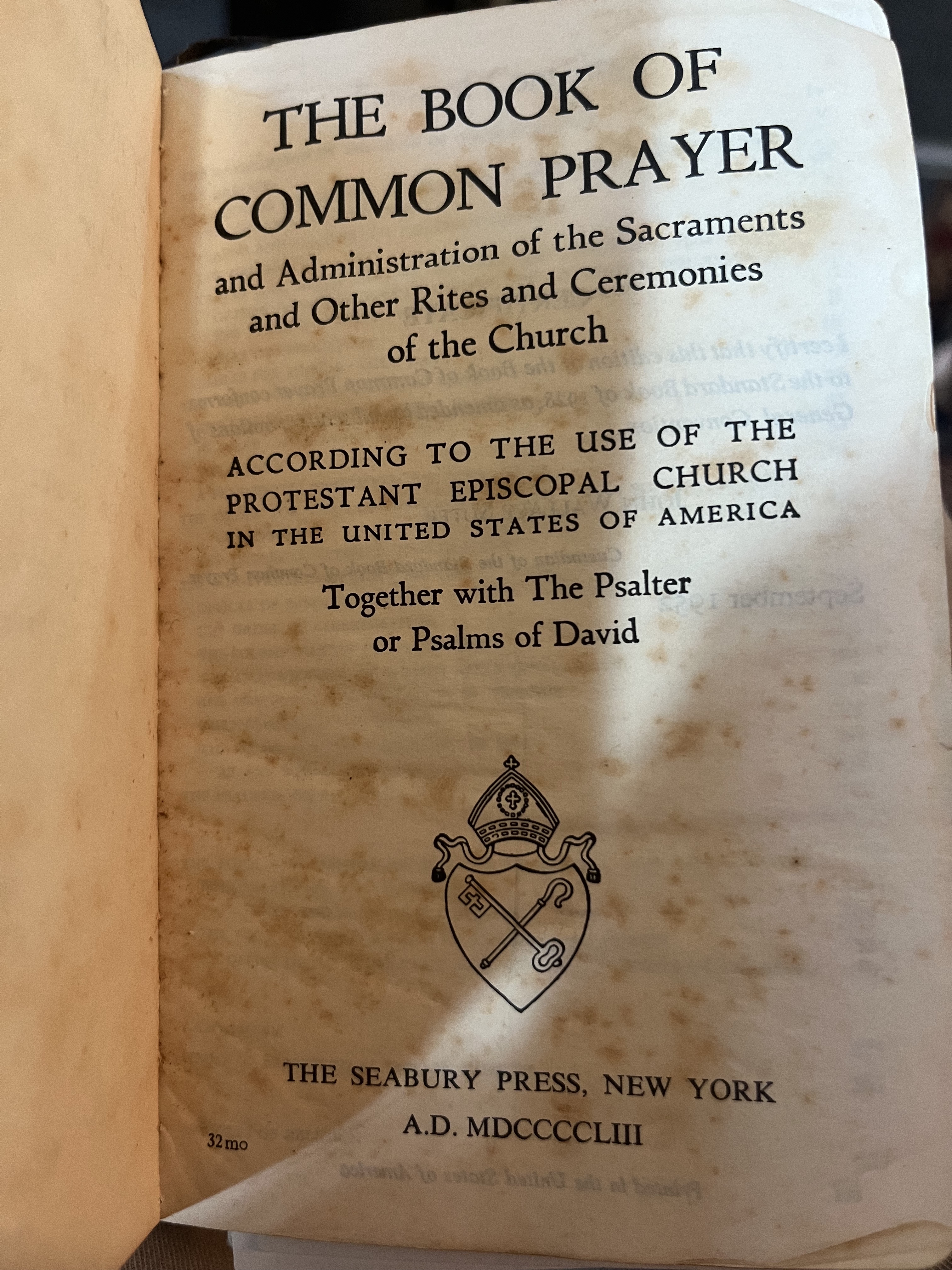
Back then, we used the 1928 version of the Book of Common Prayer which employed Jacobean English, and because of my uncanny ability to retain verse, song lyrics, and in this case liturgy, in a few years I could recite “The Order of Morning Prayer” by memory.[1]  

Here’s my favorite ditty from the Rite of Holy Communion: “If any man sin we have an Advocate with the Father, Jesus Christ the Righteous, and he is the Propitiation for our sins.”

Has a ring to it, doesn’t it.

Anyway, once I became an adult and married Judy Birdsong, who had been a Young Lifer in high school, lost her religion at Presbyterian College in Clinton, SC, “a small Christian College for small Christians,” as Judy used to say, I bid adieu to Christianity. 

We had our two sons baptized, but other than a short two-month stint at Sullivan’s Island’s Church of the Holy Cross when the boys were five and six, we didn’t go to church. However, they did attend Porter-Gaud, an Episcopal School, and sat in chapel every other week. 

My cousin Zilla, my great aunt Ruby’s daughter, an incredibly nosy and outspoken Baptist, once asked me if I had seen to my sons’ spiritual needs, and I could honestly say they frequently attended services at their school.

As I’ve written more than once, I envy people blessed with faith. It must be an enormous comfort, especially in the waning days of the American Empire.

O God, the Father of Our Lord Jesus Christ, our only Saviour, the Prince of Peace; Give us grace seriously to lay to heart the great dangers we are in by our unhappy divisions. Take away all hatred and prejudice, and whatsoever else may hinder us from godly union and concord.

Amen!


[1] This “uncanny ability” of memory doesn’t, alas, kick in with people’s names. 

In Times of Trouble Marcus Aurelius Comes to Me

In times of trouble, it’s not Mother Mary who comes to me, but Marcus Aurelius whose Meditations provide a practical response to the woes we face, and there’s no question that because of the election of Donald J Trump, the Western World is going to go through some things, especially Eastern and Western Europe. My father used to say that Russia will take us over without firing a shot. It certainly seems as if he might have been right.

Here, in the US, we have a patchwork of abortion laws, some so strict that so-called pro-lifers would rather a woman bleed to death than receive treatment during miscarriage. Trump has promised to put crackpot Robert Kennedy in charge of health and Elon Musk in charge of transforming the civil service into a Soviet-like bureaucracy of yes men. Most galling to me is that this adjudicated rapist, convicted felon, incorrigible liar and his servile minions are now in full celebration mode, not to mention that my faith of the good will of the American people has been severely compromised.

Yes, I’m heartbroken, but I am powerless at the moment to change the situation; however, I do have the power to herd my thoughts from the edge of a cliff to safer ground.

Here’s Aurelius:

“The first rule is to keep an untroubled spirit. The second is to look things in the face and know them for what they are.”

Of course, maintaining an untroubled spirit is much easier said than done.[1] However, “if you are pained by external things,” as Aurelius writes, ‘it is not they that disturb you, but your own judgement of them. And it is in your power to wipe out that judgement now.”

By judgement, I think he means your thinking of them, dwelling on them at the expense of the mundane joys of life, like looking up and seeing a formation of geese flying overhead, listening to Lester Young speaking through his tenor saxophone, enjoying the taste of olives plucked from a bowl that has been cured in a kiln, the bowl, a thing of beauty, which guides your thoughts to Keats’ great ode in which he sings, “a thing of beauty is a joy forever.”

Our moments are too precious to squander in barren speculation. What will be will be. I’ll attempt to employ what the Buddhists call mindfulness. I’ll try to pay attention to what is in front of me rather than the agonizing over what may or not be. I’ll attempt not to dwell in the shadows dark speculations.

In short, 

Live a good life. If there are gods and they are just, then they will not care how devout you have been, but will welcome you based on the virtues you have lived by. If there are gods, but unjust, then you should not want to worship them. If there are no gods, then you will be gone, but will have lived a noble life that will live on in the memories of your loved ones.

Marcus Aurelius, Meditations

To a Friend Whose Work Has Come to Nothing

Now all the truth is out,
Be secret and take defeat
From any brazen throat,
For how can you compete,
Being honor bred, with one
Who were it proved he lies
Were neither shamed in his own
Nor in his neighbors’ eyes;
Bred to a harder thing
Than Triumph, turn away
And like a laughing string
Whereon mad fingers play
Amid a place of stone,
Be secret and exult,
Because of all things known
That is most difficult.

WB Yeats


[1] Here’s a link to a piece I wrote called “The Art of Not Thinking.”