Wesley’s One Hit Hall of Fame

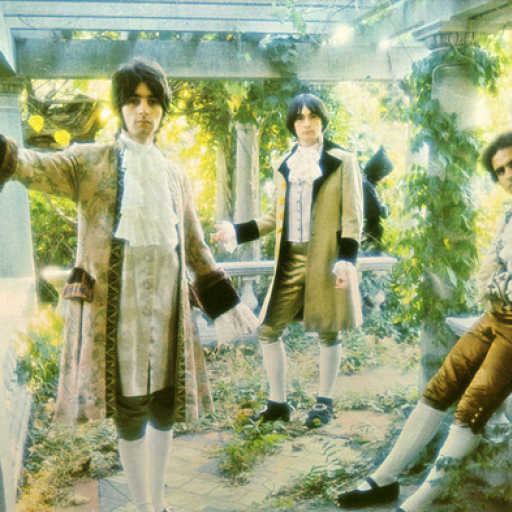
For whatever reason, the ol’ cerebral jukebox this morning had the 1966 novelty hit “Winchester Cathedral” playing in my head. Chances are you’ve never heard this New Vaudeville Band tune even though it won the Grammy for Best Contemporary R and R song that year (despite not being a rock-n-roll song). It features someone named John Carter singing through cupped hands a la Rudy Vallée singing though a megaphone.[1] On December 6th it displaced the Supremes’ “You Keep Me Hangin’ On” as the number one song in the US. Believe me, I’d much rather have “You Keep Me Hangin’ On” stuck on replay on the ol’ cerebral jukebox. “Winchester Cathedral” is inane, irritating, obviously catchy, or otherwise it wouldn’t be lying dormant in my unconscious for fifty-five years.

The tune got me thinking about one-hit wonders, those special songs that for whatever reason memed[2] their way into becoming mega hits, songs like “The Monster Mash,” “Snoopy and the Red Baron,” “Loving You Has Made Me Bananas.”[3] However, not all one-hit wonders are novelty songs. In fact, some of my favorite pop songs are one-hit wonders. Here be my top five, not necessarily in order of preference.

“96 Tears” (? and the Mysterians)

 “96 Tears” might be the grandaddy of all garage band hits, and some say (according to Wikipedia) that it played a role in the genesis of punk rock. I don’t know about that, but Springsteen has covered it, which speaks volumes.  It also came out in 1966, and I’ve never gotten tired of it.

“Double Shot of My Baby’s Love” (The Swinging Medallions)
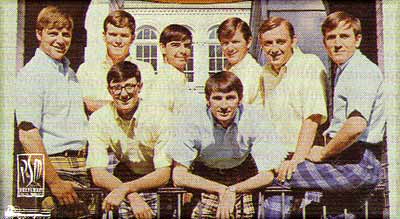
Although written by Don Smith and Cyril Vetter and first recorded by Dick Holler and the Holidays in 1963, it’s the South Carolina Beach Band The Swingin’ Medallions who made it a hit in ­– yes, you’ve guessed it – in 1966.  Damn, what an infectious, party hoot, and ladies and gentlemen, I actually heard Springsteen cover it live in 2008 at the North Charleston Coliseum. In fact, the Boss opened the show with it, hollering something like “How’ bout some Beach Music?”

“A Whiter Shade of Pale” (Procol Harem)
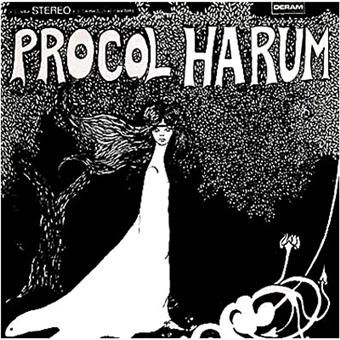
This moody, somewhat surreal, 1967 song provided an apt soundtrack for my doomed infatuation with fellow freshman Francine Light. I can see her now, standing across the cafeteria in her green tartan skirt and matching knee socks. O, woe was me!

Walk Away Renée” (The Left Banke)

When I began this little project, I had no idea that four of these favs were recorded with in a year of each other. This sad love song made it to number 5 on US Billboard Hot 100 chart. Despite its lush orchestration, flute, and harpsichord, I still sort dig it after all these years, not so much for its music but because of the memories it evokes.

“Wipe Out” (The Sufaris)

This is for my money the quintessential surf song, released in 1963 and covered by every garage band in my hometown of Summerville, SC, including The Marijuana Brass, an instrumental brass band modeled on Herb Albert. 

A couple of observations. Three of the five feature organs (a harpsichord doesn’t count) and all were recorded about the same time during my junior high days. Of course, there have been subsequent one-hit wonders I’ve enjoyed like “Play That Funky Music, White Boy.”  Oh, yeah, and “Tighten Up” by Archie Bell and “Sweet Soul Music” by Arthur Conley beat the hell out of my top five, but I don’t care. 

Maybe hormonal imbalance played a role. Anyway, this exercise has effectively effaced “Winchester Cathedral” from its seemingly never-ending loop, and for that I’m very thankful.


[1] Chances are you’ve also never heard of  Rudy Vallée, Chances are, however, you’ve heard of Frank Sinatra, who covered it on his 1966 album That’s Life. Go figure.

[2] Verb, to meme, to catch on culturally, from the noun meme, an element of culture “selected” by the masses because of its contagious appeal. (Forgive me, Richard Hawkins).

[3] “Loving You Has Made Me Bananas begins with these immortal words:

    Your red scarf matches your eyes.

    You closed your cover before striking.

    Father has the shipfitter’s blues.

    Loving you has made me bananas.
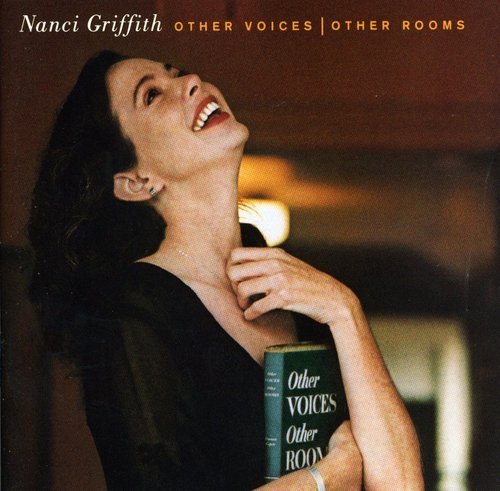
The Late Nanci Griffith’s “Other Voices, Other Rooms”

The very best Christmas present I ever received from an in-law is Nanci Griffith’s masterpiece Other Voices, Other Rooms, a collection of covers from songwriters who influenced Griffith’s own music making. My sister-in-law Linda Birdsong gave it to me in 1994, saying she thought I’d enjoy it. Understatement of the century Clinton years.

I ended up purchasing ten or so more CDs to check out the work of some of the featured songwriters, which include Kate Wolf, Vince Bell, Townes Van Zandt, Frank Christian, Bob Dylan, John Prine, Ralph McTell, Tom Paxton, Woody Guthrie, Janis Ian, Gordon Lightfoot, Jerry Jeff Walker, and Malvina Reynolds and Harry Belafonte, just to name fourteen.

The magic begins with a cover of Kate Wolf’s “Across the Great Divide,” an incredibly beautiful composition that embodies concretely the passage of time in both terrestrial and temporal images.

Here are the first three verses, but I encourage to go to YouTube (who won’t allow me to embed a link) and check out a live version:

I’ve been walkin’ in my sleep
Countin’ troubles ‘stead of countin’ sheep
Where the years went I can’t say
I just turned around and they’ve gone away

I’ve been siftin’ through the layers
Of dusty books and faded papers
They tell a story I used to know
And it was one that happened so long ago

Although they’re all excellent, the next song that blows me away is the third cut, Townes Van Zandt’s “Tecumseh Valley,” a duet Nanci performs with the great Arlo Guthrie. 

Other personnel featured on the album include Dylan himself, who plays harmonica on “Boots of Spanish Leather” and Guy Clark on the Woody Guthrie’s “Do-Re-Mi.” Also, Emmylou Harris and Iris Dement are sprinkled about, and the final cut “Wimoweh” features Odetta, the Indigo Girls, John Prine, James Hooker, Holly and Barry Tashian, John Gorka, Dave Mallet, Jim Rooney, and Nanci’s father Marlin Griffith.

Demonstrating just how much of life is fraught with loss and longing, the overall mood is melancholic with “From Clare to Here” (featuring Peter Cummin), Jerry Jeff’s “Morning Song for Sally,” Michael Burton’s “Night Rider’s Lament,” and “Speed of the Sound of Loneliness” (featuring John Prine who wrote the song).

Of course, Nanci produced an admirable body of work herself, and she’s certainly going to be missed. From everything I’ve read about her, she was a lovely person, generous, intelligent, somewhat scholarly.

Sad, sad, sad.

Feelings, Something More Than Feelings

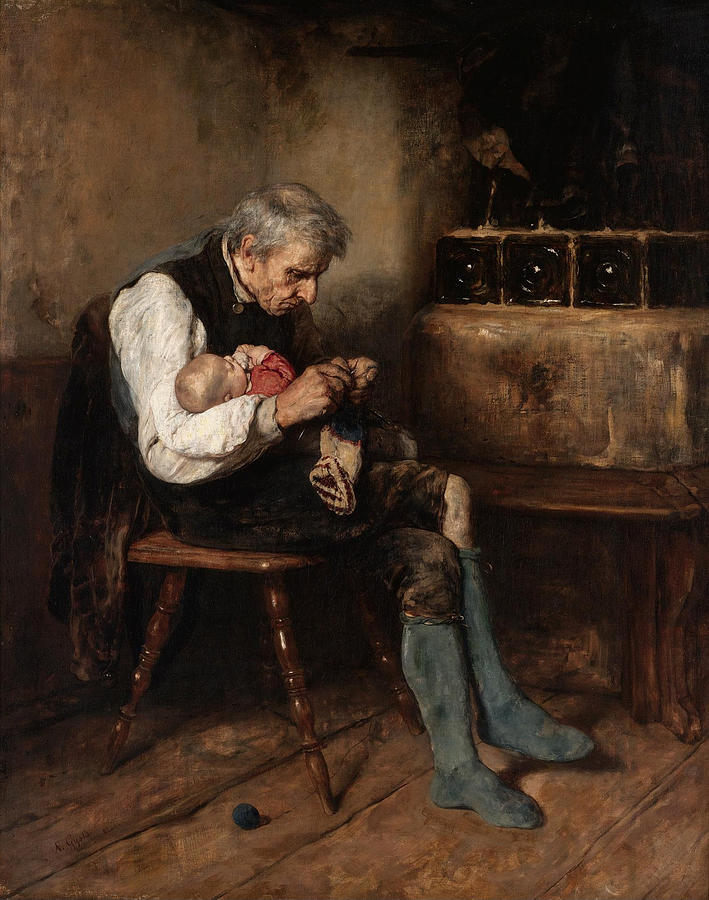
As a new grandfather, I’ve been riffling through the poetic jukebox of my memory trying to find a poem that embodies this profound visceral love I feel for this squiggling, big-headed creature I’ve seen in videos and while facetiming.

No luck. I can only recall poems about children, like Linda Pastan’s minor masterpiece “To a Daughter Leaving Home”:

When I taught you
at eight to ride
a bicycle, loping along
beside you
as you wobbled away
on two round wheels,
my own mouth rounding
in surprise when you pulled
ahead down the curved
path of the park,
I kept waiting
for the thud
of your crash as I
sprinted to catch up,
while you grew
smaller, more breakable
with distance,
pumping, pumping
for your life, screaming
with laughter,
the hair flapping
behind you like a
handkerchief waving

goodbye.

And Peter Meinke’s “E-Mail from Tokyo,” which begins with this epigram from Philip Larkin:

They fuck you up, your mum and dad
They may not mean to, but they do.

And ends with these two stanzas:

I know what memory and poetry need: storm moon
dolphin eye strings of images strung like those kites
across a summer sky years ago the wind snapping
letters toward the sun Kiss me Dear one Stay safe Write soon

but in the end we can only cry your names sending
them skyward fragile and flammable affirming that
you’re ours (poor babies): Perrie Peter Gretchen and at
last thanking you for tomorrow’s letter Timothy

Since I couldn’t recall a grandchild poem from my memory, I turned to the internet and discovered, not surprisingly, grandchildren galore have been celebrated in verse, most of it along the lines of this:

I bought two new books for you today my sweet boy.
The Wizard of Oz and The Jungle Book should bring joy.

I’m very proud of how wonderfully you read.
As an English scholar, I know you will succeed.

[groan]

So, unfortunately, I must rely on my own threadbare wit to try to express this feeling, which, of course, lends itself to cliché because it “wells up” and “warms” and “heartens.”

I’ve seen other grandparents in its throes, flashing photos, and found their enchantment genetically understandable, if a tad bit too precious, but here I am experiencing that very rapture, a love I’m incapable of embodying in images or syllables, in iambs or trochees.

All I can say is it’s really something.

Julian Levi Moore

Freedom’s Just Another Word

(a polemic prose poem)

please hit audio for the full effect

Seems to me that if you’ve read somewhere that a Covid vaccine reshuffles your DNA or magnetizes your epidermis or implants monitoring devices into your metabolism so that Satanic pedophiles can keep tabs on your comings and goings, that you’d want to wear a mask to avoid contracting a disease so mighty that it actually hospitalized superhuman Donald J Trump, who boasts an immune system so powerful your everyday microorganisms spontaneously combust if they dare enter the inner sanctum of his imperial badassness. 

But, hell no, your garden variety anti-vaxxer is also an anti-masker. I saw a video today that captured a Tennessee school board meeting where health professionals arguing that masks help to stem infection were verbally ambushed by a pack of sign-bearing parents fearful that requiring their children to wear masks during a virulent resurgence of a pandemic would be the first step down a slippery slope of freedom-confiscation that eventually would lead to the United States becoming a country where citizens receive affordable healthcare.

Suffer the Children

Slap her down again, pa

Slap her down again

Make her tell us more, pa

Tell us where she’s been

We don’t want our neighbors

Talkin’ ’bout our kin

Slap her down again, pa

Slap her down again

       as covered by Arthur Godfrey in a 1947 recording

The above mid-century snippet certainly demonstrates that times have changed.  It’s hard to imagine anyone outside a Montana militia camp or Pentecostal rattlesnake farm who would adhere to the childrearing principles practiced by the vengeful patriarch of the song (spurred on, it would seem, by a brother who suffers a case of sibling rivalry that makes Edmund’s hatred of Edgar in Lear seem like mere disgruntlement).  The song also projects a Taliban-like sexism in its relegation of females into the realm of property.  

Of course, the lyrics are meant to be humorous, but it’s hard to imagine their not offending a large number of North American citizens of both sexes.  

The word sadistic comes to mind.

another Arthur Godfrey knee-slapper

No, we middle class denizens of the Late Empire no longer treat our children as property, nor beat them with belts nor switch them with switches, which is all to the good. However, elevating them to the status of major deity might not be such a hot idea either. If judging from some of the Facebook posts of the current generation of DNA replicators and actual 3-D encounters with their offspring, a number of millennial parents seem to be transforming childrearing into some sort of strange counter-intuitive fetish in which the power of household management is ceded to tiny monomaniacs whose accumulated world wisdom would not fill one dimple of a thimble.

Idolatry!

Father to 5-year-old-daughter:  Anastasia, tell Mr. Wesley where you went today.

Anastasia:  [sullen silence, no eye contact]

Mr. Wesley:  Yeah, Helen.  I’m just dying to know where you went today.

Father [frowning]:  Helen?

Mr. Wesley:  Yeah, as in Helen Keller.  

Anastasia  [frowning]:  Why did he call me Helen, Daddy?

Father: [squatting to accomplish eye-level conversation].  Because you didn’t answer Mr. Wesley, honey, so he was pretending that you were Helen Keller, a very accomplished person.   Helen Keller was a famous girl, who well, had some obstacles to overcome.  She couldn’t hear, so she didn’t know how to talk, but a wonderful woman named Anne Sullivan worked with Helen and taught her how not only to talk, but to write, and Helen Keller became a world-renowned writer –

Mr. Wesley: And she lived happily ever after even though she was blind as well.

Anastasia [tugging at parent]: 

Father:  Um, nice seeing you, Wesley.  Say goodbye to Mr. Wesley.

Anastasia:  [sullen silence, no eye contact]  

My late wife Just Birdsong inherited a book from her mother Emily entitled Our Darlings’ ABCs, which sort of blew my very-difficult-to-blow mind.

A pretty book of A B C’s

The tiny folk is sure to please;

So here it is in colors bright,

With every letter placed in right,

And more than this, a rhyme as well

That will some Bible story tell,

To help the children learn with ease

The puzzling list of A B C’s.

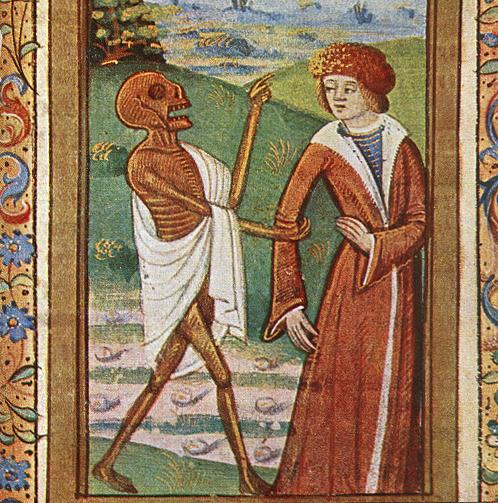
Sounds innocuous enough, right?  Well, it doesn’t take us long – the B’s in fact – to discover that childrearers around the turn of the previous century (the book appeared 40 years before Godrey’s recording of “Slap Her Down Again”) were a bit more brutal back in the day.  Here are the facing pages for B.

As one who like Elisha has “no hair on the top of his head,”  I find the children’s taunt of  “Go up, thou bald head” hurtful in the extreme and agree with the author’s observation “How unkind to speak of his head in that way.”  Certainly,  Elisha’s wish to punish the children is understandable, and God knows, they certainly will never commit that unkindness again because “God heard and sent two large bears out of the woods.  The bears were very fierce, and they soon tore forty-two of the children in pieces.”

Nighty night.  Sweet dreams, sugarplum.

That’ll teach them to mock their elders

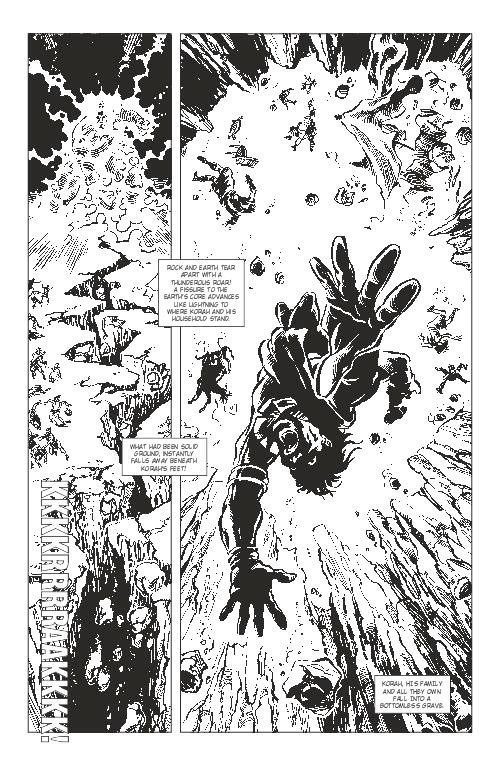
As I was perusing the alphabet and  encountering Bible stories with which I was not familiar (e.g., how Moses told his people “to hasten away from Korah’s home” before “the ground opened up and swallowed Korah”). I couldn’t help but think of the ABC book I have written and how it reflects the kinder, gentler world of 2012.  

Or [have you ever] barbered* a barbarian?*


*You can read the entire primer here and my complete guide to childrearing here

We both use the same method, alliteration and assonance – “bad bald back” and “barbered barbarian” and offer illustrations to complement our lessons, though my primer is a tad bit less didactic.

As in most cases, the Middle Way is better – too much rod = brutish child and too much parental kowtowing = loutish child.  

Anyway, I doubt if many millennials are reading goodnight stories from the O.T.

Well, enough. Good night, and may God bless!

Korah, his family and all they own fall into a bottomless grave.