America’s Dystopia Jones

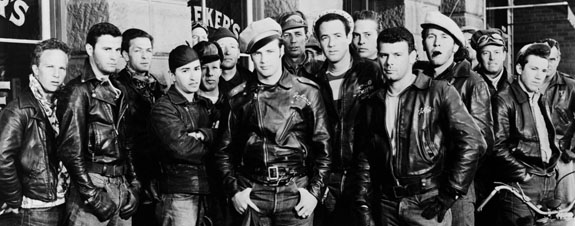
Motorcycle Gang in The Wild OneOh, for those quaint days of yore when the worst your uptight cinematic town had to fear was a motorcycle gang led by Marlon Brando cutting doughnuts on Main Street, shattering the plate glass windows of hardware stores. [TRAILER HERE]
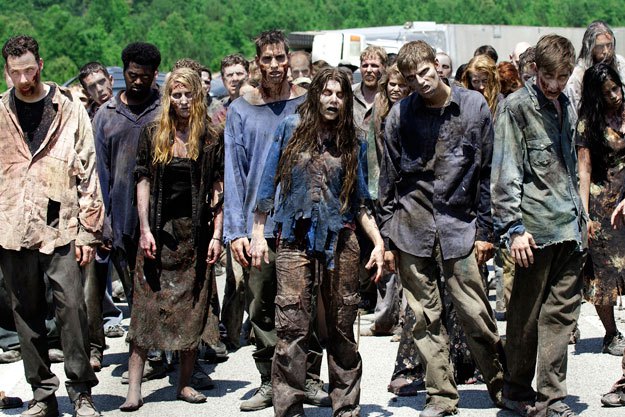
how-to-be-on-the-walking-deadNowadays, it’s brain-eating zombies upsetting the ambiance of the townships of Televisionland, shuffling like Roman Legions down Martin Luther King Boulevard, crossing the tracks, headed toward gated communities guarded by underpaid military retirees in police uniforms.

For whatever reason, we First World consumers crave catastrophe, whether we’re curling up on the sofa with Cormac McCarthy’s The Road, programming our DVRs to record the latest episode of The Walking Dead, or listening to the dulcet intonations of NPR announcers bringing us up to date on Ebola and ISIS.

Horror is all the rage in Late Empire America. Walking your rescue dog past young Bentley’s house, you can hear heavy gunfire and explosions emanating from his manipulations of a video console. Hmm, sounds like he’s playing Mortal Kombat Armageddon, or is it World of Welfare: Let’s Kill the Bloodsuckers?
Edwin Butler-Bayliss

Edwin Butler-Bayliss

All of this got me to wondering when the West quit writing utopias a la Thomas More and started portraying the future world as a nightmare. Of course, my go-to unscholarly source is Wikipedia, and it anoints Jonathan Swift’s Gulliver Travel’s as the first dystopian “literature “– though Oedipus Rex might lay some claim to being the first with its plague-ridden Thebes ruled by a tainted king whose sexual misdeeds make the Clinton/Lewinski dalliance seem downright wholesome in comparison. But Oedipus Rex predates empire, and I suppose you must have an empire, a nation state, or a fucked-up planet to qualify as a dystopian society. My colleague Aaron Lipka tells me the civilization must be a fallen one. I’d add that God has to be Dead.


Phas 2, Part 1


“Well this stuff will probably kill you/ Let’s do another line.”

Tom Waits, “Heart Attack and Vine”


On Dummyline Road east of Slidell,

I’m standing at the counter of a dirt-floor,

concrete-block shit-hole of a juke joint

doing shots of shine

with my main man Alphonse DuMar.


There’s a black bluesman sitting on a stool

in the corner blowing bad harp,

and by bad, I mean not-good, shitty, shrieking.

I wish he’d shut the fuck up.


I’m the only white cat in this joint,

the proverbial peanut in the Hershey bar,

as we used to say back in the day

before the PC Police put the nix on colorful language.


The shine burns going down, sears my esophagus.

I shout up to Mr. DuMar,

who stands six-four-and played tight end for Tulane.


“The body ain’t no temple,”

I holler over the harp.

“It’s more like a nation,

with little white blood cell armies

that attack invading viruses,

and if you abuse a territory,

like your esophagus,

it might revolt, attack your capital ass,

rising up in a cancerous insurrection.”


Alphonse shakes his big black shaved head.


“Don’t be talking no shit like that in here, mon.”


Just then, like an answered prayer,

the harp ceases its screech.

Vowel rich intermingled speech instead.


In my head that song by the Box Tops clicks on.


Lonely days are gone

I’m a goin’ home

My baby, she wrote me a letter


Problem is I ain’t got no baby —

or no home for that matter.

Been sleeping in my van for the past six months.


It’s parked outside next to a portable sign on wheels,

one of them signs with removable letters,

a sign that says

PHAS 2

   WED NITE CRA FIS

Some thieving teenager named Willie Horton

maybe made off with the W and H.


“This shine burning a hole in my gut,” I say,

and Alphonse say, “Then just one more.”


The shine is poured,

the glasses raised,

and I brace myself for a slug of fire.


I don’t even hear the pistol go off

but feel the shot rip through my gut,

and scrunch over and howl

like Lee Harvey Oswald

on that day in Dallas.

IMF_Head-Perp_Walk

Are You Telling Me or Asking Me?

I’ve been digging around the internet trying to discover the linguistic answer to why so many females (and increasing numbers of males) end declarative sentences with an interrogative lilt. You know, no matter what they say, even when it’s a universally accepted fact, their voices rise at the end of sentences as if they’re asking a question.

kim-jong-un_416x416Kim Jong-un is a North Korean dictator?

Kim Jong-un has a bad haircut?

Kim Jong-un isn’t blessed with a self-deprecating sense-of-humor?

For whatever reason, this linguistic affectation bugs the hell out of me. I know, I certainly have more pressing concerns — shit like spousal cancer, maternal dementia, my dog Saisy’s insufferable halitosis — but goddamn it, I’m sick and tired of hearing far flung NPR correspondents say “the critical mass of a bare mass sphere of plutonium-239 is 8-10kg? as if they’re asking, “Do you think breast-feeding at a rodeo is tackier than breast-feeding at a Miss Utah beauty pageant?”

I started my quixotic linguistic NetQuest by typing into Google “interrogative lilt” and garnered lots of hits. My first stop was Answer.com, a website where you can pose a question and have site visitors provide possible answers. Whoever asked the question gets to choose what she considers the best answer and then some sort of arbiter at the site sifts through the received answers and selects what he/she/it deems worthy of mentioning. It’s sort of like Wikipedia except that the responders aren’t even knowledgeable amateurs but uninformed web addicts with way too much time on their hands, in other words, cranks like me. It’s about as scientific as a History Channel feature on Noah’s Ark, but, anyway, here’s Answers.com best guess:

[The interrogative lilt] is mildly irritating. I think it is an attention getting (sic) device. People do it who are used to being ignored. Asking a question often gets an answer; the listener’s ears perk up. That is why it is annoying because you perk your ears up for nothing.

transformations-identity-construction-in-contemporary-cultureSecond on the Interrogative Lilt hierarchy of Google search hits was endnote 221 on page 367 of Grant McCracken’s Transformations Identity Construction in Contemporary Culture. From what I can glean, McCracken writes about how consumers construct new identities through acquisitions, like newbie surfers peroxiding their hair and stocking up on Rusty tee shirts and Reef footwear (though he doesn’t use that example).

Anyway, I don’t know the context of the endnote, but it reads, “The Interrogative Lilt turns statements into questions, listeners into authorities, and it helps mark and construct power difference between two conversational partners.” This statement is not all that different from the Answer.com supposition – but the endnote also provides two other ways to describe the interrogative lilt – “uptalk” and High Rising Terminal (HRT), which is official linguistic terminology.

These two terms allowed me to expand my search, and I discovered that what I’m going to continue to call the interrogative lilt (IL) is a hot topic that spawns wide-ranging responses. Many people see the predominance of women ILers as a signal of insecurity. Linguist Robin Lakoff first noticed the phenomenon in 1975 in Australia and attributes the effect to the speaker’s seeking affirmation.

There’s a notable study by William and Mary sociologist Thomas Linneman that analyzes Jeopardy contestants’’ use of IL. According to Bloomberg Business Week’s Caroline Winter, “In total, [Linneman] found that contestants answered 37 percent of the 5,473 given questions using upstalk. In terms of gender, the findings, published in 2013, exposed an unexpected correlation: Successful women were more likely to use uptalk than less successful women, whereas the reverse was true for men.” Linneman dismisses the notion that IL’s only function is to indicate uncertainty but contends that it’s meant to compensate for success.

Mark Liberman who publishes the blog Language Log cites new studies that “show that people who use uptalk are not insecure wallflowers but powerful speakers who like getting their own way: teachers, talk-show hosts, politicians and facetious shop assistants.”

Of course, what do I know, but my theory is that people use IL because they think it sounds cool, or they unconsciously parrot it because people they consider cool talk that way.

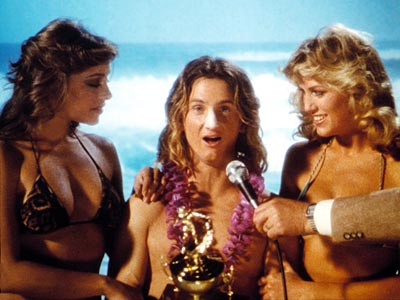
spicoli-fast-times-ridgemont-high-surf-no-diceI ran across a couple of Brit sites (the Guardian and BBC) that claim the trend started in Australia. One theory is that it became the cool-speak of the Australian surf sub culture and migrated to California where it morphed into Valley Girl Speak and then spread via the media via Moon Zappa and Clueless. This theory resonates with me. I remember West Ashley surfers I hung with in the early ’70’s affecting this whiny faux-Californian cool-speak.

Anyway, it seems that every generation develops verbal ticks, the “you-knows” of my youth morphing into “likes” and now the interrogative lilt. Is “uptalk” here to stay or will it give way to some new, even more irritating affectation?

The Academic Magnet Watermelon Fiasco

The best news I’ve heard in a long while is that 3 Academic Magnet parents “filed a defamation lawsuit claiming characterizations of the team’s controversial postgame watermelon ritual damaged their [unnamed] sons’ reputations.”

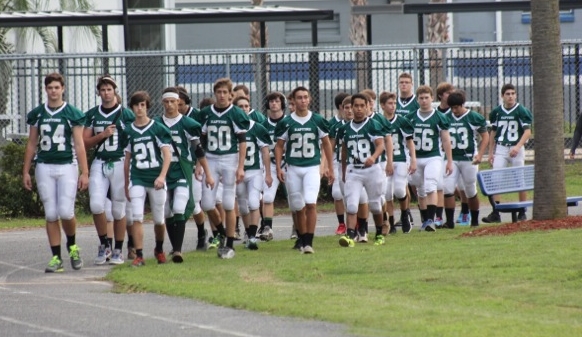
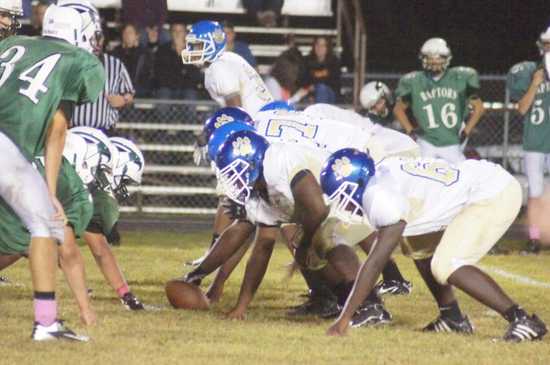
unnamedThe Academic Magnet is public charter school located in Charleston, South Carolina, where American Civil War began. Although a public school, blacks at Academic make up only 2,3% of the school’s population. According to a report issued by the school’s principal Judith Peterson, after the second game of the season, team members bought a watermelon from a roadside stand, and after they won the game, the team broke open the watermelon, cheered as a team, and ate the melon. To quote Principal Peterson, “as teams sometimes believe in superstition, the boys bought a watermelon for the next game, which the team also won.” Thus, the team concluded that pregame purchasing and postgame smashing of watermelons resulted in victory.

Magnet v. Bonds Wilson

White Magnet v. Black Magnet

After defeating Military Magnet, a predominantly black school, the Academic Magnetic team returned to campus and, again quoting Principal Peterson, “ran with the melon into the AMHS Courtyard and threw the melon to the ground.”

[Note to Academic High School Teachers and Coaches. Perhaps you might want to introduce students to the logical fallacy post hoc; ergo, propter hoc.].

This self investigation does not include troubling details included in other reports, particularly by the City Paper (hence their being named in the lawsuit) that the students painted faces that could be construed as “caricatures” on the watermelons and made “grunting sounds” and wrote “Bonds Wilson” on one of the watermelons.  Bonds Wilson was a historic black high school that once stood at the present site of Academic Magnet.

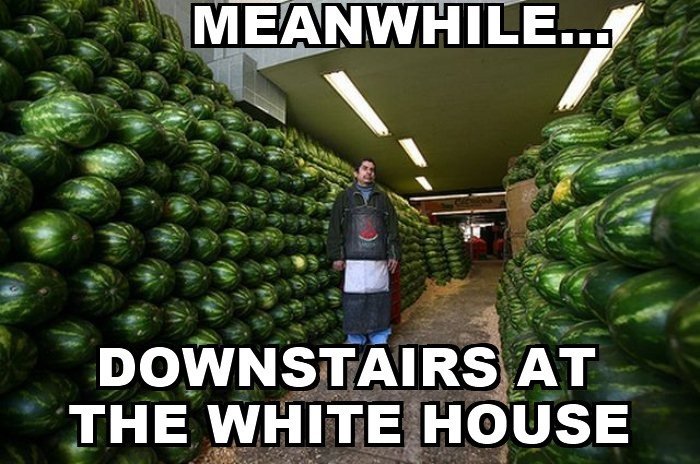
With+obama+back+in+the+office+eat+that+watermelon+eat_22b4ec_4244117To quote Wikipedia, Protesters against African Americans frequently, among other things, hold up watermelons;[2] racist imagery of President Barack Obama consuming watermelon has been the subject of viral emails circulated by political opponents. After his election, watermelon-themed imagery of Obama has continued to be created and endorsed.

The coaches were aware of the ritual but didn’t associate smashing watermelons after defeating predominately black teams with racism. An African American player on the team characterized the “grunting noises” as “football noises.” Principal Peterson referred to them as “chants.”

[Note to Academic High School History teachers: introduce a chapter in American History on racism and racial stereotypes].

Why do I say the law suit is good news, you wonder?   Because it will make one hell of a movie, that’s why — Inherit the Wind meets Friday Night Lights. I’d cast Ned Beatty as Coach Walpole and Glenn Close as Superintendent McGinley. Plus, what a boon for watermelon growers in the Lowcountry as melon after melon would need to be busted in take after take. The growers may need the help since the Magnet has put a stop to “smashing a watermelon, cheering together, and eating pieces of the melon.”