A Nostalgic Dismissal

My sons circa 1988

Although I write about the past quite often, I don’t think of myself as nostalgic. Last week, for example, I uploaded hundreds of photos from a CD-ROM to iCloud. Even though I enjoyed revisiting my life, I wouldn’t want to return to those not-so halcyon days of diaper training or middle school dances. Looking at these images of yore, I was pleasantly reminded of how our little family took almost everything in stride, even Hurricane Hugo. 

Our street, Forest Trail 17 days after Hugo
Debris on the edge of the front lawn

But we did and were almost always happy ­– that is, unless the Braves lost, the Gamecocks lost, Al Gore lost, or work drama intruded, which, of course, it did perhaps more than occasionally. 

After her stint as a stay-at-home mom and kindergarten aide, my wife Judy worked as a school psychologist, and I taught at a prestigious prep school. Nevertheless, despite the occasional workplace kerfuffle, we loved our jobs, and I don’t see how you can be happy if you don’t enjoy your employment.[1]

In fact, there was only one job I have enjoyed more than teaching at Porter-Gaud and that was bartending at the Golden Spur, a bar located in the student union center in the Russell House at the University of South Carolina back in those enlightened days when 18-year-olds were allowed to purchase alcohol in addition to being eligible to join the armed forces.  

You punched a time clock at the Spur. Since you could get draft beer at happy hour for a quarter, I suspect that my hourly wage would seem downright Medieval nowadays, but being poor wasn’t shameful back then. I didn’t own a car until I was 25. I got by on my charm. 

But man, what fun I had slinging the suds, engaging with the clientele, flirting with customers and my fellow bartenders. I never looked up ruefully at a clock ever. And then other times we’d bartend frat parties at Belle Camp. When I matriculated at USC, I was anti-fraternity, but these parties made me realize that I had been too severe a moralizer. These parties were fun. One time, a preppy girl took my hand, pulled me away from my station at the makeshift Budweiser truck mobile bar with beer taps sticking out its side, and started dancing with me. She did some kind of sorority sway; I did the wa-wa-tusi like Bela Lugosi. 

Your friendly (and apparently stoned) Golden Spur Bartender

It was fun, memorable. 

So sure, I think about the past occasionally, but I don’t dwell on it. It’s the future that hijacks my thoughts when I lack the good sense to savor the eternal now. The planet is coughing up phlegm. The Fertile Crescent is virtually uninhabitable. Connecticut-sized slabs of glaciers are sloughing off into an ever-rising ocean. 12% of the Republican Party think that the Deep State is run by extraterrestrial pedophiles. Millions of people worship a wrestling promoter.

So yeah, I can see why nostalgia might serve as a refuge. I ain’t judging.


[1] Confession. I don’t use the word “kerfuffle” in conversation. It’s a Britishism. Perhaps I chose it because I just got back from Oxford. Maybe the background conversations that didn’t register took root somehow. Anyway, I don’t like kerfuffle. It’s too cute sounding. I should have used my ol’ go-to snafu synonym: “conjunctification.” 

Inquiring Minds Want to Intrude

Now that I can legitimately claim to be a novelist, I feel obligated to eavesdrop, to ask strangers about their lives, even at the cost of seeming intrusive. It’s my job to chronicle the human condition, dammit!

For example, at the moment I’m in a bar at Charleston International Airport sitting next to a young man who turns thirty-one next week. He is, to coin a phrase, as blind as a John Milton’s pet bat’s pet mole. He suffers from a hereditary disease called ocular atrophy, which he gets honestly – his father has it, his uncle has it. He leans his face two inches from his laptop, reminiscent of a photograph I’ve seen of James Joyce peering at close range with the aid of a magnifying glass at Finnegan’s Wake.

The good news is that next week my near-sighted brand-new friend is headed to the Aegean with his girlfriend. They’ll check out an exotic medley of destinations including Athens, Mykonos, Venice, and places in Croatia whose names he can’t at the moment conjure.

But here’s the rub: the last cruise he and his girlfriend took, a Caribbean island-hopping adventure, commenced before Covid was a publicized thing.  Near the end of the cruise, having just fallen asleep and already hungover at five a.m, he was awakened by an ominous blast blaring from a loud speaker. The port of San Juan had been closed because of a pandemic! 

I thought he was going to relate a prisoner-at-sea tale, the ship running out of provisions because no mayor wanted a Covid incubator infecting their fair city, the parched passengers turning on each other, battling over a dwindling supply of Lays potato chips, but he said San Juan’s closing suited him fine because he didn’t have to go ashore and could recuperate in his cabin for two days.

I told him that had the potential of being a great short story and that I might steal the idea. “It’s all yours,” he said.

But now he’s off, headed to Dallas for a job interview.

I’m not making this up. The fellow who has taken his place at the seat next to me is flying to DC because his father’s just had, “a widow-making heart attack,” 9.9 blockage, but, as it turns out, the father is not dead (nor is he married at the moment). The heart attack victim’s family is “up his ass” about his lifestyle. I can’t follow up on the drama because I need to make my way to B9, and anyway, the sons’ thumbs are flying in rapid-fire texting. 

Hey, I can identify with the the young man’s father. A lifestyle is a lifestyle is a lifestyle. Don’t get up my ass, do-gooders!  Keith Richards don’t work for no CIA.

Cheers, I’m off to London!

Choo-Choo Ding-a-Ling-a-Ling

Intro

So, I decided to take Amtrak to DC to spend time with my Yankee-Doodle-Dandy grandson and his parents instead of driving up there on 95 in a 2007 Mini Cooper jockeying among speeders headed to New York and those big rigs spewing their diesel that travel at varying speeds. Nor did I want to deal with Fourth of July airline woes, the inventible delays, the soullessness of the spaces where you wait in cramped quarters among others.[1]

Advertising it as a nine-hour trip, the website boasted of Wi-Fi and electric plugs, a cafe car, and microwavable entrees (though they didn’t present the menu quite like that). I was all aboard. It would be an adventure, and indeed the trip back ended up being an adventure featuring coincidences, camaraderie, a micro-overdose, and a very belligerent wheelchair bound forty-something rage hollering with stitches bridging a freshly broken nose.

On the trip up, which ended up being ten hours, I spent a bit of time staring out of my window contemplating the wide-open spaces in one of the reddest parts of the reddest of states, acres of corn, acres of woods, lonely manufactured homes in the distance with no neighbors in sight, dying towns with water towers in need of painting, all this rushing or creeping past under the mournful warning of the whistle – though it doesn’t sound like a whistle but more like a sad exasperated industrial sigh. 

I tried to put myself in their places, to imagine what their lives are like, like Lucinda does here.

I walked out in a field,
The grass was high, it brushed against my legs.
I just stood and looked out at the open space,
And a farmhouse out a-ways.
And I wondered about the people who live there.
And I wondered if they were happy and content.
Were there children and a man and a wife?
Did she love him and take her hair down at night?

                                                            Lucinda Williams, “Side of the Road”

Chevy Chase

So I spent two days hanging with my older son Harrison, his wife Taryn, Taryn’s mother Sue, and, of course, Julian, a mighty master of nouns, who calls me Rusty. His uncle Logan he calls Lo-Lo; Logan’s wife Ivette he calls Te Te.  He calls his maternal grandfather, Pop Pop and Pop Pop’s girlfriend Fi Fi. 

Lo-Lo-Te-Te-Pop-Pop-Fi-Fi.[2]

Casey Jones, You Better Watch Your Speed

We went to a playground on day one and had a lovely birthday party day two, but the next thing you know, I’m in an Uber headed to Union Station, and the driver pantomimes/asks if he can stop for gas, pointing to a gauge looking dire. I told him I wasn’t in a hurry, so he got out and sprinted into the Circle-K to stand in line at the counter to purchase forty-dollars’ worth of unleaded. 

Despite the delay, I got to the station in enough time not to be stressed. A train station is much more straightforward than an airport. I love the fact that you can get on without showing a ticket. Anyway, though I’m not supposed to be superstitious, I look for omens. If this were a short story, I’d make the ride much more creepy, dramatize it as foreshadowing, a bad bodement that things on the trip could very well go wrong.

But anyway, I climbed aboard, a spry 70-year-old two-bag toting fedora sporting dandy of sorts. They cordon you into cars headed to the same latitudes, Rocky Mount, Florence, Kingstree, North Charleston as opposed to Georgia and Florida. There were only singleton seats next to others, so I asked the fellow pictured below if he minded if I sat next to him. “Not at all,” he said in a pleasant Southern California voice that has a nice balance between vowels and consonants.

This fellow, whose name is Derrick, smelled of alcohol but was not in the least intoxicated, so at first we sat silently, he listening to music via earbuds, I reading from a dream journal I created in the last century. I had grabbed it off the shelf because I couldn’t find a notebook, and I knew the journal had blank pages. The first entry is dated 2/12/80 with a dream in which I’m a juror in a show trial. The last dream entry is dated 3/1/97. Here’s the dream:

I dream I encounter a sort of Jungian “wise old man.” He’s a cross between Ezra Pound [the opposite of a wise old man] and Ashley Brown [a former professor with a speech impediment]. He [the Jungian old man] has a goatee but a kind young-seeming face. His speech impediment is gone. He speaks many languages but is humble – [illegible] of over-indulgence but admits he’s travelled that path. He says he’s going off to church to “become learned in eternity.” 

The journal also contains lists of books I read over the years starting in 1992 and ending in 2004.

Perhaps an hour elapses in silence. After I finish reading the journal, I reach for one of the novels I’ve brought, Richard Ford’s Be Mine, whose plot revolves around a 74-year-old man caring for his 47-year-old son who is dying of ALS.[3]

My neighbor reaches down to procure another Bud Lite and asks me if I would like a beer. It’s eleven-something, before the cafe car serves alcohol.[4]

“I’d love one,” I say. “You coming from DC?”

“No, Baltimore. I’ve been staying with my best friend who has ALS.”

“What a coincidence! This novel is about ALS. One of my best friends died of ALS.”

He takes a photo of the cover and tells me about his friend, who has had ALS for about a year. His friend, whose nickname is Ziggy, is still ambulatory. Derrick spends weeks at a time with him, rigging up inventions like a hand-operated thing-a-ma-jig that raises and lowers the umbrella on a patio table. Derrick is relentlessly upbeat. He and Ziggy live in the present, which is what the narrator of Be Mine is attempting but failing to do.

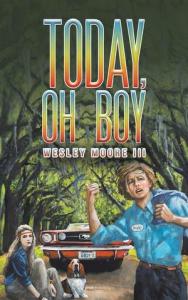
Over the course of the next two hours he plies me with Bud Lites, so I get his address so I can mail him a copy of my novel Today, Oh Boy. He also offers me his vape pin to take to the restroom to hit on some cannabis, which I politely turn down. However, he insists I take this piece of chocolate, legally purchased in liberal Maryland. “You got four more hours,” he said. “You ought to take it now.”

“The whole thing?”

“Yes.”

So I did.

There’s No Fool Like an Old Fool

I don’t enjoy tripping; a slight buzz is enough for me.

When I used to occasionally drop acid back in the early 1970s (when coming down off the strychnine-laced drug was physically painful), I’d swear off it forever. One time in ’73 I threw away my paraphernalia, my incense holder, etc., which I attribute to the traces of Protestant guilt that remain in my bloodstream despite my agnosticism. Yet, years later, I’d relapse and accept a hit as a gift in communal gatherings, even though when I’m tripping, I crave solitude. 

Anyway, all too soon I was way too high and started suffering bodily discomfort. It was like being in a bad dream in murky light, but at least I knew it was a dream. I practiced breathing exercises, stared out of the window at a surreal rush of staccato-ing images, green vegetation tearing past, trains blurring by in the opposite direction. I tried to will my way into enjoying the present, which, as the effects waned over the ensuing hours, I was able to do, and by the time we hit Florence, I was in control enough to sway my way to the cafe car for a Stella.

The end was in sight.

No Expectations to Pass Through Here Again

The North Charleston Amtrak station must be new. It’s white and gleaming, the restrooms immaculate. The bad news was that it was pouring, and I was having trouble procuring an Uber, essentially because I live at Folly Beach. Finally, the app claimed someone was on the way, but the tiny car on my screen was going around in circles, alternating from 6.1 miles to 6.2 miles, so I called the driver and asked if he was headed to the train station, and he said yeah, and then the car on the screen started slowly heading to the dot of my location.

I was standing outside with others when a rough looking wheelchair bound wreck of a human in filthy sweatpants suddenly rage-screamed at the top of his lungs. I’m a really accomplished nothing-doer in situations like this, so I pretended that nothing unusual had happened, but unfortunately, he rolled up to me and asked to get him a cab. I shook my head no. He got abusive, so I went inside and stood next to the no loitering sign, but he followed me inside anyway, so I donned my scary pissed-off mask and hissed, “No, I’m not getting you a cab.” His eyes were glazed; he had stitches in his nose, which was bruised and broken.

I went back outside to wait on my Uber when a cop car pulled in. I verbally greeted the officer as he went inside and received a tense nod of acknowledgement.

Finally, my driver arrived, and as we left the parking lot, I saw two cops talking to the wheelchair man.

Alas, as he were headed home on Cosgrove, I heard the driver’s GPS voice say, “Take I-26 East,” and I said, “No, go straight,” which he did, which seemed easier but then I had to tell the driver where to turn from the back seat, and once again I was in an unfortunate Uber situation, which I supposed was a fitting bookend to my travels. The driver wouldn’t pull into my driveway, so I hauled out my bags and ran around to the garage in the pouring rain, fumbled for the light switch on the second piling, procured the hidden key, and stepped into the safe solitude of 516 East Huron.

The entire trip had taken twelve hours and by that, I mean the train trip. Real and unreal.


[1] BTW, like George Cohen, the composer of “Yankee Doodle Dandy,” my grandson Julian was born on the 4th of July.

[2] It’s all yours, Ms Moni. Write a song, compose a rhyming children’s book about a 4th of July family get together cause I’m all eat up with lassitude and can’t get round to it ever..

[3] The other novel I’ve brought is Anna Karenina, the perfect book to read on a train!

[4] I’m not making this up, an email notification just came up on my screen :

wanderu chiku logo
Hey Wesley,We wanna hear all about your train trip from Washington to North Charleston on Jul 05. Can you spare just two minutes to share your travel experience? 
WRITE A REVIEW
If you did not travel, but still have feedback to share or need assistance filing a claim with the carrier, please email us at contact@wanderu.com.Thank you!Cheers,Chiku & the team at Wanderu

Folly Float Frenzy

8 September 2013

Sad to say but word has reached me that a disgruntled fellow ethnologist (who shall remain nameless) has criticized yours truly for choosing Folly Beach, SC – the Edge of America – as the focus of my anthropological studies.  Granted, habitating Folly might on the surface seem cushier than dining on locusts in a mud hut among the Gola and Kissa peoples of Liberia; however, let me tell you, dwelling on Folly is no piece of coconut cream cake.  

In addition to mosquitos, yappy dogs, sauna-like humidity, and jaywalkers, citizens of Folly must also endure the grating roar of jet skis, scantily clad retired pro wrestlers, and some of the most garish Late Empire tattoos known to man humankind.  Oh, whine on nameless naysayer, but a complete anthropological portrait of our planet must include all peoples, not just primitive pre-industrial tribes.

In addition, documenting the folkways of Folly Island poses dangers, especially around the river and ocean (I wonder how many of my critical colleagues encamped in the Kalahari have suffered jelly fish bites on their assignments?).  Take yesterday, for example, when my trusty unpaid intern Jesus “Paco” Martinez and I braved the treacherous Folly River to record the Island Festival known as the Folly Float Frenzy.  To say we found ourselves in harm’s way is an understatement, like saying a devout Mormon might find Miley Cyrus’s performance at the MVA awards off-putting or that smoking a bunch of dope and then deciding to fashion your own bungee cord might be a bad idea.  Anyway, what follows is a first person account of yesterday’s festival.

Warning, some of the following images might be upsetting to young readers. 

Background

One characteristic of Folly people is their propensity to party, which manifests itself in a plethora of civic sponsored festivals:  New Years Fireworks, Follylapooza, St Patrick’s Day, Follygras, the Sand and Sea Festival, the Tree and Bush Festival, the Stem and Seeds Festival, etc., etc. 

The Float Frenzy is an annual September Saturday morning event in which tribes build floats loaded with malted alcoholic beverages, launch them from Folly Boat Landing and see which of the tide-bourne vessels arrives first at Sunset Cay, a marina bar on the southern tip of the island (see below). At the Cay, the participants continue to consume even more malted beverages at the bar and stare at cell phones. Part mating ritual, part celebration of the Sun God, the festival offers a peek at Folly people at their most unguarded, and at the Sunset Cay, Paco and I were lucky enough to witness one female denizen twerking to the accompaniment of amplified music, a sight neither of us will ever forget. 

The image below depicts the round trip route from the Moore’s dock to Sunset Cay.

One of the challenges we faced was to make it from Moore’s Dock to the Sunset Cay and back within the constraints of the ebbing tide, which could make re-entry into the creek that leads to Moore’s Dock impossible.  If we were to misjudge our return, we’d have to face to daunting task of dragging our kayaks between the Scylla and Charybdis  of pluff mud and oyster shells.  Leaving at 10:45, we needed to be back by two or face the unthinkable.  Obviously, the time it takes to navigate the Folly varies according to wind and tides, and we’d be going against both on the return trip.

Paco at the beginning of our trip (note the phallic fertility obelisks in the background)

The Trip

To be as inconspicuous as possible, Paco and I donned local costumes (tee shirts and board shorts) and loaded our kayaks with malted beverages.  In addition, that intrepid intern also brought a bag a boiled peanuts (a local delicacy), which became a life-saver at the Cay, providing us with much needed protein for the Odyssian trek home.

As we approached the landing I couldn’t see any floats. In previous years participants were more numerous, a veritable flotilla of elaborate watercraft dotted the river, but this year’s contingent consisted of a paltry four or five floats.

a few of last year’s participants

As fate would have it, this year’s most elaborate float, an homage to the endangered sea turtle, would face two horrific incidents.  First, without any steering mechanism, it almost crashed into an anchored yacht.

The Turtles weren’t the only craft to suffer the fury of nature.  This vessel started taking on water, and two of its occupants were transferred to a more seaworthy craft.

Eventually, the marina came into view with the current really churning. I heard my name called, and there stood Judy Birdsong, so I paddled toward her, crashing into the pier sideways.  Paco was right behind me.  We lashed our kayaks to the pier hold and made our way to Sunset Cay to join the natives in downing malt beverages.  Paco had some bad news to share; the Turtles had crashed into the marsh.

The best laid schemes of mice and turtles.

Yes, we had survived the trip to the Cay. . . 

and we couldn’t believe our luck when we witnessed a very rare daylight sighting of Folly twerking.  If only I had had the presence of mind to shoot a video instead of still photos!

Paco dubbed her “the human maraca” – those bangles were a-clacking

It was Judy Birdsong who brought us down to earth by asking the time.  

“Oh, it’s 1:05,”  I said, “We’re okay. Low tide’s not till 4.”

“4?”  she asked incredulously.  “Low tide’s at 3!  I checked before riding down here.”

I’m not going to bore you with the saga of our trip back – the gale-like breeze, the on-coming tide, the lukewarm beer – it was Kon-Tiki all over again.  

An hour and twenty minutes later we found ourselves at the mouth of the creek, our paddles hitting oyster banks.  Yet we made it with only about an inch of water to spare. (Note the bottoms of the kayaks below).  

We had devoted 4 1/2 hours of the sake of science documenting the people and culture of Folly Beach and proven that you can get into the creek an hour before low tide.  Our expedition had been a success, no matter what those elitist mud-hut living ethologists have to say.

Judy Birdsong and the worn out kayaks

Here We Go Loopy Light

Here We Go Loopy Light

Here we go looby loo,
All on a Saturday night,

They say socializing jazzes up 

old people’s metabolism, 

that yakking it up may ward off 

something or another, 

which is a happy accident 

in my case, 

because even 

if I were operating 

an electric wheelchair, 

I’d be locomoting 

up to the bar, 

making eye contact, 

getting my suds delivered.

Transitioning from Tween to Teen in 1966

The summer before my eighth grade year, I started hanging out with nerdy high school sophomores who, rather than drinking and fornicating, behaved like tweens, tweens who could drive at night but who also did dumb stuff like chunking lit cherry bombs out of windows of moving vehicles with fireworks galore on board. I didn’t lie to my mother – my father was a distant figure, not involved with my comings and goings – I’d tell Mama I’d be riding around town with Ricky and Dave, and she’d say okay but be home by ten. I can’t remember my precise curfew, probably ten. In high school it was 11:30.

I have no memory of what we talked about on those hours-long drives, but I do remember cherry bombs exploding underwater when we’d stop at a bridge, and I remember the circuit we’d take, heading out Trolley Road to Dorchester, taking a left, then another left that took us to Ladson, skirting a subdivision called Tranquil Acres where my crush, blandly pretty, super-intelligent Laura Alexander lived with her Air Force Lt. Colonel of a father, her mother, and whatever siblings she may have had. 

We’d head back along that stretch of Hwy 78 towards Twin Oaks, or sometimes take Lincolnville Road back to our subdivision. This looping drive introduced me to a strange, incongruous world of manufactured houses with meticulously tended gardens and churches, churches, churches, tiny concrete block churches, every half-mile on both sides of the road, with exotic names rife with schism, like the Second Church of God Consecrated in Holy Blood of the Nazarene.[1]

My high school friend Ricky was the product of what some called in those days “a broken home,” and he rarely saw his father, an airline pilot who showered him with gifts whenever they did get together. His mother worked, so we could hang out at his house and listen over and over and over again to The Animals Greatest Hits, which ended up being a revelation to me, hearing Eric Burdon sing “House of the Rising Sun” in a voice that sounded as if he himself could have been  born in Summerville, singing in baritone with a hint of Gullah about things much deeper than you found in the Monkees’ catchy love songs.

Ricky had two sisters, one off at college and another maybe a junior or senior, a year or two older. Her name was Penelope, and one afternoon, she jumped out of a closet in her institutional white bra and panties screaming “boo!” If this were a graphic novel instead of po-dunk memoir, I’d have my auburn hair porcupining like I’d received an electric shock. She howling, laughing, sprinted to her room, butt jiggling, and slammed the door. It was weird, but cool, yet it never happened again. She spent a lot of time in her room alone. She was a brunette, very good looking, but not all that popular.

The older sister, on the other hand, a coed at the University of South Carolina, had been a Summerville High School superstar, the homecoming queen, maybe.[2] I met her once with her boyfriend at Ricky’s, the boyfriend Hollywood good-looking and the son of the woman who four years later would be my English teacher, the model for Mrs. Barrineau in Today, Oh Boy. I knew about this star couple because my aunt Virginia, only 6 years older than I-and-I[3], was in their graduating class. I felt as if I were hanging with celebrities, and they shocked me by striding up to Ricky’s mama’s bar and pouring themselves some kind of whiskey over ice. Ricky showed my future teacher’s son of Best of the Animals‘ album cover, and he said that “House of the Rising Sun” was the only song he liked, and I thought to myself what about “We Got to Get Out of This Place,” what about “It’s My Life,” what about “Please Don’t Let Me Misunderstood?” 

It was a memorable summer. 


[1] Or something like that.

[2] None of my yearbooks have survived my bopping from place to place, so I can’t confirm. 

[3] This affectation, using the Rasta hyphenated pronouns, does come in handy here where I can avoid the conversational, grammatically incorrect “me” yet sound hip.

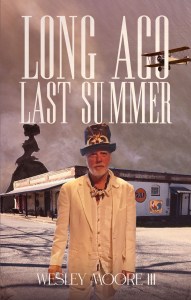
You can purchase Today, Oh Boy HERE.

You Can’t be Any More Out of It Than Dead

Cotswold cottages with hollyhocks and roses at sunset, Mickleton near Chipping Campden, Gloucestershire, England.

You Can’t be Any More Out of It Than Dead

Nor dread nor hope attend
A dying animal;
A man awaits his end
Dreading and hoping all.

WB Yeats

Perhaps the only people who die happy are James Dean types who, defying speed limits, enjoy an intense adrenaline rush right before a fiery crash instantaneously switches off the lights. Dean died young as did F Scott Fitzgerald, who legend has it, suffered a massive heart attack at 44 while making love to Sheilah Graham, a gossip columnist. Nevertheless, I doubt that he died happy. One of the symptoms of a heart attack is a feeling of impending doom.

Of course, the opposite of dying young is enjoying an extended lifespan, but you don’t want to overdo it. Chances are that if you succumb at the way overripe age of 97, you’ve outlived your spouse – maybe two – and perhaps one or two of your children. Chances are you’re sick and tired of wheelchairs, sick and tired of constant confusion, or simply sick and tired. 

Even if you’re happy right before your death, after the event, you’re simply dead, so nothing matters to you anymore anyway. You don’t pick up on those Happy Heavenly Father’s Day Facebook posts, nor, on the plus side, does the Braves’ bullpen blowing a save bother you. Fact is that you can’t be any poorer than dead, or, as Flannery O’Connor’s Francis Marion Tarwater puts it, “The dead don’t bother about particulars.”

It would be nice, though, to die in a relatively serene era of history, puttering around a cottage in the Cotswolds’ in the 1870s, say, not fixating on the Franco-Russian war, but tending to your roses, having time enough to notice the lovely russet sunset beyond the hedgerows. Wouldn’t it be nice to die in a place of peace and quiet surrounded by loved ones who realize that death is the mother of beauty? 

That’s the way to go. 

Copyright: Copyright © 2013 Tom Bartel

Here Comes the Night

Illustration by James Lee Chiahan. Source image: Karol Jalochowski / Santa Fe Institute / Miller Omega Program.

13 June 2023

I can’t listen to music and write simultaneously. For example, right now I’m attempting to crank something out while listening to the Human Beinz only hit, “Nobody But Me.”

“Nobody, Nobody, Nobody, Nobody . . . “[fade out]

Big day today. It’s William Butler Yeats’s 158th birthday, Trump’s been arraigned, Cormac McCarthy has died, and an obviously un-embalmed would-be corpse in Ecuador disrupted her wake by banging on her coffin lid, which brings to mind the Irish song “Finnegan’s Wake” and that Bloomsday is only two days away.

Yeats, Joyce, and McCarthy, three undisputed geniuses.

Now, Lucinda Williams is singing “2 Kool 2 Be 4-Gotten,” which reminds me of these spiral notebooks kids passed out in junior high. I can’t remember what we called them, but the owner would pass the notebook to you, and you signed your name in the front page with a number, and each kid in the class had his or her own page, and you wrote what you thought about the person on that page using the number as your signature. At the top of one of the pages, you’d see your name, then in various handwritings assessments of your character and personality. To find out who thought what, you’d refer to the first page with the names and numbers. I’d get a slew of “OK”s, a couple of “cools” but no 2 Kool 2 Be Forgotten”s. Then you’d cast your own judgement on the participants and hand the notebook back to the owner.[1]

Now, I’m hearing through my headphones Nancy Griffin’s cover of Kate Wolf’s great song “The Great Divide”. When I was teaching, I used the song to illustrate TS Eliot’s notion of what he called “the objective correlative,” the idea that ideas need to be embodied in imagery.

The finest hour that I have seen
Is the one that comes between
The edge of night and the break of day
It’s when the darkness rolls away.

It’s gone away in yesterday.
Now I find myself on the mountainside
Where the rivers change direction
Across the Great Divide.

The great divide, Cormac, Treat Williams. Nanci Griffin, Kate Wolf, Judy Birdsong, but not the woman from Ecuador, not Donald Trump, not Henry Kissinger, not Jason Chambers, not Caroline Tigner Moore, not you, not I-and-I, not yet.

And Not Van Morrison, who, conveniently enough, is singing “Here Comes the Night” as I abandon this silly little experiment.


[1] Note the shittiness of the music-marred prose. Like I said, I can’t write and listen to music at the same time.

Lock Him Up – Let the Great Axe Fall 

Obviously, Donald Trump considers himself above the law, thinks that whatever he wishes can be conjured by the genie of his entitlement to become immediately manifest. If he, the Mighty Wizard of Oz Mar-a-Lago, wants documents declassified – presto – they’re his to keep.

According to an audio tape in the possession of prosecutor Jack Smith, Trump has shared the contents of a top-secret document concerning a proposed invasion of Iran with people without security clearances, which is patently illegal. Why be bothered by petty little procedures like institutional declassification if you’re Donald J Trump? Sheltered by his wealth, he routinely has gotten away with ignoring inconvenient laws, and obviously he became complacent about not being taken to task. However, now that has been indicted for stealing classified documents, he is, according to his own paranoid estimation, the most persecuted president in history, more wronged than Lincoln, Garfield, McKinley, and Kennedy.[1]

Instead of “Macho Man,” they should play “Poor, Poor Pitiful Me” at his rallies.

I admit to being old and hard-hearted. I grew reading Hemingway in neighborhoods where dads who had fought hand-to-hand in the Pacific eschewed self-pity and kept their mouths shut when it came to their own personal suffering. They didn’t whine about their travails on the beaches of Normandy or in the jungles of Korea. For them it was blood – literally in some cases – under the bridge. That was the price you paid for freedom.

Of course, Donald Trump avoided the draft via bone spurs so didn’t get the chance to employ his reform school military training in Viet Nam. He learned from his father Fred that rules were made to be broken. What he didn’t receive from Fred was affection. It’s not at all surprising that an unloved scion of a real estate fortune would grow up to be needy. 

What does surprise me, though, is that so many self-proclaimed red-blooded males, especially Southern males, have not only embraced, but in some cases deified, this crybaby. Donald Trump is the absolute antithesis of the caricature of Robert E Lee that Southerners of my generation had been groomed to revere. 

Despite his vulgar bluster, Trump is no John Wayne, no James Bond. no Hamlet the Dane. Rather, he’s Michael Henchard from the Thomas Hardy’s The Mayor of Casterbridge (though that’s a little unfair to Henchard who was capable of self-recrimination and regret).

JOEY MACALLE 

Like Henchard, Trump’s a self-pitying blowhard who somehow PT Barnum-ed his way into elected office.  Unlike Henchard, though, Trump has become a cult figure, a demigod. His deification among gun-toting, drag-queen-hating outdoorsmen is beyond counter-intuitive, especially given his copious application of make-up, his platinum comb over, his gut-concealing girdle. Why do evangelicals see him as Christlike, even though he’s incapable of feeling empathy for anyone but himself?

I don’t know, but I say where offence is – and espionage is a great offence – let the great axe fall. 


[1] Bonus question: Can you name their assassins? 

The Un-Woke Mind Virus

I read this morning in an actual newspaper printed on newsprint that some parent in Utah has successfully petitioned to have the Bible removed from elementary and middle school libraries in that most conservative of states. I guess, though, if you’re going to yank Judy Blume, ‘ol Moses ought to go down, too, writing all that shit about fratricide, genocide, incest. Add to that David’s offing Uriah to he could be with Bathsheba; Job’s getting whacked with woe by his Creator in a friendly bet with his prodigal son Satan; Jacobs’ sons attacking Hamor and Shechem, butchering every male of their enclave, looting livestock, dragging away the wives and children of their victims.[1]

I suspect that the usual vulgarians in Congress (a couple of whom are depicted above) will be howling in protest, perhaps not discerning that their putting parents in charge of schools has more than one ideological scenario. If they’re sincerely serious about eradicating the Woke Mind Virus, they should be ecstatic that the New Testament with its pacifistic, communistic, and inclusive messages won’t fall into the hands of impressionable young people trying to make sense of what TS Eliot called “the immense panorama of futility and anarchy that is contemporary history.”

Compare the MAGA ethos with the Beatitudes, delivered by Jesus after dividing private property (i.e., loaves and fishes) and redistributing them among the masses.

Talking about woke!

Blessed are the poor in spirit,
    for theirs is the kingdom of heaven.
Blessed are those who mourn,
    for they will be comforted.
Blessed are the meek,
    for they will inherit the earth.
Blessed are those who hunger and thirst for righteousness,
    for they will be filled.
Blessed are the merciful,
    for they will be shown mercy.
Blessed are the pure in heart,
    for they will see God.
Blessed are the peacemakers,
    for they will be called children of God.
Blessed are those who are persecuted because of righteousness,
    for theirs is the kingdom of heaven.

I’m reminded of Woody Guthrie’s song “Jesus Christ,” sung to the tune of “Jesse James.”

This song was written in New York City
Of rich men, preachers and slaves
Yes, if Jesus was to preach like he preached in Galillee,
They would lay Jesus Christ in his grave.


[1] The last item in that series happens to be Donald Trump’s favorite Bible story. For more, do yourself a favor and click on the link for BIBLE STUDY WITH DONALD TRUMP.